In the realm of industrial automation and machinery control, the reliability and precision of sensing components are paramount. Among the diverse array of sensors available, the three-wire proximity switch, exemplified by models like the LJ8A3-2, stands as a cornerstone for non-contact detection. This article provides a comprehensive technical overview of the LJ8A3-2 inductive proximity sensor, exploring its operating principles, key specifications, wiring configurations, and typical application scenarios.
The LJ8A3-2 is a cylindrical, shielded, inductive proximity sensor. Its core function is to detect the presence or absence of metallic objects—typically ferrous metals like iron and steel—without any physical contact. This non-contact operation eliminates mechanical wear, ensuring a long operational life and high reliability in demanding environments. The "three-wire" designation refers to its standard connection scheme: one wire for the positive DC supply voltage (brown wire), one for the negative or 0V common (blue wire), and one for the switched output signal (black wire). The LJ8A3-2 commonly features a Normally Open (NO) output configuration, meaning the output circuit closes (switches "on") when a target enters its sensing range.
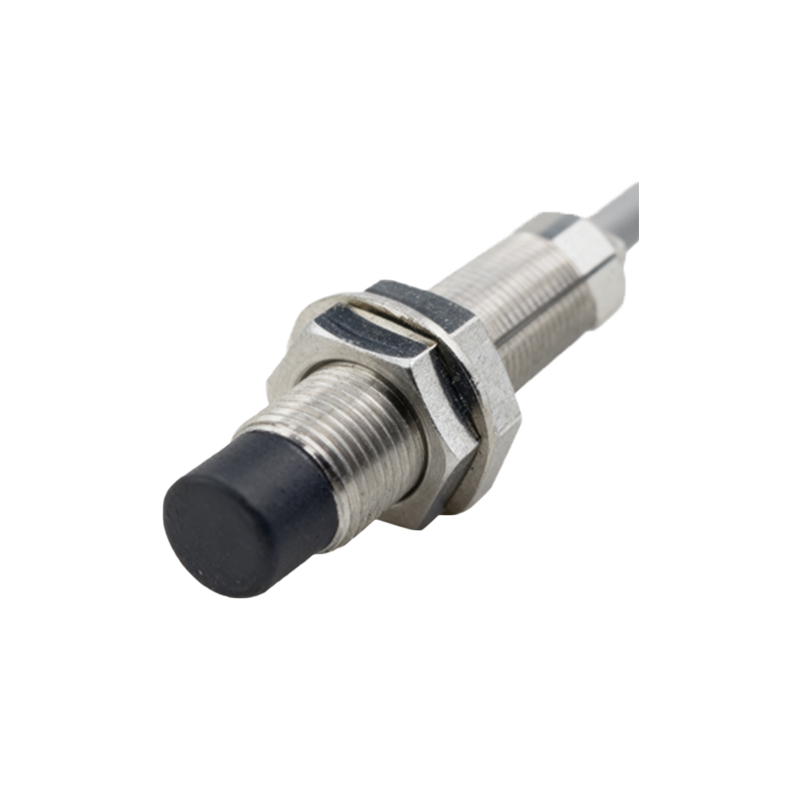
Operating on the principle of electromagnetic induction, the sensor's face contains an oscillator coil that generates a high-frequency electromagnetic field. When a metallic object enters this field, eddy currents are induced on the surface of the target. This causes a change in the oscillation amplitude within the sensor, which is detected by a threshold circuit. This detection event triggers the solid-state output switch—often a transistor—to change state. The use of a transistor (PNP or NPN type is model-dependent) allows for fast switching speeds, suitable for high-cycle counting applications.
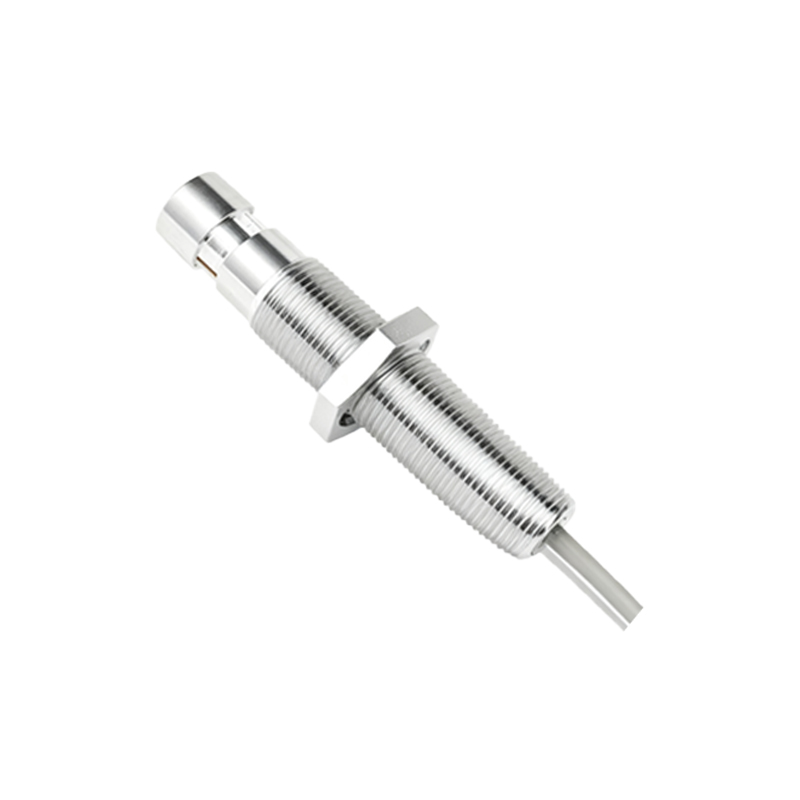
Key technical specifications define the LJ8A3-2's performance envelope. The sensing distance is typically 2mm, a critical parameter that must be considered during installation to ensure consistent and reliable detection. It is designed for a standard DC supply voltage range, commonly 6-36V DC, making it compatible with most industrial control circuits (PLCs). The output current rating, often around 200mA, dictates the load it can drive directly, such as a PLC input, a relay coil, or a small indicator lamp. Its housing is usually constructed from nickel-plated brass or stainless steel, offering good resistance to oils, coolants, and minor physical impacts. The sensor also incorporates built-in protection against short-circuits and reverse polarity, enhancing its robustness.
Correct wiring is fundamental to safe and functional operation. For a standard DC PNP (sourcing) version, the brown wire connects to the positive DC supply, the blue wire to the negative/common (0V), and the black output wire connects to the load. The load (e.g., a PLC input module) is then connected between the black wire and the 0V supply. For an NPN (sinking) version, the wiring logic is inverted. It is crucial to consult the specific datasheet for the exact model variant. Proper installation involves ensuring the target material, size, and approach axis meet the sensor's specifications. Shielded (flush-mountable) sensors like the LJ8A3-2 can be installed flush in a metal bracket without affecting their sensing field, offering design flexibility.
The applications for the LJ8A3-2 are vast across factory floors. It is frequently employed for position sensing, such as verifying the presence of a metal part on a conveyor, detecting the end-of-travel of a pneumatic cylinder with a metallic piston rod, or confirming the closed position of a metal door or guard. It serves as a vital component in automated assembly lines for part counting and jam detection. In packaging machinery, it can detect metallic elements on packaging films. Its durability makes it suitable for machine tools, robotic cells, and material handling systems where dust, moisture, and vibration are present.
In conclusion, the LJ8A3-2 three-wire proximity sensor represents a mature, reliable, and versatile solution for metallic object detection. Understanding its inductive sensing principle, respecting its 2mm nominal range, and implementing correct wiring practices are essential for engineers and technicians to integrate it effectively. Its widespread adoption is a testament to its ability to provide the precise, wear-free feedback necessary for modern automated systems, contributing to enhanced productivity, safety, and process control in countless industrial settings.