In the rapidly evolving landscape of industrial automation and precision manufacturing, laser equipment has become indispensable. From cutting and welding to marking and engraving, lasers deliver unparalleled accuracy and efficiency. However, the performance and safety of these sophisticated systems heavily rely on a critical component: sensors. Advanced sensors are the eyes and ears of laser machinery, enabling real-time monitoring, control, and protection. This article explores the key types of sensors used in laser equipment, their functions, and the technological trends shaping their future.
One of the primary roles of sensors in laser systems is to ensure operational precision. Position and displacement sensors, such as laser interferometers and capacitive sensors, provide micron-level measurements to guide laser beams accurately. For instance, in laser cutting machines, these sensors detect the exact distance to the workpiece, allowing dynamic focal length adjustments. This compensates for material irregularities, ensuring consistent cut quality and reducing waste. Similarly, in additive manufacturing or 3D printing with lasers, sensors monitor layer thickness and alignment, crucial for building complex geometries without defects.
Temperature sensors are equally vital, as thermal management directly impacts laser performance and longevity. High-power lasers generate significant heat, which can degrade optical components and cause wavelength drift. Thermocouples and infrared sensors continuously monitor temperatures at critical points, such as the laser diode, resonator, or cooling systems. By integrating this data with feedback loops, the equipment can automatically modulate power output or activate cooling mechanisms, preventing overheating and maintaining stable operation. This not only enhances process reliability but also extends the lifespan of expensive laser modules.
Safety is a non-negotiable aspect of laser applications, given the potential hazards from high-intensity beams. Here, sensors act as guardians. Beam diagnostic sensors, including photodiodes and CCD cameras, analyze laser power, mode profile, and beam position. Any deviation from set parameters—like a power surge or misalignment—triggers immediate shutdowns or alerts, protecting both the machinery and operators. Furthermore, area monitoring sensors, such as safety light curtains and LiDAR systems, create invisible barriers around laser workstations. If an intrusion is detected, the laser pulse is interrupted within milliseconds, mitigating risks of exposure.
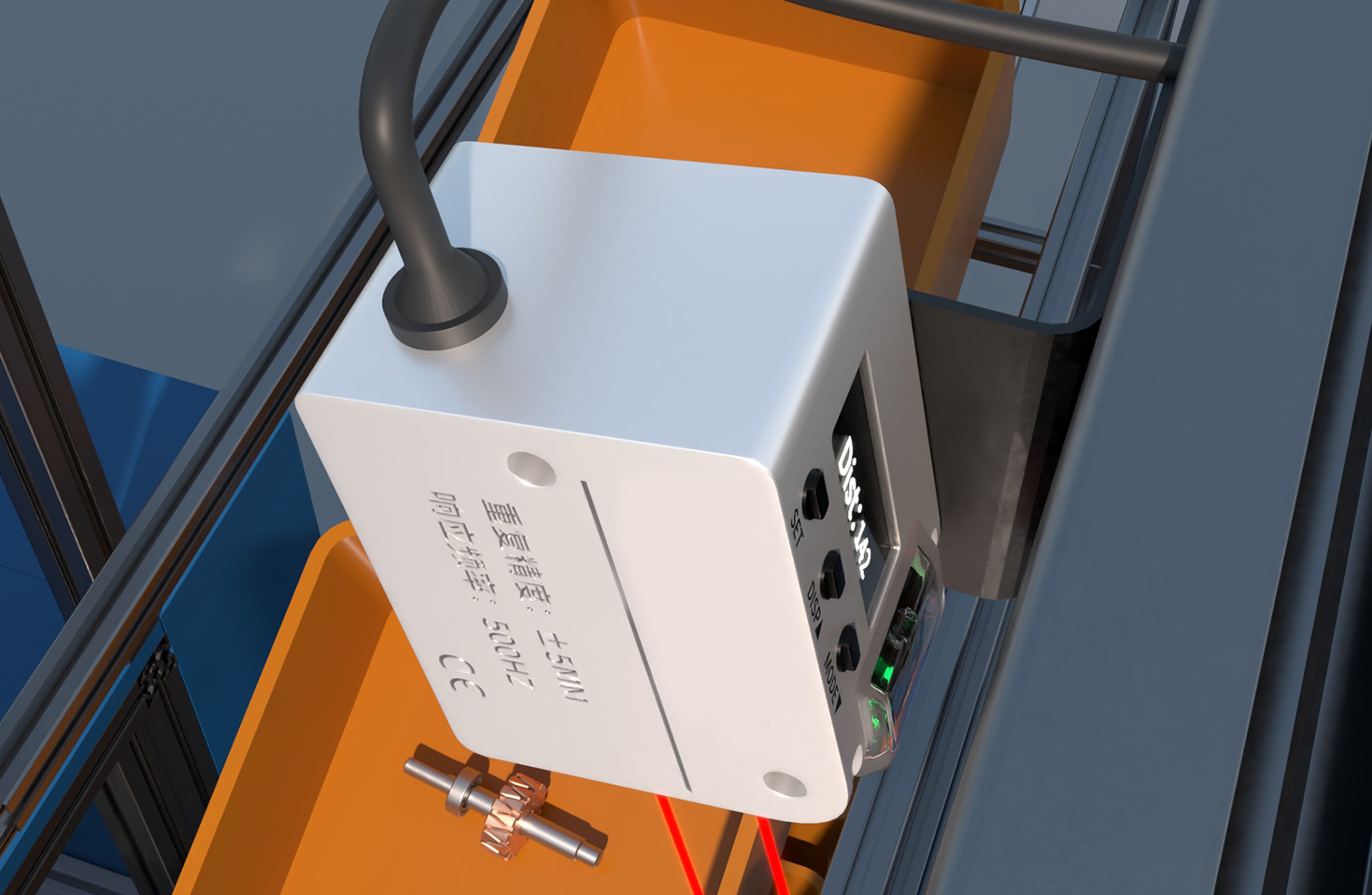
Emerging trends are pushing sensor technology toward greater integration and intelligence. The adoption of Industry 4.0 principles has led to smart sensors with embedded IoT capabilities. These sensors not only collect data but also communicate with central control systems via wireless networks, enabling predictive maintenance. For example, vibration sensors can detect abnormal oscillations in laser galvanometers, signaling the need for calibration before a failure occurs. Additionally, multispectral sensors are gaining traction, allowing lasers to process diverse materials by analyzing reflectance and absorption in real-time. This adaptability is key for flexible manufacturing lines.

Another frontier is the development of ultra-compact, high-speed sensors for ultrafast lasers used in micromachining. These lasers operate at femtosecond pulses, requiring sensors with nanosecond response times to capture transient phenomena. Innovations in MEMS (Micro-Electro-Mechanical Systems) and fiber-optic sensors are meeting these demands, offering high resolution without electromagnetic interference. As laser applications expand into fields like medical devices and electronics, such precision sensors will become even more critical.
In conclusion, sensors are the unsung heroes behind modern laser equipment, driving advancements in accuracy, efficiency, and safety. As laser technology continues to evolve—toward higher powers, faster speeds, and new wavelengths—sensor systems must keep pace. Future developments will likely focus on enhancing sensor durability in harsh environments, reducing costs through mass production, and leveraging AI for data analytics. For engineers and industry stakeholders, investing in cutting-edge sensor solutions is not just an option but a necessity to unlock the full potential of laser-based processes. By embracing these technologies, businesses can achieve superior product quality, minimize downtime, and ensure a safer workplace, solidifying their competitive edge in the global market.