Line laser sensors have become indispensable tools in modern industrial automation, offering high-precision, non-contact measurement capabilities across diverse applications. Their design integrates principles from optics, electronics, and software engineering to deliver reliable performance in challenging environments. This article explores the core design considerations, operational mechanisms, and practical implementations of line laser sensors, providing insights for engineers and technical professionals.
At the heart of a line laser sensor is a laser diode that emits a focused beam, which is then transformed into a thin, uniform line of light through cylindrical lenses or diffractive optical elements. This line is projected onto a target surface, and a high-resolution CMOS or CCD camera, positioned at a known angle, captures the reflected pattern. Any variation in the surface profile—such as height changes, gaps, or defects—causes distortions in the line shape. Advanced algorithms, often based on triangulation, analyze these distortions to generate precise 3D measurements. Key design parameters include laser wavelength (typically in the visible or near-infrared spectrum), power output, camera resolution, and field of view, all tailored to specific industrial needs like inspection, alignment, or profiling.

Environmental robustness is critical in sensor design. Industrial settings often involve vibrations, temperature fluctuations, and ambient light interference. Engineers address this by incorporating protective housings with IP ratings, temperature stabilization systems, and optical filters that isolate the laser wavelength. For instance, in automotive manufacturing, sensors must withstand factory-floor conditions while measuring weld seams or panel gaps with micron-level accuracy. Software plays an equally vital role, enabling real-time data processing, noise reduction, and integration with PLCs or robotic systems. Modern designs also leverage AI-driven analytics to enhance defect detection in quality control scenarios.
Applications span numerous sectors. In electronics assembly, line laser sensors verify component placement on PCBs, detecting soldering defects or misalignments. In logistics, they facilitate dimensioning and sorting of packages by scanning irregular shapes. The construction industry uses them for structural monitoring, such as assessing concrete flatness or alignment of beams. A notable case is in semiconductor fabrication, where sensors measure wafer thickness and topography without physical contact, preventing contamination. Each application demands customization; for example, food processing lines might require stainless steel enclosures for hygiene, while outdoor uses need enhanced resistance to moisture.
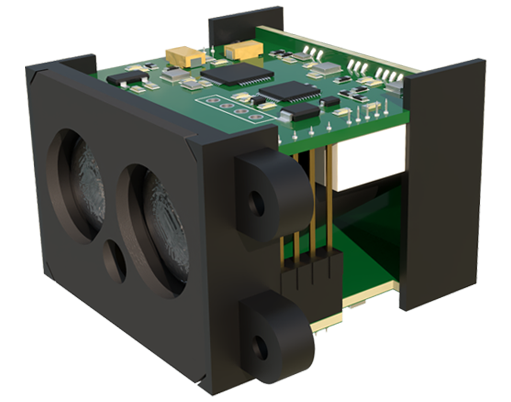
Future trends focus on miniaturization, higher speed, and smarter integration. Emerging technologies like MEMS-based lasers and embedded machine learning are pushing the boundaries, allowing sensors to operate in tighter spaces with lower power consumption. As Industry 4.0 evolves, line laser sensors will increasingly connect to IoT networks, enabling predictive maintenance and adaptive manufacturing. For engineers, mastering these design principles ensures optimized sensor selection and deployment, driving efficiency and innovation in automation projects. By balancing optical precision, mechanical durability, and computational intelligence, line laser sensors continue to redefine measurement standards in industrial ecosystems.