In the realm of industrial automation, precision and reliability are non-negotiable. Among the myriad of components that keep production lines humming, proximity switch counting sensors stand out as fundamental yet sophisticated workhorses. These devices are the silent sentinels, tirelessly monitoring, detecting, and counting objects without any physical contact, ensuring seamless operations from automotive assembly to food packaging.
At their core, proximity switch counting sensors are electronic devices designed to detect the presence or absence of an object within a specific range. Unlike mechanical limit switches that require physical touch, these sensors operate on various non-contact principles, primarily inductive, capacitive, photoelectric, and ultrasonic. For counting applications, the sensor's primary function is to generate a discrete electrical signal—a "pulse"—each time an object passes its detection field. This pulse is then transmitted to a programmable logic controller (PLC), counter, or data acquisition system, where it is tallied, providing real-time quantitative data on production volume, throughput, or component flow.
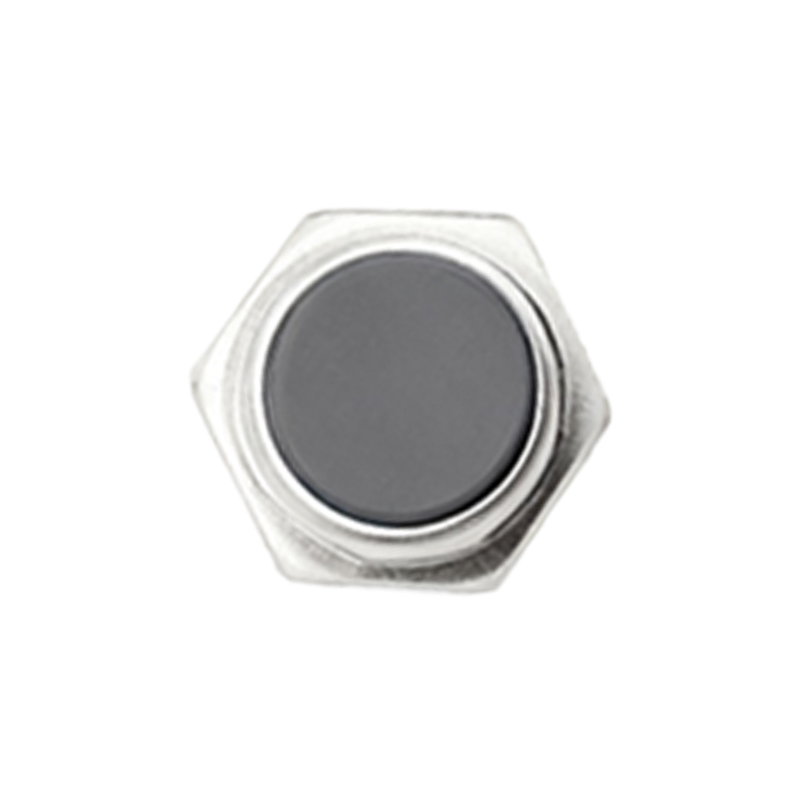
The choice of sensing technology is critical and depends on the application's specific demands. Inductive proximity sensors are the stalwarts for detecting metallic objects. They generate an electromagnetic field; when a metal target enters this field, it causes a change in oscillation, triggering the sensor's output. They are exceptionally robust, immune to environmental factors like dust, oil, or moisture, making them ideal for harsh industrial environments like metal stamping or machining centers. Capacitive sensors, on the other hand, can detect both metallic and non-metallic materials (plastics, wood, liquids, etc.) by sensing changes in capacitance. They are perfect for applications involving bottles on a conveyor, paper stacks, or level detection in silos. Photoelectric sensors use a beam of light (visible, infrared, or laser) and are excellent for long-range detection and sensing small or transparent objects. Ultrasonic sensors employ sound waves and are effective for distance measurement and detecting objects with complex shapes or in challenging conditions where other technologies might fail.
Integrating a proximity sensor into a counting system involves more than just mounting it near a conveyor. Key parameters must be meticulously configured. The sensing distance, or "range," must be appropriate for the target size and required mounting clearance. The response frequency dictates how quickly the sensor can detect successive objects, a vital factor for high-speed production lines. Environmental considerations are paramount: temperature extremes, chemical exposure, and mechanical vibrations can all impact sensor performance. Therefore, selecting a sensor with the correct Ingress Protection (IP) rating is essential for longevity.
The true power of these sensors is unlocked when their output signals are processed. A simple electromechanical counter can provide a basic tally. However, in modern Industry 4.0 setups, the sensor's pulse is fed into a PLC. Here, sophisticated logic can be programmed—not just to count, but to track rates (units per minute), control batch sizes, trigger alarms for jams or shortages, and integrate with Manufacturing Execution Systems (MES) for comprehensive production monitoring and traceability. This data becomes the lifeblood for efficiency analysis, predictive maintenance, and overall equipment effectiveness (OEE) calculations.
Real-world applications are vast and varied. In automotive manufacturing, inductive sensors count engine blocks or wheel hubs moving along an assembly line. In pharmaceutical packaging, capacitive or photoelectric sensors tally blister packs or vials, ensuring correct quantities are filled. In material handling, they monitor the flow of boxes on sortation conveyors. A less obvious but crucial application is in rotary systems, where a sensor counts the teeth of a gear or pulses from a rotary encoder to measure precise rotational speed or position, which is fundamental in synchronizing machinery.
Despite their robustness, challenges can arise. Electrical noise from motors or welders can cause false triggering. Incorrect mounting alignment can lead to missed counts. Accumulation of debris on the sensor face can attenuate signals. Regular maintenance, proper shielding of cables, and adherence to manufacturer guidelines for installation are crucial for mitigating these issues. Furthermore, the advent of IO-Link communication protocol is revolutionizing sensor integration. Smart proximity sensors with IO-Link can transmit not just a simple on/off signal, but a wealth of diagnostic data—operating temperature, signal strength, operating hours—enabling predictive maintenance and much easier parameter configuration.
In conclusion, proximity switch counting sensors are far more than simple object detectors. They are precise, reliable, and adaptable data points at the very edge of the industrial network. Their ability to provide accurate, real-time count data forms the foundation for automated control, process optimization, and intelligent decision-making. As factories become smarter and more connected, the role of these sensors will only grow in importance, evolving from mere components to intelligent nodes in an interconnected digital ecosystem, driving productivity and quality to new heights.