In the realm of industrial automation and machine safety, proximity sensors are indispensable components. These non-contact devices detect the presence or absence of an object within a defined sensing range without physical contact. Their ability to operate reliably in harsh environments—resisting dust, oil, and mechanical wear—makes them superior to mechanical limit switches. This article delves into six fundamental types of proximity sensors, explaining their operating principles, typical applications, and key considerations for selection.
The first and most common type is the Inductive Proximity Sensor. This sensor generates an electromagnetic field. When a metallic object (ferrous or non-ferrous) enters this field, it induces eddy currents within the object, causing a change in the sensor's oscillation amplitude. This change is detected and triggers a switching output. Inductive sensors are ideal for detecting metals in applications like machine tools, robotic arms, and conveyor systems. Their sensing range is relatively short, typically up to 60 mm, and they are unaffected by non-metallic materials like plastic or wood.
Second are Capacitive Proximity Sensors. These sensors can detect both metallic and non-metallic objects, including liquids, powders, plastics, and glass. They function by generating an electrostatic field. Any object that enters this field alters the capacitance of the sensor's circuit, triggering an output state change. This makes them versatile for level detection in tanks (e.g., detecting liquid or granular materials), material handling, and presence detection of non-metallic products. They generally offer a slightly longer range than inductive types for certain materials but can be influenced by environmental factors like humidity.
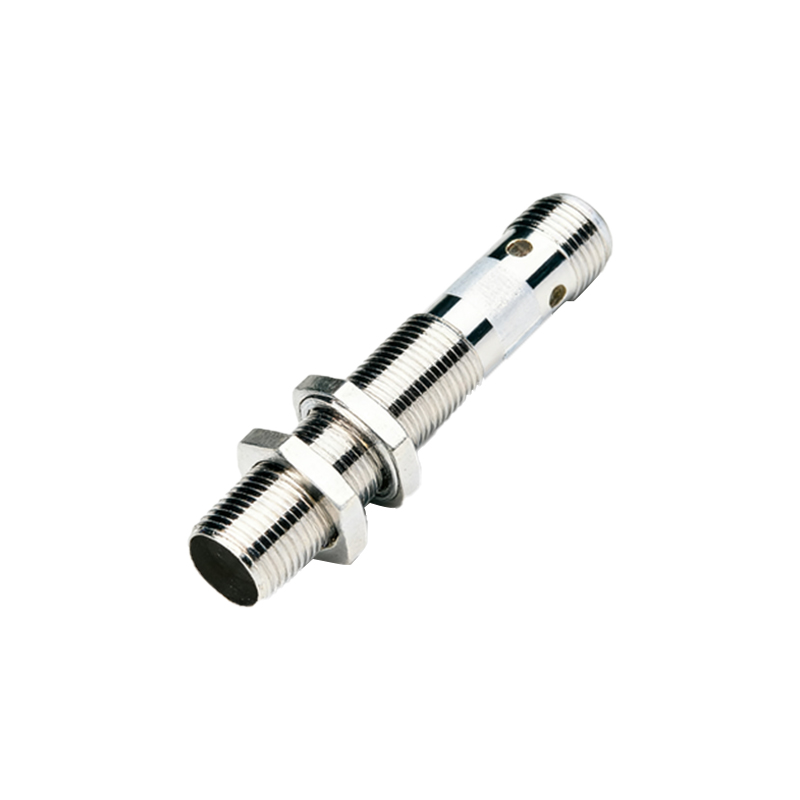
The third category is Ultrasonic Proximity Sensors. These devices operate on the principle of sound wave echo. The sensor emits high-frequency ultrasonic pulses and measures the time taken for the echo to return from a target object. This time-of-flight measurement allows them to calculate distance, making them excellent not just for presence detection but also for precise distance measurement and level sensing. They can detect virtually any material, regardless of color or transparency, and are used in parking assistance systems, bulk material level control, and collision avoidance.
Photoelectric Sensors represent the fourth major type. They use a beam of light (visible, infrared, or laser) to detect objects. They come in several configurations: through-beam (separate emitter and receiver), retro-reflective (uses a reflector), and diffuse (reflective), where the sensor and target are on the same side. Photoelectric sensors offer the longest sensing ranges, sometimes exceeding 100 meters for through-beam types. They are perfect for detecting small objects, transparent materials, and for applications requiring long-range detection, such as packaging lines and object counting.
Fifth, we have Magnetic Proximity Sensors (often called reed switches or Hall effect sensors). These detect the presence of a permanent magnet. Reed switches use hermetically sealed ferromagnetic reeds that close or open in the presence of a magnetic field. Hall effect sensors produce a voltage output proportional to the magnetic field strength. They are extremely reliable, consume very little power, and are used in applications where only a magnet can be attached to the target, such as in cylinder position sensing, door/window security systems, and low-speed rotational encoding.
Finally, the sixth type is Eddy-Current Proximity Sensors. A specialized subset of inductive sensors, they are designed for high-precision measurement of displacement, position, or vibration of conductive metallic targets. They operate at very high frequencies and can detect minute changes in the gap between the sensor probe and the target. This makes them critical in precision manufacturing, vibration monitoring of rotating machinery like turbines and shafts, and in aerospace applications for monitoring bearing clearance.
Selecting the right proximity sensor requires careful analysis of the target material, required sensing distance, environmental conditions (temperature, contaminants), output type (PNP/NPN, analog, IO-Link), and installation constraints. Understanding the distinct advantages and limitations of these six sensor technologies—Inductive, Capacitive, Ultrasonic, Photoelectric, Magnetic, and Eddy-Current—empowers engineers to design more efficient, reliable, and intelligent automated systems. Their continued evolution, with features like enhanced noise immunity, smarter diagnostics, and industrial networking capabilities, ensures they remain at the forefront of industrial innovation.