Laser parallel sensors, a cornerstone technology in modern industrial automation, represent a sophisticated class of photoelectric sensors designed for precise, non-contact detection and measurement. Unlike traditional single-spot sensors, these devices project a precise, collimated line or plane of laser light, enabling simultaneous detection across a defined area. This capability makes them indispensable for applications requiring edge detection, width measurement, part presence verification over a broad surface, and precise positioning where a single point is insufficient.
The fundamental operating principle hinges on the triangulation method. The sensor emits a parallel laser line onto the target object. A receiving element, typically a CMOS or CCD array, captures the reflected light pattern. When an object intersects the laser plane, it creates a distinct shadow or a change in the reflected line's position. The sensor's internal processor analyzes this change. For measurement tasks, the displacement of the line's edges is calculated to determine dimensions like width or diameter. For presence detection, the simple interruption or alteration of the line pattern triggers an output signal. Key components include the laser diode for generating a stable, visible (often red) or invisible line, precision optics for collimating the light into a parallel plane, and a high-resolution receiver with advanced algorithms for reliable interpretation in varying environmental conditions.

The advantages of laser parallel sensors over conventional methods are substantial. Their non-contact nature eliminates mechanical wear and prevents damage to delicate objects. The line projection allows for inspection of an entire profile at once, significantly increasing inspection speed and throughput compared to scanning single-point sensors. They offer high resolution and repeatability, often in the micron range, making them suitable for stringent quality control. Furthermore, their visible laser line simplifies setup and alignment, reducing commissioning time.
In practical industrial applications, laser parallel sensors are ubiquitous. In the automotive sector, they verify the correct assembly of components like gaskets or seals by detecting their presence along a continuous seam. In electronics manufacturing, they measure the width of circuit boards or the placement of components. Packaging lines utilize them to check fill levels in transparent containers by detecting the position of the liquid meniscus against the laser line, or to ensure labels are applied squarely. In material handling, they detect the height of stacked materials or the overhang of packages on conveyor belts, preventing jams. Robotic guidance systems employ them for precise bin-picking by creating a 3D profile of randomly oriented parts.
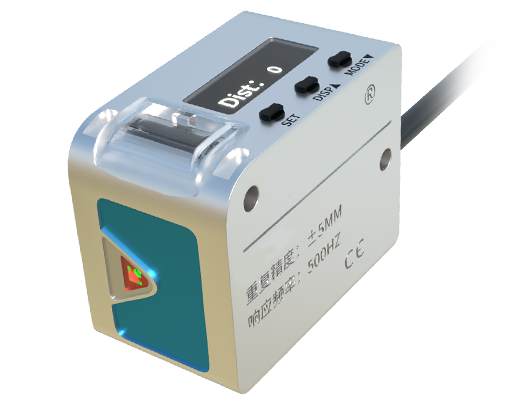
Selecting the appropriate laser parallel sensor requires careful consideration of several parameters. The measuring range and stand-off distance define the operational envelope. The laser line length must be sufficient to cover the target's width. Resolution and repeatability are critical for measurement accuracy. Response time must match the production line speed. Environmental factors are crucial; sensors with high IP ratings (e.g., IP67) are necessary for dusty or washdown environments. The type of output (digital switch, analog voltage/current, or serial communication like IO-Link) must integrate with the existing control system. Finally, the background suppression capability is vital to ignore reflections from shiny or distant surfaces, ensuring stable detection.
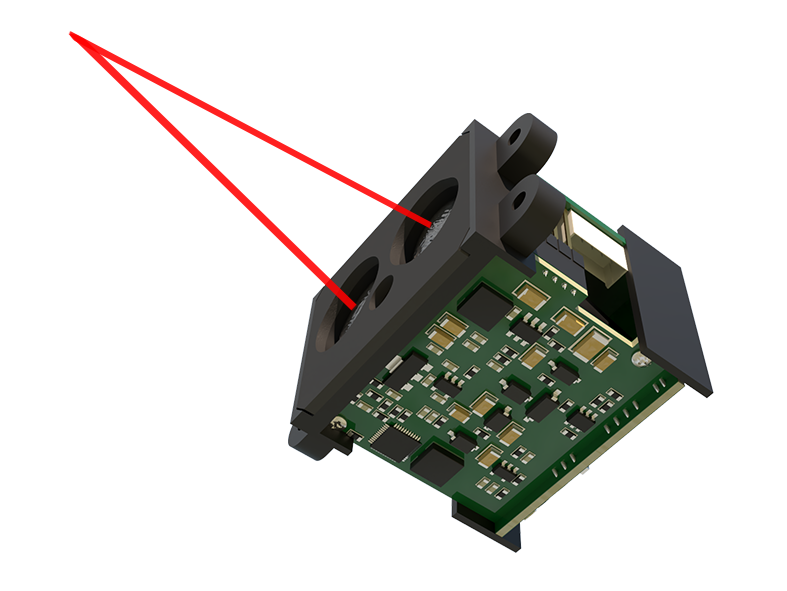
Integration and calibration are straightforward but vital steps. Mounting must be rigid to prevent vibration-induced errors. The sensor should be positioned so the laser plane is perpendicular to the direction of measurement for optimal accuracy. Most modern sensors feature teach-in functions or software interfaces for easy configuration of switching thresholds or measurement benchmarks. Regular maintenance primarily involves keeping the lens clean from dust and debris to maintain optical performance.
Looking ahead, the evolution of laser parallel sensors is intertwined with Industry 4.0. Integration of smarter onboard processors and AI-driven image analysis will enable more complex feature recognition and defect classification directly at the sensor level. Enhanced connectivity via Ethernet-APL or OPC UA will facilitate seamless data integration into plant-wide monitoring systems for predictive maintenance and process optimization. Furthermore, miniaturization and reduced power consumption will open new applications in mobile robotics and compact machinery.
In conclusion, laser parallel sensors are powerful, versatile tools that solve complex detection and measurement challenges with speed and precision. By understanding their operating principles, key benefits, and application criteria, engineers and system integrators can effectively leverage this technology to enhance automation efficiency, improve product quality, and drive innovation in manufacturing processes across diverse industries.