In modern industrial manufacturing, precision thickness measurement is a critical parameter for quality control, process optimization, and material consistency. Laser sensors have emerged as a premier non-contact technology for this purpose, offering high accuracy, speed, and reliability across diverse applications from metal rolling and plastic film production to semiconductor wafer inspection.
The fundamental principle behind laser-based thickness gauging typically involves triangulation or time-of-flight (ToF) methods. In triangulation-based sensors, a laser diode projects a focused beam onto the target surface. The reflected light is captured by a receiving element (like a CCD or PSD array) at a known angle. Any variation in the target's surface position—directly correlating to thickness when measuring from a fixed reference—causes a shift in the reflected light spot on the receiver. This displacement is calculated with sophisticated algorithms to determine the distance or thickness with micron-level resolution. Time-of-flight sensors, often used for larger measurement ranges, calculate distance by measuring the round-trip time of a laser pulse.
Key advantages of laser thickness sensors are numerous. Their non-contact nature eliminates mechanical wear, prevents deformation of delicate materials, and allows measurement on hot, moving, or hazardous surfaces. They provide exceptionally fast response times, enabling real-time, in-line measurement for closed-loop process control. This allows for immediate adjustments in production lines, such as calibrating rollers in a steel mill to maintain uniform sheet thickness, thereby reducing material waste and ensuring product specifications. Modern laser sensors are also highly resistant to environmental interference like ambient light, vibration, and temperature fluctuations, thanks to advanced optical designs and digital signal processing.
Industrial deployment requires careful consideration of several factors. The material's surface properties—such as color, reflectivity, roughness, and transparency—can significantly impact measurement accuracy. For instance, highly reflective or transparent materials may require sensors with specialized laser wavelengths or filtering systems. Many contemporary sensors feature automatic gain control and surface compensation algorithms to mitigate these effects. Installation geometry is another crucial aspect; sensors must be precisely aligned, and in dual-sensor setups for thickness measurement (where two sensors measure from opposite sides to a common reference), synchronization is paramount to eliminate errors from target movement.

Applications are vast. In metals manufacturing, laser sensors continuously monitor the thickness of strips and plates during hot and cold rolling processes. In plastics and films, they ensure consistent extrusion coating and laminating thickness. The paper industry relies on them for caliper control, while the glass industry uses them to verify flat panel and automotive glass thickness. Furthermore, in battery production, laser sensors precisely measure electrode coating thickness, a vital parameter for performance and safety.
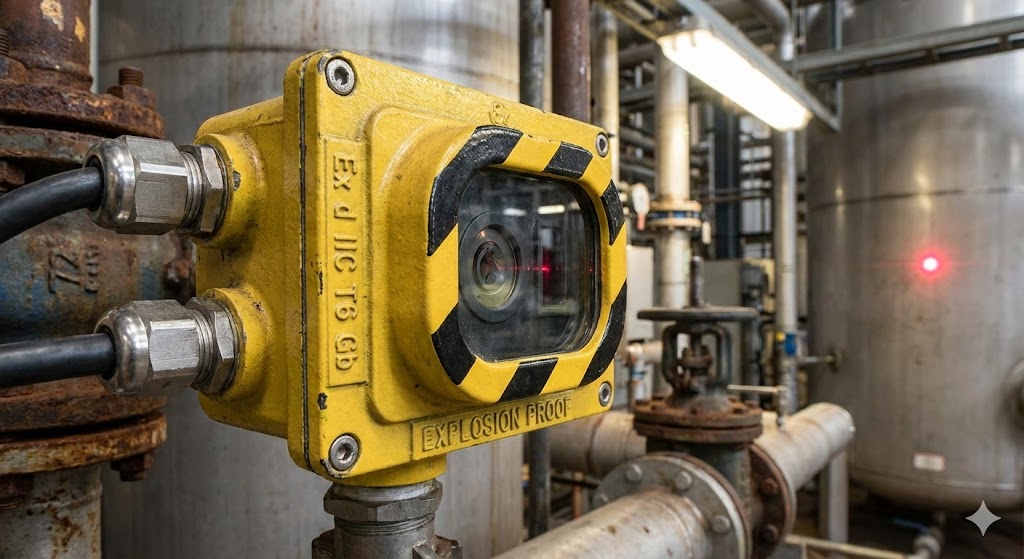
Integration with factory automation systems is seamless via standard industrial communication protocols like Ethernet/IP, Profinet, or analog outputs. This enables data logging, statistical process control (SPC), and integration with Manufacturing Execution Systems (MES) for comprehensive quality traceability. Regular calibration against certified standards is recommended to maintain long-term accuracy.
Looking ahead, advancements in laser diode technology, smarter onboard processors, and integration with machine vision and AI for defect classification are pushing the boundaries. These developments promise even greater precision, adaptability to complex surfaces, and predictive maintenance capabilities. For engineers and plant managers, selecting the right laser thickness sensor involves a detailed analysis of the specific material, required accuracy, measurement range, environmental conditions, and integration needs. Partnering with experienced sensor suppliers for application testing is often a prudent step to ensure optimal performance and return on investment in demanding industrial environments.