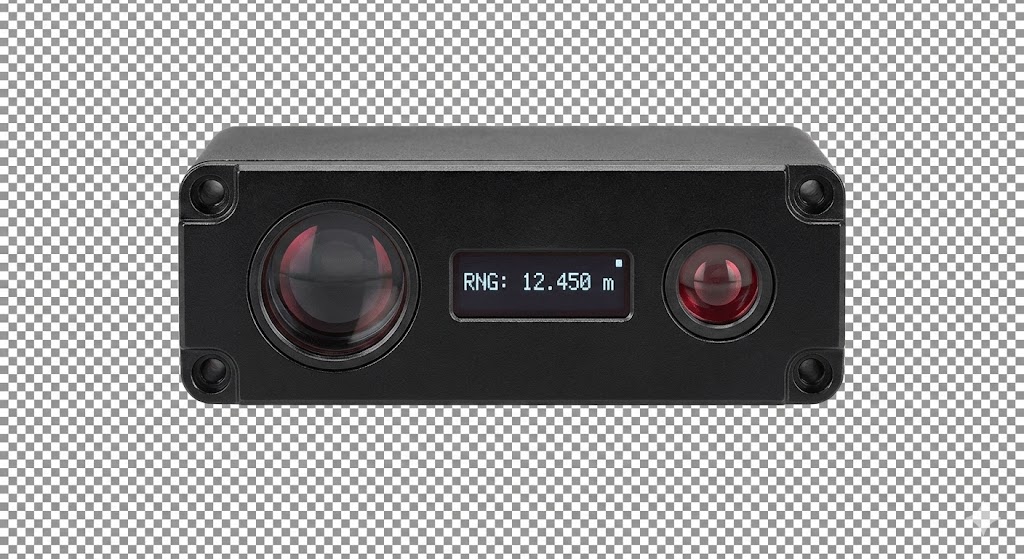
In the realm of modern underground engineering and infrastructure management, tunnel monitoring laser sensors have emerged as indispensable tools for ensuring structural integrity, operational safety, and long-term asset performance. These advanced devices leverage laser technology—typically employing time-of-flight, phase-shift, or triangulation principles—to deliver non-contact, high-precision measurements of critical parameters such as convergence, deformation, displacement, and settlement within tunnel environments.
The operational core of a tunnel monitoring laser sensor involves emitting a focused laser beam towards a target surface or reflective prism installed on the tunnel lining. By analyzing the reflected signal, the sensor calculates distances with sub-millimeter accuracy, often in real-time. This capability is vital for detecting minute movements that may indicate stress, ground instability, or potential failure zones. Systems are commonly deployed in networks, providing continuous, automated surveillance and generating vast datasets for trend analysis. Compared to traditional manual surveying methods, laser-based monitoring offers significant advantages: it eliminates human error, functions effectively in low-visibility or hazardous conditions, and enables remote access to data via integrated communication modules (e.g., cellular, fiber-optic, or LoRaWAN networks).
Key applications span transportation tunnels (railway, metro, highway), hydropower water conduits, mining galleries, and utility passages. For instance, in urban metro systems, sensors track lining deformation during adjacent construction activities or due to traffic vibrations. In rock tunnels, they monitor convergence during and after excavation, informing support system adjustments. The integration of these sensors with Building Information Modeling (BIM) and Geographic Information Systems (GIS) platforms further enhances data visualization and predictive maintenance strategies.
However, implementing tunnel laser sensors presents technical challenges. Environmental factors like dust, moisture, condensation, and temperature fluctuations can affect laser propagation and signal quality. Robust sensor housings with appropriate Ingress Protection (IP) ratings, along with periodic calibration and cleaning, are essential for reliable operation. Additionally, data management requires sophisticated software to filter noise, validate measurements, and trigger alerts based on predefined thresholds. Cybersecurity measures are also crucial as systems become more interconnected.

Looking forward, innovations in sensor technology are driving greater adoption. The development of multi-functional laser scanners that capture 3D profiles, the use of fiber Bragg grating (FBG) sensors integrated with laser interferometry for strain measurement, and advancements in artificial intelligence for anomaly detection are expanding monitoring capabilities. These trends align with the growing emphasis on smart infrastructure and resilience against natural disasters or climate-induced ground movements.
In conclusion, tunnel monitoring laser sensors represent a critical convergence of photonics, civil engineering, and data science. They provide a proactive approach to risk management, helping engineers and asset owners make informed decisions, optimize maintenance schedules, and ultimately extend the service life of underground structures. As tunneling projects grow in scale and complexity—particularly in seismically active regions or densely populated urban areas—the role of precise, reliable laser-based monitoring will only become more central to ensuring public safety and infrastructure sustainability.