In the realm of industrial automation and machine control, proximity sensors are indispensable components. But what exactly is a proximity sensor? Fundamentally, a proximity sensor is a non-contact electronic device designed to detect the presence or absence of an object within its sensing range without any physical contact. It converts information about the presence or distance of a target object into an electrical signal. This capability makes them crucial for tasks like object detection, positioning, counting, and inspection in harsh, fast-paced, or precise environments where mechanical contact is undesirable or impossible.
The core principle behind most proximity sensors involves generating an electromagnetic field, beam, or acoustic wave and then looking for changes in the field or return signal. The absence or presence of an object causes a detectable change, which the sensor's circuitry interprets as a switching signal. This signal is then sent to a controller like a PLC (Programmable Logic Controller) to trigger a specific action, such as stopping a conveyor belt, activating a robotic arm, or updating a counter.
There are several primary types of proximity sensors, each based on different physical principles and suited for specific applications.
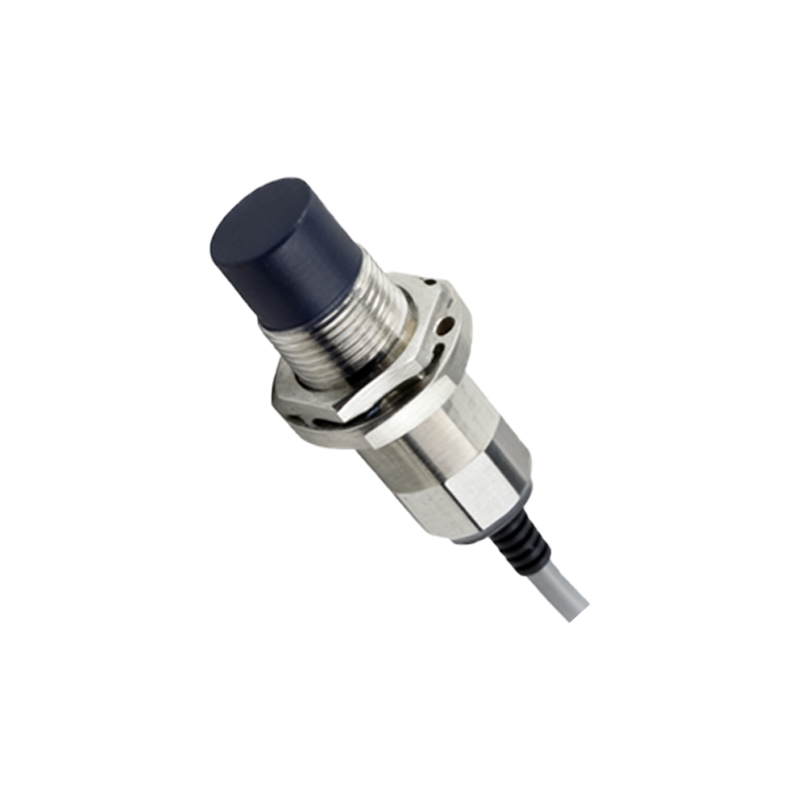
Inductive Proximity Sensors: These are among the most common types in industrial settings. They generate an oscillating electromagnetic field from a coil at the sensing face. When a metallic object (ferrous or non-ferrous) enters this field, it induces eddy currents within the object, which causes a change in the oscillation amplitude. The sensor detects this change and triggers its output switch. Inductive sensors are robust, reliable, and excellent for detecting metals but are ineffective for non-metallic materials.
Capacitive Proximity Sensors: These sensors can detect both metallic and non-metallic objects, including liquids, powders, plastics, and wood. They operate by generating an electrostatic field. When any object with a dielectric constant different from air enters this field, it changes the capacitance of the sensor's circuit, triggering the output. They are often used for level detection in tanks, material handling, and detecting non-metallic products.
Ultrasonic Proximity Sensors: These sensors use sound waves beyond the human hearing range. They emit ultrasonic pulses and measure the time it takes for the echo to return after bouncing off a target object. This "time-of-flight" measurement allows them to not only detect presence but also precisely measure distance. They are effective for detecting objects of various materials, shapes, and colors, and are commonly used in level measurement, collision avoidance, and distance monitoring.
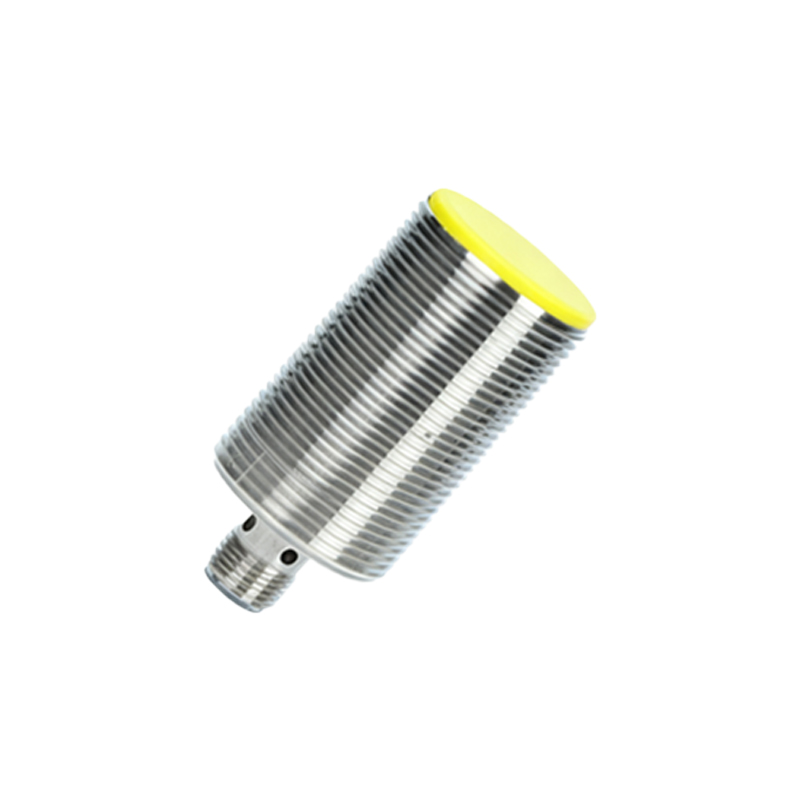
Photoelectric Sensors: While sometimes categorized separately, they function as proximity devices. They consist of a light emitter (usually LED) and a receiver. They detect objects by either interrupting a light beam (through-beam), reflecting light off the target (retro-reflective), or detecting light diffused from the target's surface (diffuse reflective). Photoelectric sensors offer long sensing ranges and can detect virtually any material.
Magnetic Proximity Sensors (Reed Switches): These simple sensors are activated by the presence of a permanent magnet. They contain two ferromagnetic reeds sealed in a glass tube. When a magnet approaches, the reeds attract each other and make contact, closing the switch. They are often used for door/window position detection and in conjunction with moving machine parts that have a magnet attached.
The selection of a proximity sensor depends on numerous factors: the material of the target object (metal, plastic, liquid), the required sensing distance, the operating environment (temperature, humidity, presence of chemicals), the required output type (PNP/NPN, analog, IO-Link), and the speed of detection.
Key advantages of using proximity sensors include their non-contact nature, which eliminates mechanical wear and tear; high reliability and long operational life; fast response times suitable for high-speed machinery; and ability to function in dirty, oily, or wet conditions where optical or mechanical switches would fail. They form the foundational sensory layer in modern manufacturing, packaging, automotive assembly, and material handling systems, enabling precision, efficiency, and safety.
In conclusion, a proximity sensor is far more than a simple switch. It is a sophisticated, application-specific device that provides essential feedback for automated systems. Understanding their types, principles, and capabilities is fundamental for engineers and technicians designing, maintaining, or optimizing industrial automation processes. Their role in enabling smarter, more responsive, and more efficient manufacturing continues to grow with the advancement of Industry 4.0 and the Industrial Internet of Things (IIoT).