Laser on/off sensors, also known as laser presence sensors or laser beam sensors, are pivotal components in modern industrial automation and control systems. These devices operate by emitting a focused laser beam toward a target or a receiver. The fundamental principle involves detecting the presence or absence of an object by monitoring the interruption or restoration of this laser beam. Unlike traditional mechanical limit switches or photoelectric sensors using diffuse or retro-reflective methods, laser sensors offer significantly higher precision, longer sensing ranges, and exceptional reliability in challenging environments.
The core components of a typical laser on/off sensor include a laser diode emitter, a photodetector receiver (which can be integrated into a single unit for through-beam mode or separate for opposed mode), signal processing circuitry, and an output switching unit. The laser diode generates a coherent, narrow-wavelength light beam, usually in the visible red or infrared spectrum. This coherence allows the beam to travel long distances with minimal divergence, making it ideal for applications requiring precise detection over several meters. When an object passes through the beam's path, it interrupts the light reaching the receiver. The photodetector senses this change in light intensity, triggering the internal circuitry to change the state of its output—typically switching from "on" to "off" or vice-versa. This output is a clean, digital signal that can directly interface with programmable logic controllers (PLCs), robotic controllers, or other industrial machinery to initiate actions like counting, sorting, stopping a conveyor, or triggering a safety interlock.
Key advantages of laser sensors drive their widespread adoption. First is their exceptional accuracy and resolution. The small, focused spot size of a laser beam enables detection of very small objects or precise edge positioning that would be impossible with standard photoelectric sensors. Second, they offer long sensing ranges, often exceeding 100 meters in through-beam configurations, facilitating use in large-scale installations like warehouse automation or material handling systems. Third, they exhibit high immunity to ambient light interference and environmental factors such as dust, steam, or vibration, thanks to the modulated laser signal and advanced filtering techniques. This makes them suitable for harsh conditions in industries like metalworking, packaging, and automotive assembly.

Common configurations include Through-Beam, Retro-reflective, and Diffuse Reflective. The Through-Beam type, with separate emitter and receiver units, provides the longest range and highest reliability. The Retro-reflective type uses a single housing containing both emitter and receiver, with a reflector bouncing the beam back; it offers easier alignment. The Diffuse Reflective type detects light reflected directly from the target object itself, useful for varied surface colors and textures, though with a shorter range.
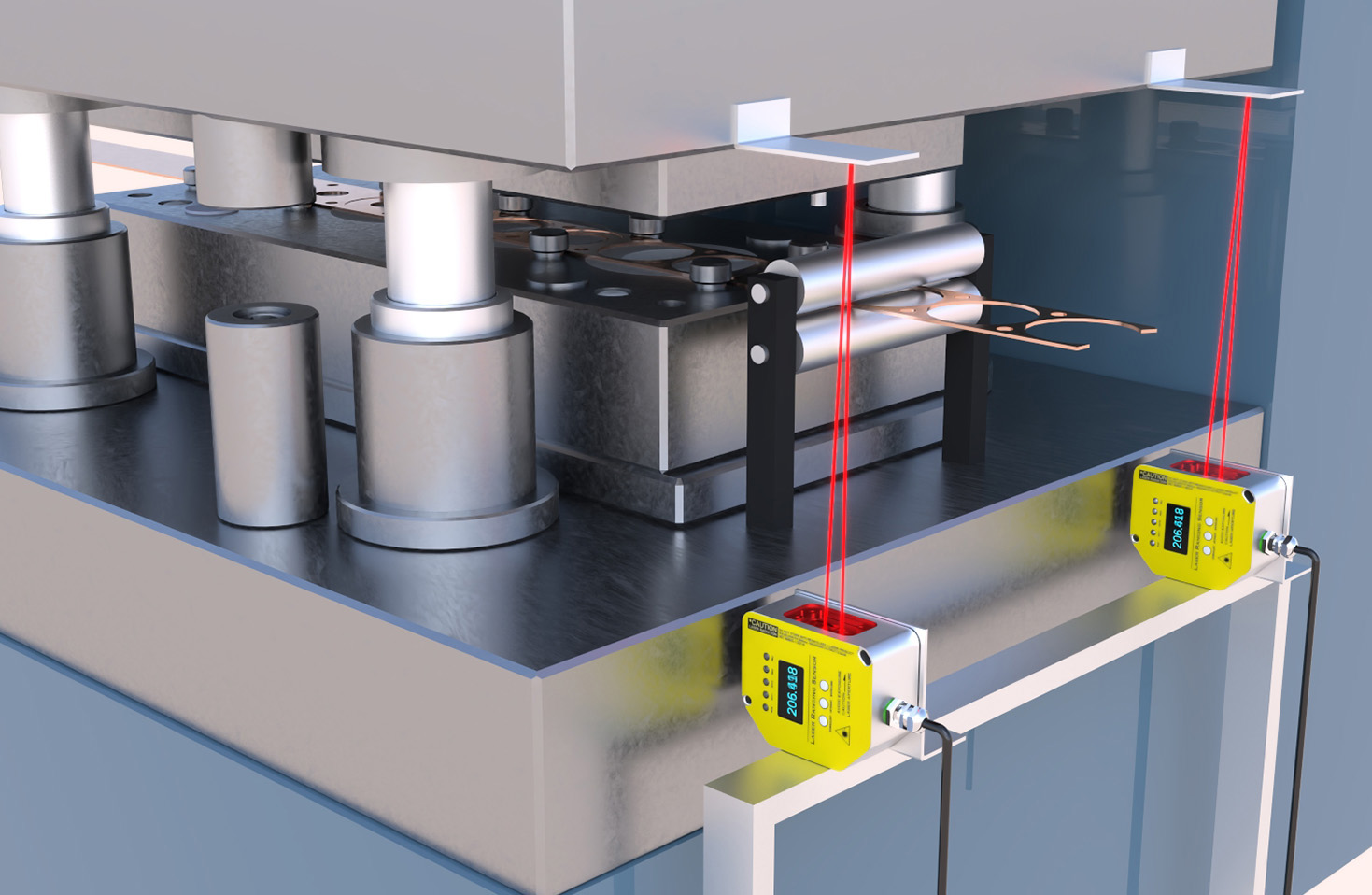
Applications are vast and critical. In automated assembly lines, they verify part presence before a welding or machining operation. In packaging machinery, they ensure correct carton flap position or label placement. In logistics, they count items on high-speed conveyors. In safety systems, they create invisible light curtains to protect personnel around hazardous machinery. Their role in quality control is indispensable, such as detecting minute defects or verifying dimensions.
When selecting a laser on/off sensor, engineers must consider factors like sensing range, required spot size, response time, environmental protection rating (IP67/IP69K for washdown areas), output type (PNP/NPN, relay), and mounting flexibility. Proper alignment is crucial for optimal performance, and many modern sensors feature built-in alignment aids like visible laser beams or LED indicators. Regular maintenance involves lens cleaning and verifying alignment to prevent false triggers.
In conclusion, laser on/off sensors represent a sophisticated, reliable solution for object detection and positioning tasks where precision, speed, and environmental robustness are non-negotiable. Their integration continues to enhance efficiency, safety, and quality across the manufacturing and industrial landscape, solidifying their status as a cornerstone of smart automation. As technology advances, we can expect further miniaturization, integration with IO-Link for digital communication and diagnostics, and enhanced intelligence for more adaptive sensing capabilities.