In the realm of industrial automation and control, the ability to detect the presence or absence of an object without physical contact is fundamental. Inductive sensors and proximity switches are the cornerstone technologies enabling this capability, offering robust, reliable, and non-contact sensing for a vast array of applications. This article delves into the operational principles, key characteristics, common applications, and critical selection criteria for these indispensable components.
At its core, an inductive proximity sensor operates on the principle of electromagnetic induction. The sensor contains a coil wound around a ferrite core, which is part of an oscillator circuit. When an alternating current flows through this coil, it generates an alternating electromagnetic field at the active face of the sensor. When a metallic object (the "target") enters this field, eddy currents are induced on the surface of the target. These eddy currents draw energy from the oscillator, resulting in a reduction of its oscillation amplitude. This change in amplitude is detected by a threshold circuit, which subsequently triggers a change in the sensor's output state—typically switching a solid-state output (like a PNP or NPN transistor) from OFF to ON, or vice versa. It is crucial to note that standard inductive sensors are designed to detect ferrous and non-ferrous metals; they cannot detect non-metallic materials like plastic, wood, or glass.
The term "proximity switch" is often used interchangeably with "inductive sensor," though it broadly emphasizes the switching function. These devices are celebrated for their durability. With no moving mechanical parts to wear out, they offer exceptionally long service life, high switching frequencies, and resistance to vibration, dirt, oil, and moisture when properly housed. Key performance specifications include sensing distance (nominal and effective), repeat accuracy, hysteresis (the difference between the switch-on and switch-off points), and switching frequency. Housing materials, typically nickel-plated brass, stainless steel, or PBT plastic, are chosen based on the environmental conditions.
Applications for inductive sensors are ubiquitous across manufacturing. They are used for simple object detection (e.g., confirming a part is in place on a conveyor), counting (e.g., bottles on a line), position sensing (e.g., end-of-travel limits on a cylinder), and speed monitoring (by detecting gear teeth or holes in a rotating disc). In metal machining, they verify tool presence or breakage. Their robustness makes them ideal for harsh environments found in automotive, packaging, and material handling industries.
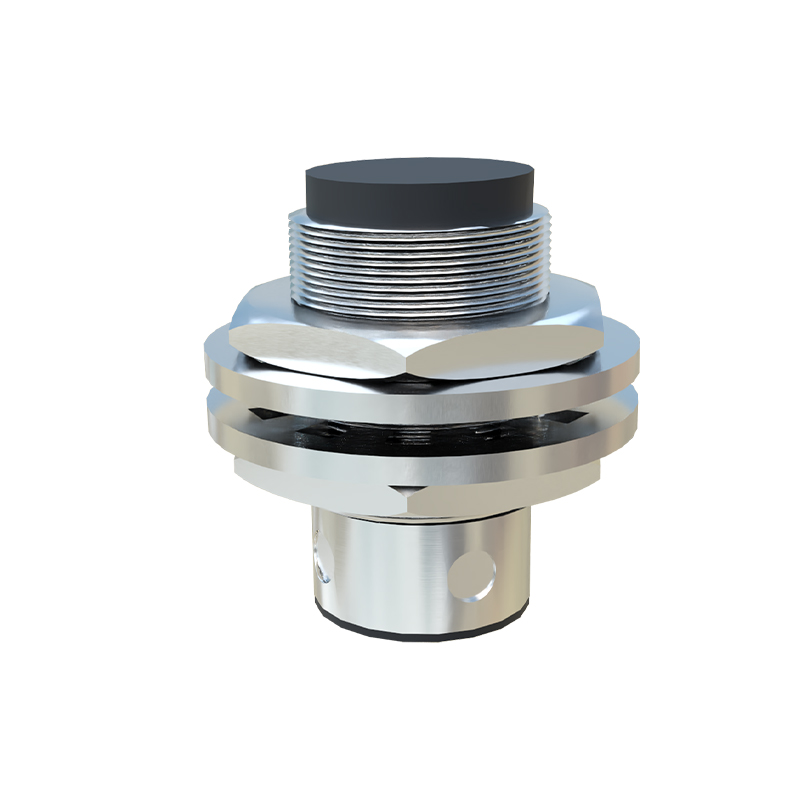
Selecting the right inductive sensor requires careful consideration of several factors:
1. Target Material: Standard sensors work for steel, aluminum, copper, etc. For specific applications, special versions like "non-ferrous only" or "all-metal" sensors are available.
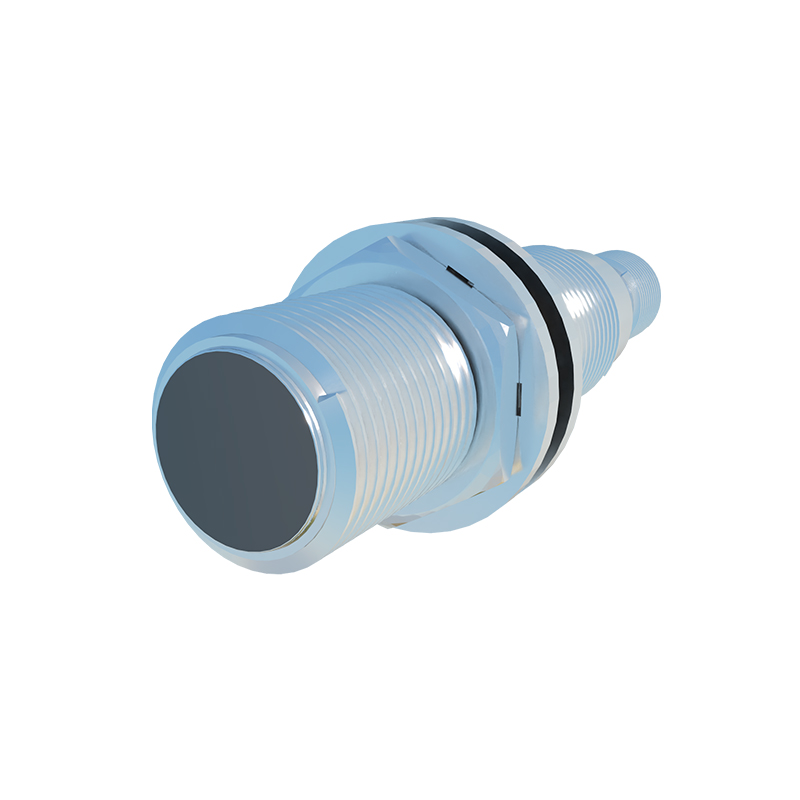
2. Sensing Distance: The required distance between the sensor face and the target. Always consider a safety factor, as the effective sensing distance can be reduced by target size, shape, and temperature.
3. Output Type: Two-wire AC/DC, three-wire DC (PNP-sourcing or NPN-sinking), or four-wire versions with both NO and NC contacts. The choice must match the control system's input card (sinking or sourcing).
4. Housing Style: Cylindrical (e.g., M8, M12, M18, M30 threads), rectangular, or slot-style. The form factor must suit the mounting constraints.
5. Environmental Ratings: Ingress Protection (IP) rating (e.g., IP67 for dust and temporary immersion), temperature range, and resistance to specific chemicals are critical for reliability.
6. Output Function: Normally Open (NO), Normally Closed (NC), or programmable.
7. Shielding: Shielded (flush-mountable) sensors can be mounted flush in metal without affecting their field, while unshielded sensors offer a longer sensing range but require a non-metallic surround.
Advanced variants extend functionality. Analog inductive sensors provide a continuous current or voltage output proportional to the distance to the target, enabling precise position measurement. Factor-1 sensors are calibrated for steel but provide a reduced sensing factor (e.g., 0.3 to 0.5) for non-ferrous metals, which is important for consistent performance with mixed materials. High-temperature sensors are designed for foundries or welding lines.
In conclusion, inductive sensors and proximity switches are vital, versatile tools in electrical and control engineering. Their non-contact operation, combined with high reliability and speed, makes them superior to mechanical limit switches in most industrial scenarios. A thorough understanding of their working principle, coupled with a methodical approach to selection based on the specific application requirements—target, distance, environment, and electrical interface—is essential for designing efficient, dependable, and maintenance-friendly automated systems. Proper installation, respecting the specified mounting clearances and