In the rapidly evolving landscape of industrial automation, robotics, and consumer electronics, the demand for compact, high-precision sensing solutions has never been greater. Among these, ultra-thin proximity sensors have emerged as critical components, enabling sophisticated detection capabilities in space-constrained environments. This article delves into the various types of ultra-thin proximity sensors, their underlying technologies, key applications, and essential considerations for selection and integration.
Ultra-thin proximity sensors are characterized by their minimal thickness, often measuring less than a few millimeters, while maintaining robust performance. Their slim profile allows for seamless integration into thin devices and tight mechanical assemblies where traditional sensors cannot fit. The primary technologies driving these sensors include inductive, capacitive, and optical principles, each suited to specific material detection and environmental conditions.
Inductive ultra-thin proximity sensors are predominantly used for detecting metallic objects. They operate by generating an electromagnetic field; when a metal target enters this field, it induces eddy currents that alter the sensor's oscillation, triggering a detection signal. These sensors are ideal for high-speed counting, position verification, and end-of-travel detection in machinery. Their thin variants are commonly embedded in mobile device assemblies, precision robotic grippers, and thin automotive panels for non-contact sensing.
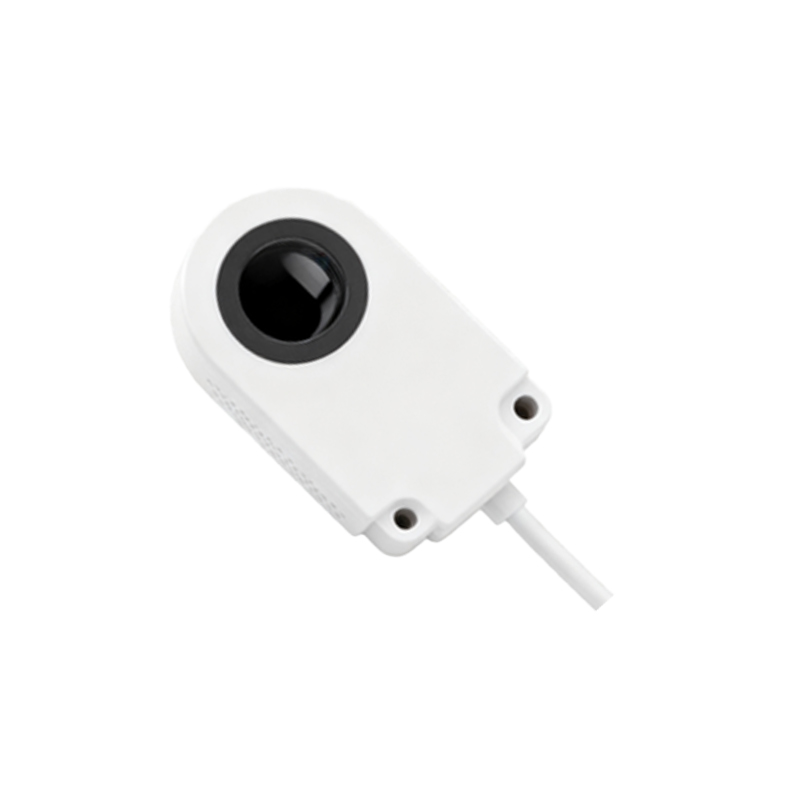
Capacitive ultra-thin proximity sensors, on the other hand, can detect both metallic and non-metallic materials, including liquids, plastics, and organic substances. They function by measuring changes in capacitance caused by the presence of a target object within an electrostatic field. This makes them versatile for applications like liquid level sensing in thin containers, touch-sensitive interfaces on ultra-slim displays, and presence detection of materials in packaging lines. Their ability to sense through non-conductive barriers adds to their flexibility in design.
Optical ultra-thin proximity sensors utilize infrared (IR) or laser light to detect objects. They consist of a light emitter and a receiver packaged into an extremely thin housing. When an object interrupts or reflects the light beam, the sensor outputs a signal. These sensors excel in applications requiring precise distance measurement or detection of small, fast-moving objects. They are extensively used in smartphones for screen blanking during calls, in thin medical devices for fluid detection, and in automated equipment for precise object positioning.
Beyond these core types, recent advancements have led to the development of hybrid and MEMS-based ultra-thin sensors. These integrate multiple sensing principles or micro-electromechanical systems to achieve even smaller form factors with enhanced functionality, such as multi-object detection or immunity to environmental interference like dust and moisture.
Selecting the appropriate ultra-thin proximity sensor requires careful analysis of several parameters. Sensing distance, or the maximum range at which the sensor can reliably detect a target, is crucial and often limited in thin designs due to physical constraints. The target material composition directly influences the choice between inductive, capacitive, or optical technologies. Environmental factors—including temperature extremes, humidity, exposure to chemicals, or potential electrical noise—must be accounted for to ensure long-term reliability. Additionally, the output type (e.g., digital NPN/PNP, analog, or IO-Link) and supply voltage compatibility are key for seamless integration into existing control systems.
Installation and mounting of these sensors demand precision. Their minimal thickness leaves little room for error in alignment. Designers must ensure proper mounting brackets, avoid metallic or interfering materials in the immediate surroundings, and consider shielding requirements in electrically noisy environments. Regular maintenance, though minimal, involves keeping the sensing face clean and verifying performance through periodic calibration checks.
The applications of ultra-thin proximity sensors span numerous industries. In consumer electronics, they enable features like automatic screen dimming in laptops and tablets. In automotive manufacturing, they monitor component placement in thin door assemblies and battery modules. The medical sector employs them in disposable diagnostic devices and slim surgical instruments for safety interlocks. As Industry 4.0 and the Internet of Things (IoT) progress, these sensors are becoming integral to smart, miniaturized systems, providing essential data for predictive maintenance and process optimization.
In conclusion, ultra-thin proximity sensors represent a significant engineering achievement, packing reliable detection into minimal spaces. Understanding the distinct advantages of inductive, capacitive, and optical types, along with a methodical approach to selection based on application requirements, is essential for leveraging their full potential. As technology advances, we can anticipate even thinner, smarter, and more energy-efficient sensors that will continue to push the boundaries of design and automation across all sectors.