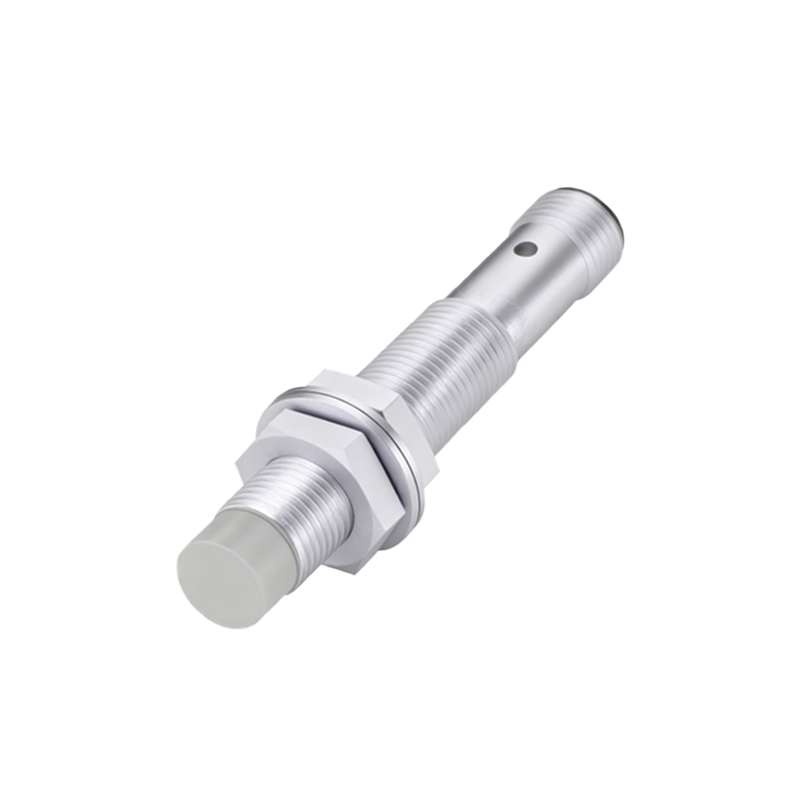
Proximity sensors are indispensable components in modern industrial automation, serving as the primary means of non-contact object detection. Their fundamental operation hinges on the principle of sensing the presence or absence of a target object within a defined detection range without any physical contact. This capability is crucial for applications requiring high-speed counting, precise positioning, jam detection, and end-of-travel monitoring in harsh environments where mechanical switches would fail prematurely. The core working principle involves the sensor generating an electromagnetic field, light beam, or ultrasonic signal. When a target object enters this active field, it causes a detectable change in the field's state or the signal's return path. This change is then converted by the sensor's internal circuitry into a clean, binary electrical output signal—typically a switch closure or a voltage transition—that can be readily interpreted by a Programmable Logic Controller (PLC) or other control systems.
There are several primary types of proximity sensors, each based on a distinct physical principle. Inductive proximity sensors are the most common in metal-dominant environments. They consist of an oscillator circuit that generates a high-frequency electromagnetic field at the sensing face. When a conductive metal target enters this field, eddy currents are induced on the target's surface. These currents draw energy from the oscillator, causing its amplitude to decrease. A threshold circuit monitors this amplitude drop and triggers the output switch when the reduction exceeds a preset level. Key characteristics include their sensitivity to different metals (with correction factors for non-ferrous metals like aluminum or copper), inherent resistance to environmental contaminants like dust, oil, and coolant, and their inability to detect non-metallic objects.
Capacitive proximity sensors, in contrast, can detect both metallic and non-metallic materials, including liquids, plastics, wood, and granules. They function by generating an electrostatic field between two electrodes (often the sensor face and a ground). The target object, when approaching, alters the dielectric constant of the space between the electrodes, thereby changing the capacitance of the system. This capacitance change is measured by an internal circuit, which activates the output once a specific threshold is reached. These sensors are ideal for applications like level detection in non-metallic tanks or detecting filled plastic bottles on a conveyor. However, they can be susceptible to false triggers from humidity or other environmental factors.
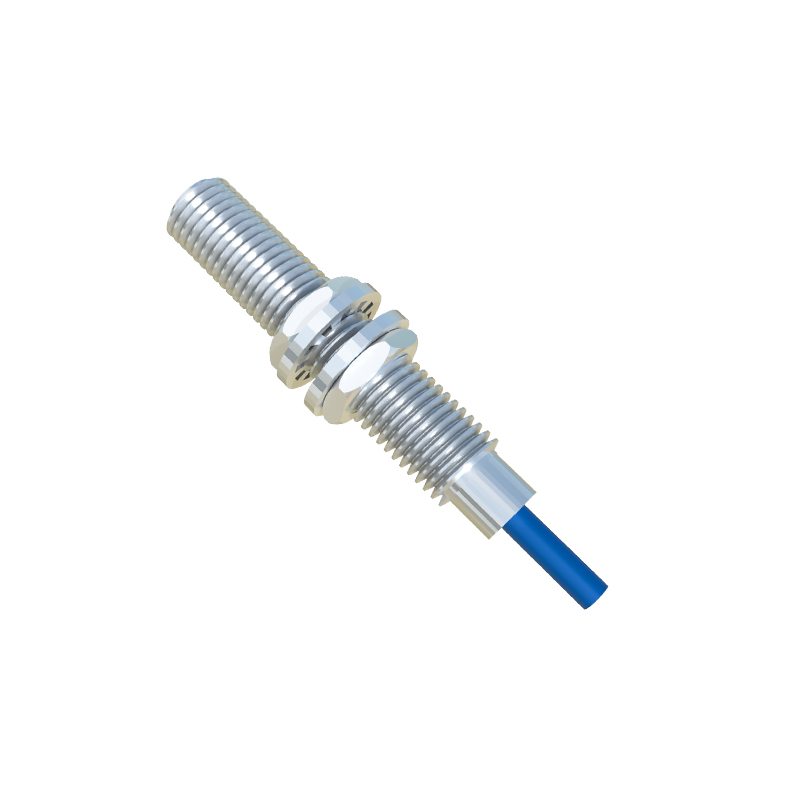
Photoelectric sensors operate on a completely different principle, using a beam of light (visible, infrared, or laser). The basic configuration involves an emitter (light source) and a receiver. There are three main operational modes: through-beam, retro-reflective, and diffuse reflective. In through-beam mode, the emitter and receiver are separate units; an object is detected when it interrupts the light beam. This mode offers the longest sensing range and highest reliability. Retro-reflective mode uses a single housing containing both emitter and receiver, along with a reflector; detection occurs when the object blocks the reflected beam. Diffuse reflective (or proximity) mode relies on light reflecting directly off the target object back to the receiver. Photoelectric sensors excel at long-range detection and can sense virtually any material, but their performance can be affected by color, transparency, surface finish, and ambient light.
Ultrasonic proximity sensors emit high-frequency sound waves and evaluate the echo received after reflection from a target. By measuring the time interval between sending the signal and receiving the echo, the sensor can calculate the distance to the object. This principle, known as time-of-flight, allows these sensors to perform well in challenging environments with dust, smoke, or vapors where optical methods might fail. They are commonly used for distance measurement, level sensing in bulk solids or liquids, and detecting objects with complex surfaces.
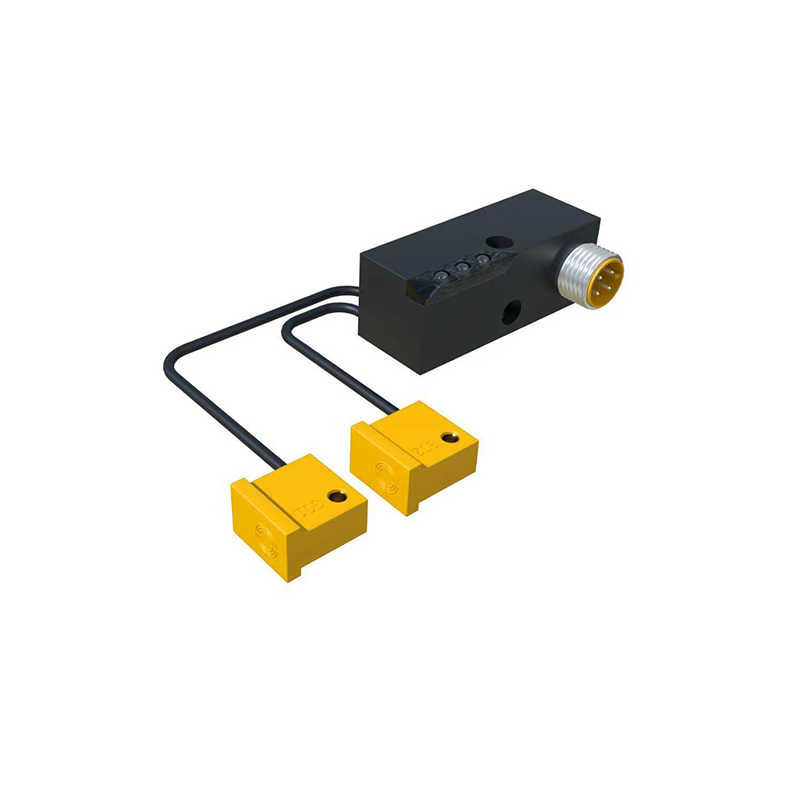
Critical performance parameters for all proximity sensors include sensing distance (nominal and effective), repeat accuracy, hysteresis, response frequency, and environmental ratings (IP, NEMA). The sensing distance, often specified as Sn, is the nominal operating distance for a standard target. Hysteresis is a built-in differential between the switch-on and switch-off points to prevent output chatter when a target is at the edge of the detection zone. Selecting the correct sensor requires careful consideration of the target material, required sensing distance, environmental conditions, electrical output type (NPN/PNP, NO/NC), and housing style. Proper installation is equally vital; sensors must be mounted securely, with adequate clearance from metal surroundings (flush or non-flush mounting specifications) to avoid interference and ensure reliable, maintenance-free operation in demanding industrial settings.