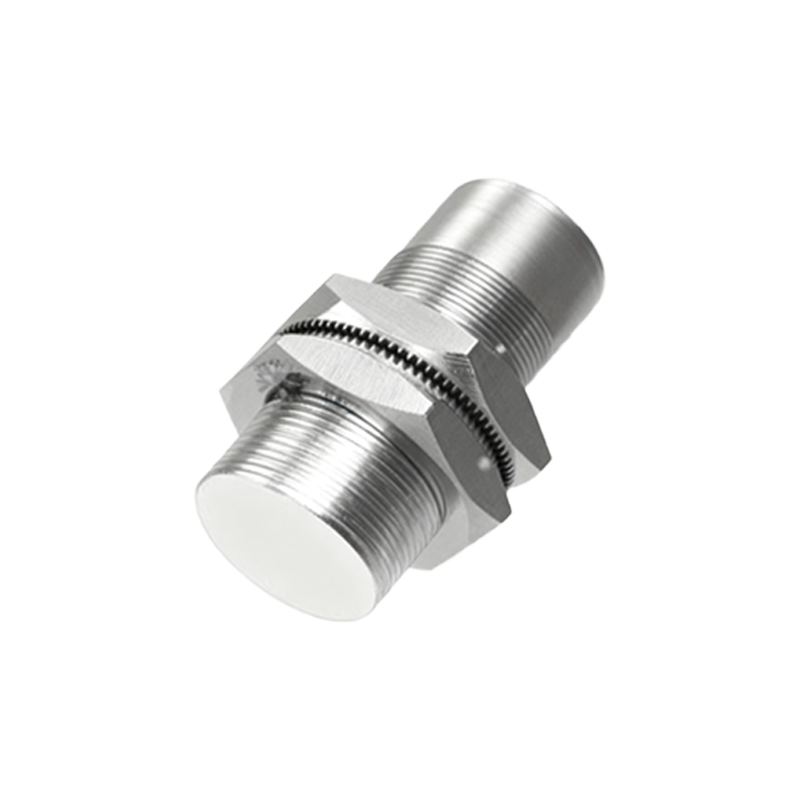
In the realm of industrial automation and process control, the demand for reliable, accurate, and robust sensing solutions is paramount. Among the diverse array of technologies available, ultrasonic proximity sensors have carved out a significant niche, particularly in challenging environments where other sensing modalities may falter. High-performance ultrasonic sensors represent the pinnacle of this technology, offering enhanced capabilities for precise non-contact detection and measurement. This article delves into the operational principles, key application areas, and critical selection criteria for these advanced devices.
At its core, an ultrasonic proximity sensor operates on the principle of echolocation, similar to that used by bats and sonar systems. The sensor emits high-frequency sound waves, typically in the range of 40 kHz to 400 kHz, which are inaudible to the human ear. These sound waves travel through the air until they encounter a target object. Upon striking the object, the waves are reflected back towards the sensor. A piezoelectric receiver within the sensor detects this returning echo. By precisely measuring the time interval between the emission of the sound pulse and the reception of its echo, the sensor's onboard electronics can calculate the distance to the target with high accuracy. This time-of-flight (ToF) measurement is the fundamental basis for all ultrasonic ranging and proximity detection.
What distinguishes high-performance ultrasonic sensors from their standard counterparts is a suite of enhanced features designed to overcome common environmental and application challenges. Key performance attributes include extended sensing ranges, which can reach up to several meters for some models, and superior resolution, often down to sub-millimeter levels. Advanced signal processing algorithms are employed to filter out acoustic noise and false echoes from background structures, ensuring reliable operation in acoustically noisy environments like manufacturing floors. Furthermore, many high-end models incorporate temperature compensation circuits. Since the speed of sound in air varies with temperature, this compensation is crucial for maintaining measurement accuracy across fluctuating ambient conditions. The housing and transducer design of these sensors are also engineered for resilience, often achieving high Ingress Protection (IP) ratings (e.g., IP67, IP69K) to withstand dust, moisture, and high-pressure washdowns, making them ideal for food & beverage, pharmaceutical, and outdoor applications.
The application spectrum for high-performance ultrasonic proximity sensors is remarkably broad. In material handling and logistics, they are indispensable for palletizing, stack height control, and conveyor belt monitoring. Their ability to detect objects regardless of color, transparency, or surface finish makes them superior to optical sensors when dealing with clear glass bottles, shiny metallic parts, or dark-colored objects. In the automotive industry, they are used for robot guidance, part presence verification, and liquid level sensing in tanks. Agricultural and construction machinery utilize them for obstacle detection and terrain monitoring. Perhaps one of their most critical roles is in continuous level measurement of bulk solids, powders, and liquids in silos and tanks, where their non-contact nature prevents contamination and mechanical wear.
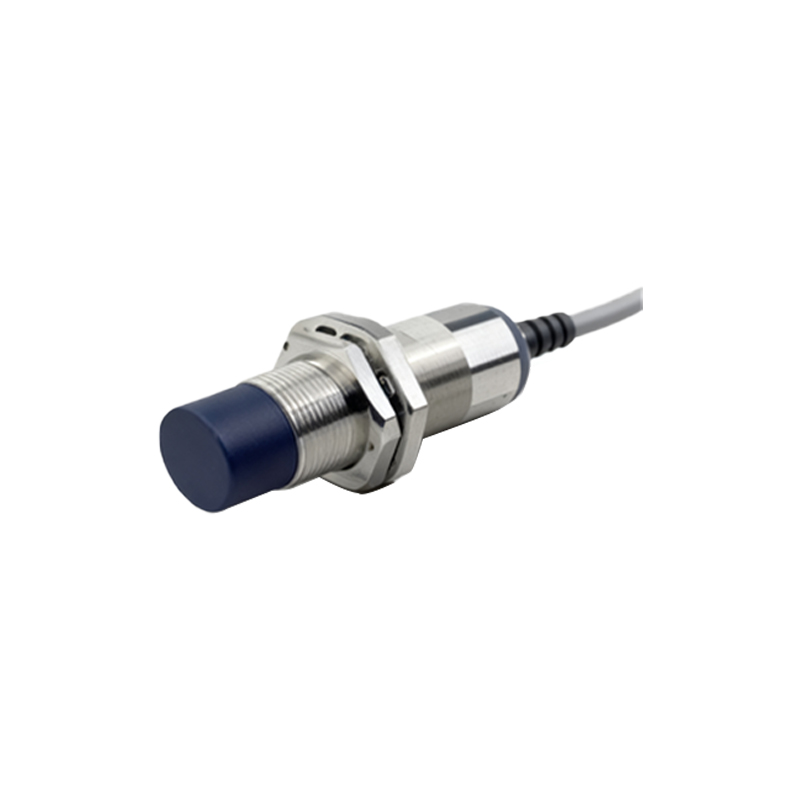
Selecting the appropriate high-performance ultrasonic sensor requires careful consideration of several technical parameters. First, the required sensing range and blind zone must be evaluated. The blind zone is the minimum distance in front of the sensor where reliable detection is not possible due to transducer ringing. Second, the beam angle is critical; a narrow beam is suitable for precise detection of small objects or in confined spaces, while a wider beam is better for detecting uneven surfaces or for general presence detection. Output options are another key decision point. Common outputs include analog (4-20 mA, 0-10 V), discrete (PNP/NPN), and digital interfaces (IO-Link, RS-485). IO-Link, in particular, is becoming a standard for smart sensors, enabling parameterization, diagnostics, and process data integration into Industry 4.0 systems. The housing material, typically stainless steel or high-grade plastics like PBT or PPSU, must be compatible with the application environment, especially when dealing with corrosive chemicals or requiring frequent cleaning. Finally, certifications for use in hazardous areas (ATEX, IECEx) may be necessary for applications in oil & gas or chemical processing plants.
In conclusion, high-performance ultrasonic proximity sensors are versatile and robust workhorses in modern industrial sensing. Their principle of operation grants them unique advantages in detecting a wide variety of targets under difficult conditions. By understanding their enhanced capabilities, diverse applications, and the detailed criteria for selection, engineers and system integrators can effectively leverage this technology to improve automation efficiency, ensure safety, and enhance process reliability. As industries continue to evolve towards greater connectivity and intelligence, the role of these sophisticated sensors, especially those with smart communication capabilities, is set to become even more central to automated systems worldwide.