In the intricate world of industrial automation and machine safety, the reliable detection of objects without physical contact is paramount. Among the myriad of solutions available, the GL-8 series of inductive proximity sensors has established itself as a robust and dependable choice for engineers and system integrators. This article delves into the technical specifications, operational principles, and practical applications of the GL-8 sensor, providing a detailed overview for professionals seeking to optimize their sensing solutions.
The GL-8 is a cylindrical, shielded inductive proximity sensor designed for the non-contact detection of metallic objects. Its core operating principle is based on electromagnetic induction. The sensor generates a high-frequency oscillating electromagnetic field from its active face. When a metallic target enters this field, eddy currents are induced within the target, causing a change in the oscillation amplitude within the sensor's internal LC circuit. This change is detected by the sensor's circuitry, which subsequently triggers a solid-state switching output. This fundamental principle allows for highly reliable detection, immune to environmental factors like dust, oil, and moisture, provided the sensor has an appropriate IP (Ingress Protection) rating, typically IP67 for the GL-8 series.
Key technical characteristics define the GL-8's performance. The sensing range, a critical parameter, is typically standardized (e.g., 8mm for a standard model), but it is crucial to consult the datasheet for the exact specification, as it can vary. This nominal sensing distance is defined for a standard target of mild steel. For other metals, such as aluminum or brass, a reduction factor must be applied, as these materials induce eddy currents less effectively. The GL-8 commonly features a DC three-wire configuration (brown for +V, blue for 0V, black for output) with both NPN (sinking) and PNP (sourcing) output types available, ensuring compatibility with a wide range of PLCs (Programmable Logic Controllers) and control systems. Its housing, usually constructed from nickel-plated brass or stainless steel, offers excellent mechanical strength and corrosion resistance, suitable for harsh industrial environments.
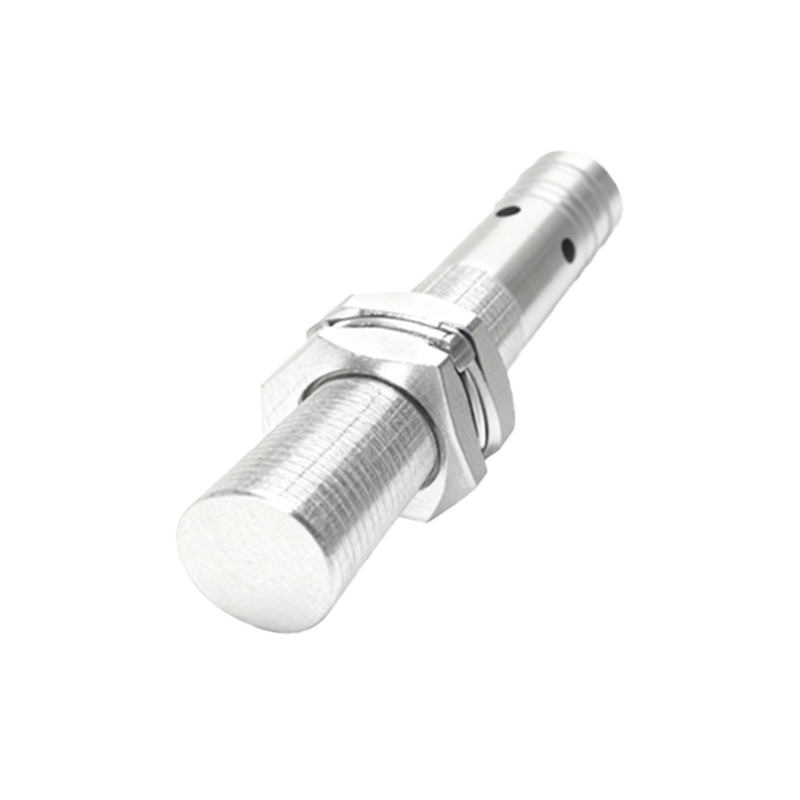
Installation and application of the GL-8 sensor require careful consideration. Being a shielded (flush-mountable) type, it can be installed flush with a metal mounting surface without affecting its sensing characteristics, a significant advantage in space-constrained designs. However, users must ensure adequate clearance between adjacent sensors to prevent mutual interference. Typical applications are vast and span across numerous industries. In automotive manufacturing, GL-8 sensors are used for part presence verification on assembly lines, such as confirming a piston is in place before machining. In material handling, they detect the position of metal pallets or crates on conveyors. In packaging machinery, they monitor the position of metallic components or count products. Their robustness also makes them ideal for use in metalworking CNC machines for tool positioning and limit switching.
When selecting a GL-8 sensor, engineers must evaluate several factors beyond just the sensing distance. The operating voltage range (commonly 10-30V DC), output current capacity, switching frequency (how quickly it can detect objects in succession), and temperature operating range are all vital for ensuring long-term reliability. Furthermore, understanding the difference between normally open (NO) and normally closed (NC) output logic is essential for proper safety and control circuit design. For instance, a NO configuration is often used for basic presence detection, while an NC configuration might be employed in safety-critical circuits where a wire break should cause a safe shutdown.
Troubleshooting is generally straightforward. Common issues include failure to detect, which can be caused by using an incorrect metal target, the target being outside the effective sensing range, or electrical issues like incorrect wiring or insufficient voltage. LED indicators, a standard feature on most GL-8 models, provide immediate visual feedback on the sensor's power status and switching state, greatly simplifying diagnostics.
In conclusion, the GL-8 proximity sensor represents a mature and highly effective technology for industrial metal detection. Its simplicity, durability, and versatility make it a cornerstone component in modern automation systems. By thoroughly understanding its specifications, operating environment, and application requirements, engineers can leverage the GL-8 to enhance machine efficiency, ensure operational safety, and improve overall system reliability. As automation continues to evolve, the fundamental role of reliable sensors like the GL-8 remains unchanged, proving that robust design and proven performance are timeless assets in industrial engineering.