In the realm of industrial safety, environmental monitoring, and process control, the accurate detection and measurement of airborne particulate matter, or dust, is paramount. Traditional methods often fall short in providing the real-time, high-precision data required for modern automated systems. This is where advanced dust laser sensor technology emerges as a superior solution, offering unparalleled accuracy, reliability, and operational efficiency.
The core principle of a dust laser sensor, specifically a laser scattering sensor, involves the interaction of light with particles. A controlled laser diode emits a focused beam of light into a designated sampling chamber. As dust particles pass through this beam, they scatter the light in various directions. A strategically positioned photodetector then captures this scattered light. The intensity of the scattered signal is directly proportional to the concentration of particulate matter. Sophisticated algorithms within the sensor's microprocessor analyze this signal, compensating for factors like particle composition and humidity, to output precise mass concentration readings, typically in units like mg/m³ or μg/m³.
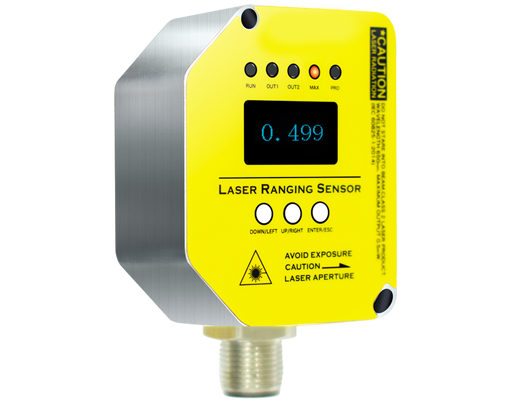
Modern dust laser sensor solutions are engineered to excel in demanding industrial environments. Key features include high sensitivity, capable of detecting particles in the PM1.0, PM2.5, and PM10 ranges. They offer a wide dynamic range, effectively measuring from very low background levels to high concentrations encountered in processes like milling, grinding, or powder handling. Robust housing with ingress protection (IP65 or higher) ensures resilience against dust, water, and mechanical shock. Furthermore, these sensors are designed for minimal maintenance, often featuring self-diagnostic functions and long-life laser components exceeding 50,000 hours.
The applications for these sensors are vast and critical. In workplace safety, they are integral to dust explosion prevention systems, continuously monitoring concentrations to ensure they remain below explosive limits in silos, ducts, and processing areas. They trigger alarms and can initiate suppression systems, safeguarding personnel and infrastructure. For environmental compliance, sensors provide continuous emission monitoring (CEM) at stack outlets, ensuring adherence to stringent regulatory standards. Within manufacturing processes, they enable precise control of air quality in cleanrooms, monitor filter efficiency in dust collection systems, and optimize processes in industries ranging from pharmaceuticals and food production to metalworking and wood processing.

When selecting a dust laser sensor solution, several technical parameters must be considered. Measurement range and resolution should match the specific application's requirements. Response time is crucial for safety-critical applications. The type of output (analog 4-20mA, digital Modbus, Ethernet/IP, etc.) must be compatible with existing control systems. Environmental ratings for temperature and humidity are essential for reliable operation. Finally, certifications for use in hazardous areas (ATEX, IECEx) are mandatory for installations where flammable dust or gases may be present.
Integration of these sensors into a broader Industrial Internet of Things (IIoT) framework represents the future. Networked sensors can transmit data to centralized cloud platforms for real-time dashboard visualization, historical trend analysis, and predictive maintenance alerts. This data-driven approach allows for proactive management of air quality, optimization of energy consumption in ventilation systems, and comprehensive reporting for regulatory audits.
In conclusion, modern dust laser sensor solutions are indispensable tools for enhancing operational safety, ensuring regulatory compliance, and improving process efficiency. Their precision, durability, and connectivity options make them a smart investment for any industry dealing with airborne particulates. By providing reliable, real-time data, they form the foundational layer for intelligent environmental monitoring and control systems, paving the way for safer, cleaner, and more sustainable industrial operations.