Laser radar, commonly known as LiDAR (Light Detection and Ranging), is a remote sensing technology that uses laser pulses to measure distances and create precise three-dimensional representations of environments. At its core, a laser radar sensor emits focused light beams—typically in the form of short-wavelength infrared or visible light—toward a target. The fundamental principle relies on the time-of-flight (ToF) method: the sensor calculates the distance to an object by measuring the time interval between the emission of a laser pulse and the detection of its reflected signal. This process, repeated millions of times per second, generates high-resolution point clouds that map spatial details with centimeter-level accuracy.
The operational mechanism involves several key components. A laser diode generates coherent light pulses, which are directed through optical systems like lenses or mirrors to shape and steer the beam. Upon striking a surface, the light scatters, and a fraction returns to the sensor’s receiver, usually a photodetector such as an avalanche photodiode (APD) or a silicon photomultiplier (SiPM). Advanced signal processing algorithms then analyze the return signals, filtering noise and compensating for environmental factors like atmospheric absorption or interference from ambient light. Modern LiDAR systems often incorporate scanning mechanisms—such as rotating mirrors, MEMS (Micro-Electro-Mechanical Systems), or solid-state phased arrays—to cover wide fields of view without moving parts, enhancing durability and speed.
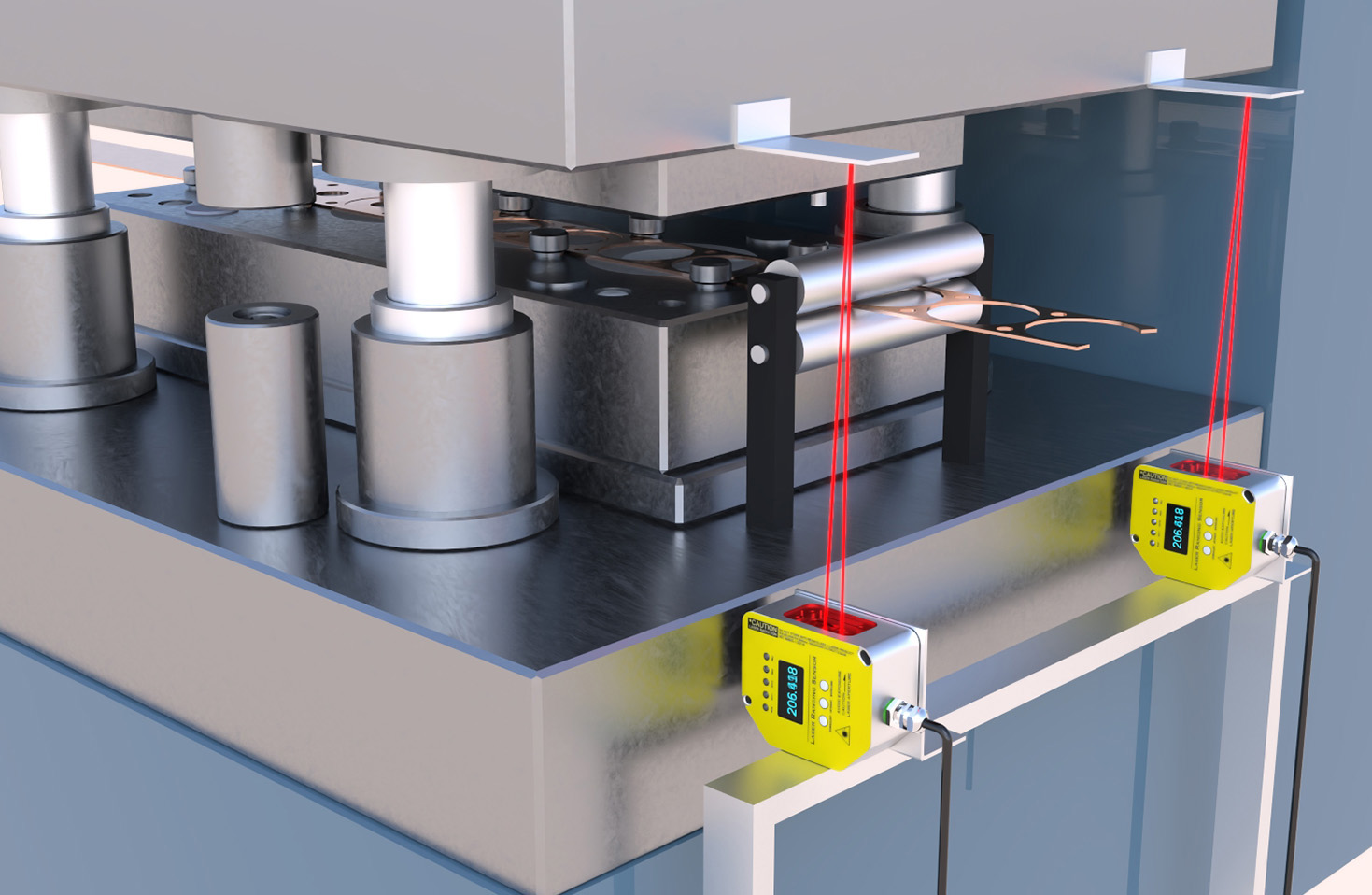
Applications of laser radar sensors span diverse industries. In autonomous vehicles, they provide real-time obstacle detection and navigation by creating dynamic maps of surroundings. In robotics, LiDAR enables precise localization and mapping for warehouse automation or agricultural machinery. Environmental monitoring utilizes it for topographic surveys, forest management, and climate research, while aerospace and defense sectors employ it for terrain mapping and object tracking. The technology’s advantages include high accuracy, long-range capability (up to several hundred meters), and immunity to radio frequency interference. However, challenges persist, such as sensitivity to weather conditions like fog or rain, high power consumption, and cost barriers for mass adoption.
Recent innovations focus on overcoming these limitations. Frequency-modulated continuous-wave (FMCW) LiDAR, for instance, uses modulated laser waves to measure both distance and velocity simultaneously, improving performance in low-visibility scenarios. Integration with complementary sensors like cameras and radar enhances data fusion, while miniaturization and cost-reduction efforts drive accessibility. As laser radar evolves, it promises to revolutionize smart infrastructure, industrial automation, and safety systems, underpinning the next generation of intelligent sensing solutions.

In summary, laser radar sensors operate on precise optical and timing principles, leveraging advanced electronics and software to deliver unmatched spatial awareness. Their continued refinement will expand their role in technology-driven ecosystems, making them indispensable for future innovations.