In the intricate world of industrial automation and electronic design, the precise detection of objects is paramount. Among the myriad of sensing solutions available, the 5mm proximity sensor stands out as a remarkably compact and versatile component. This article provides a comprehensive technical exploration of what a 5mm proximity sensor is, its operating principles, key types, and its critical applications across various industries.
Fundamentally, a proximity sensor is a non-contact device designed to detect the presence or absence of an object within a specified range without any physical contact. The "5mm" designation specifically refers to its nominal sensing distance or range. This means the sensor is optimally calibrated to reliably detect a standard target (typically a square of mild steel) at a distance of up to 5 millimeters. It is crucial to understand that this is a nominal value; actual performance can be influenced by the target material's properties, size, and environmental conditions.
The compact 5mm form factor is a significant advantage in space-constrained applications. These sensors are engineered to fit into tight mechanical assemblies where larger sensors would be impractical. Despite their small size, they deliver robust and reliable performance. The most common technologies employed in 5mm proximity sensors are inductive and capacitive sensing.
Inductive proximity sensors are the workhorses for detecting metallic objects. They operate on the principle of electromagnetic induction. The sensor contains a coil that generates a high-frequency oscillating electromagnetic field. When a metallic object enters this field, eddy currents are induced on the surface of the target. This causes a change in the oscillation amplitude within the sensor's circuit, which is then processed to trigger a solid-state output switch. Inductive 5mm sensors are ideal for detecting ferrous and non-ferrous metals in machinery, such as verifying the position of a metal piston in a cylinder or counting metal parts on a conveyor.
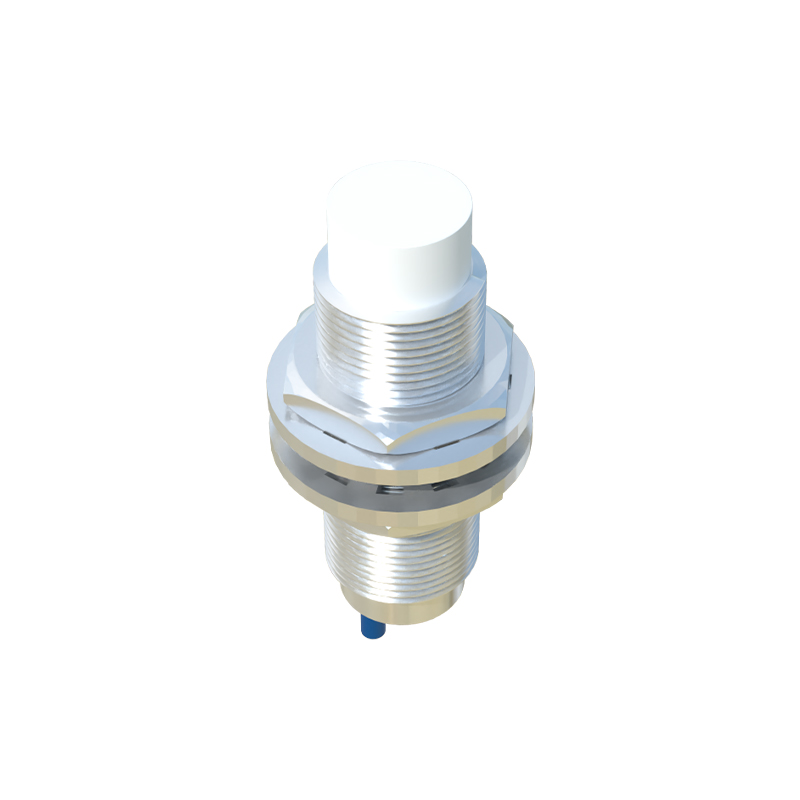
Capacitive proximity sensors, on the other hand, can detect both metallic and non-metallic materials, including liquids, plastics, glass, and wood. They function by generating an electrostatic field. Any object that enters this field alters the capacitance of the sensor's circuit. This change is detected and converted into a switching signal. The 5mm capacitive sensor is invaluable in applications like liquid level detection in small containers, monitoring the presence of plastic caps, or detecting powdered materials.
The output of these sensors is typically a digital signal. Common configurations include NPN (sinking) or PNP (sourcing) transistor outputs, which interface seamlessly with Programmable Logic Controllers (PLCs), microcontrollers, and other control systems. Some advanced models also offer analog current (4-20mA) or voltage (0-10V) outputs proportional to the distance, providing more granular data for precision applications.
The selection of a 5mm proximity sensor involves several key parameters beyond just the sensing distance. Engineers must consider the housing material (often nickel-plated brass or stainless steel for durability), the operating voltage range (commonly 10-30V DC), output type, switching frequency (how fast it can detect objects), and environmental ratings such as IP67 for protection against dust and temporary immersion. Temperature tolerance is also critical for harsh environments.
In practice, the applications for 5mm proximity sensors are vast and critical. In automated assembly lines, they provide precise end-of-travel detection for small actuators. In robotics, they are used for delicate object detection and anti-collision in grippers. The consumer electronics industry relies on them for position sensing in compact devices. Packaging machinery uses them to detect thin materials or small components. Their reliability and speed make them indispensable for ensuring process accuracy, enhancing safety, and preventing machine damage.
In conclusion, the 5mm proximity sensor is a masterpiece of miniaturized sensing technology. It delivers high-performance, non-contact detection in an extremely small package. By understanding its operating principles—whether inductive for metals or capacitive for a wider range of materials—engineers and designers can effectively integrate this component to solve complex automation challenges, improve efficiency, and enable innovative designs where space is at a premium. Its role as a fundamental building block in modern electromechanical systems is both profound and essential.