Inductive proximity sensors are fundamental components in modern industrial automation, offering non-contact detection of metallic objects. Among the diverse range of models available, the E2E-X101-Z from Omron stands out as a particularly reliable and widely adopted cylindrical sensor. This article provides a detailed technical examination of the E2E-X101-Z, covering its operating principles, key specifications, installation considerations, and typical use cases in various industrial environments.
The E2E-X101-Z is a shielded (flush-mountable) inductive proximity sensor with a threaded M8 housing. Its core operating principle is based on electromagnetic induction. The sensor generates a high-frequency oscillating electromagnetic field from its sensing face. When a metallic target enters this field, eddy currents are induced on the target's surface. This causes a change in the oscillation amplitude within the sensor's coil circuit. The sensor's built-in circuitry detects this change and triggers a solid-state output switch. For the E2E-X101-Z, this output is typically a DC three-wire configuration (brown wire for +V, blue wire for 0V, and black wire for the output signal), with both NPN (sinking) and PNP (sourcing) versions available to interface seamlessly with different PLC (Programmable Logic Controller) and control system standards.
Key specifications define the sensor's performance envelope. The E2E-X101-Z has a rated sensing distance of 1 mm. It is crucial to note that this is the nominal distance for a standard target, defined as a square of mild steel (Fe 37) measuring 1mm thick with sides equal to the sensor's sensing face diameter or three times the rated sensing distance, whichever is greater. The sensor features a built-in potentiometer for sensitivity adjustment, allowing fine-tuning to compensate for different target materials (e.g., steel, aluminum, brass) or to ignore smaller, unwanted metallic debris. Its operating voltage range is typically 10 to 30 VDC, making it compatible with standard 12V and 24V DC control circuits. The output current is up to 200 mA, sufficient to directly drive small relays, indicators, or PLC input modules. An important characteristic is its high switching frequency, often up to 5 kHz, enabling the detection of very fast-moving objects on production lines. Furthermore, it boasts robust environmental ratings, commonly IP67, which signifies complete protection against dust ingress and protection against temporary immersion in water, ensuring reliable operation in harsh workshop conditions involving coolants, oils, and washdowns.
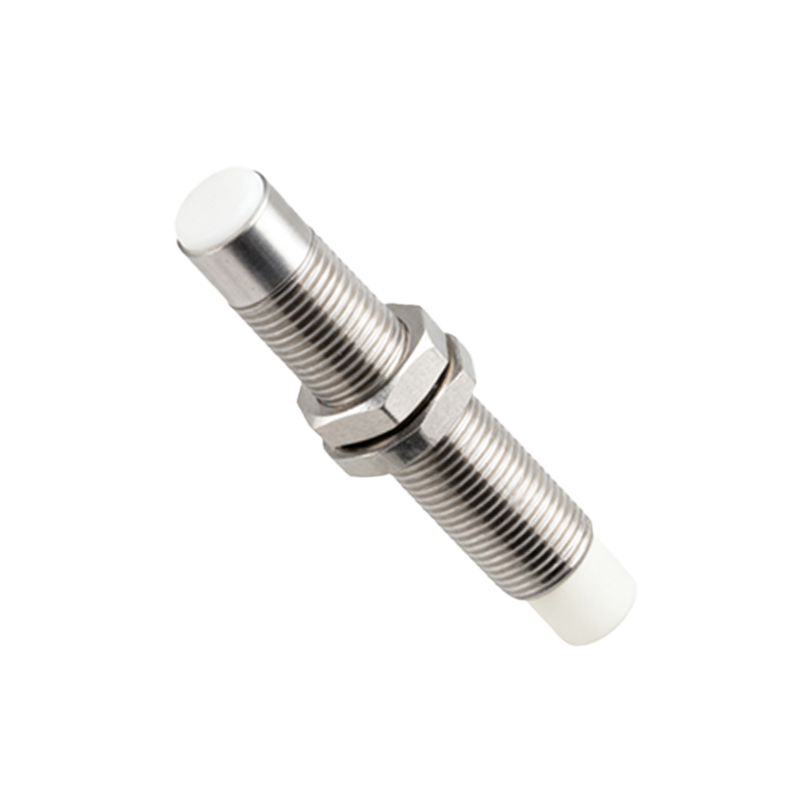
Proper installation and wiring are paramount for optimal performance and longevity. As a shielded type, the E2E-X101-Z can be flush-mounted in a metal bracket without affecting its sensing characteristics, which simplifies mechanical design. However, installers must maintain the specified lateral spacing between multiple sensors to prevent mutual interference. Correct polarity must be observed when connecting the DC wires. The sensor also incorporates protection against short-circuit, overload, and reverse polarity connection. For applications involving non-ferrous metals like aluminum or copper, the effective sensing distance will be reduced; the sensor's adjustable sensitivity can partially compensate for this, but this factor must be accounted for during system design. Regular maintenance is minimal, but the sensing face should be kept clean from accumulated metallic dust or thick contaminant layers that could potentially dampen the electromagnetic field.
In practice, the E2E-X101-Z finds extensive application across numerous sectors. In automotive assembly, it is used for precise position verification of metal components, such as confirming the presence of an engine block on a pallet or the correct insertion of a gear shaft. Within packaging machinery, it detects the passage of metal lids or caps on filling lines, providing the trigger signal for capping heads. On CNC machine tools, these sensors serve as tool presence detectors in the tool changer arm or as limit switches for axis movement. In material handling, they are employed to count metal parts on conveyors or to detect the end-of-travel position of metal slides and actuators. Its compact M8 size makes it ideal for applications with severe space constraints.
In summary, the Omron E2E-X101-Z inductive proximity sensor represents a mature, versatile, and robust solution for metallic object detection. Its combination of adjustable sensitivity, flush-mounting capability, solid environmental sealing, and high-speed performance makes it a dependable workhorse in countless automation scenarios. Engineers and technicians select this model for its proven reliability, ease of integration, and ability to perform consistently in demanding industrial settings, from clean electronics assembly to gritty metal stamping floors. Understanding its technical parameters and application nuances is key to leveraging its full potential in creating efficient and fault-resistant automated systems.