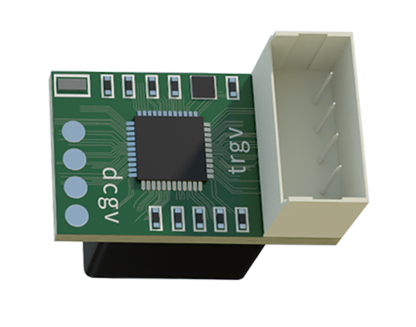
In the highly demanding automotive and tire manufacturing industries, precision, efficiency, and quality control are paramount. The integration of advanced laser displacement sensors has revolutionized tire inspection and production processes, offering unparalleled accuracy and reliability. These non-contact measurement devices project a laser beam onto the tire surface and analyze the reflected light to determine precise distance, thickness, profile, and surface defect data with micron-level resolution.
The core technology typically involves triangulation or time-of-flight principles. In a triangulation-based sensor, a laser diode emits a focused beam onto the measurement point. The light reflected from the surface is captured by a receiving lens at a known angle and focused onto a position-sensitive detector, such as a CCD or CMOS array. Any change in the distance to the target causes a proportional shift in the position of the light spot on the detector, allowing for extremely accurate displacement calculation. This method is exceptionally suited for high-speed, high-precision applications like measuring tire tread depth, sidewall profile, and runout during both the green tire building phase and final inspection.
Key applications in tire manufacturing are multifaceted. During the calendaring process, laser sensors continuously monitor the thickness of various rubber compounds—such as the tread, inner liner, and sidewall—ensuring material consistency before they are assembled. In the tire building machine, sensors verify the precise placement and alignment of belts, plies, and other components, critical for tire uniformity and performance. Post-curing, the inspection phase leverages laser displacement sensors for comprehensive 3D profiling. They scan the entire tire contour to detect deformations, bulges, or depressions, and meticulously measure tread groove depth and pattern wear indicators to ensure they meet stringent safety standards. Furthermore, dynamic uniformity testing machines utilize arrays of these sensors to measure radial and lateral force variations while the tire is rotating under load, identifying imperfections that could lead to vibrations in the vehicle.
The advantages over traditional contact methods or older optical systems are significant. As non-contact tools, they eliminate the risk of damaging soft rubber compounds or deforming the tire during measurement. They provide exceptionally high sampling rates, enabling real-time, 100% inspection on production lines without sacrificing throughput. Their robustness allows them to operate reliably in harsh industrial environments with vibrations, temperature fluctuations, and ambient light interference, thanks to sophisticated filtering algorithms and protective housings.
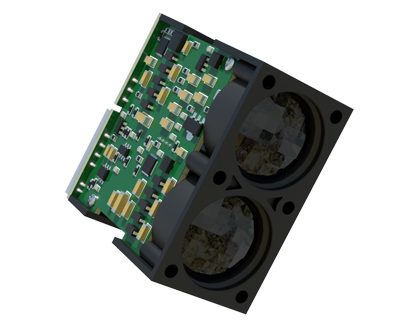
Recent technological advancements are pushing the boundaries further. The development of blue laser sensors, with their shorter wavelength, provides superior resolution and performance on low-reflectance or black rubber surfaces common in tires, reducing measurement noise. Line laser sensors, which project a laser line instead of a single point, can capture an entire cross-sectional profile in a single scan, dramatically speeding up the inspection of tire tread patterns and sidewalls. Integration with machine vision systems and Industrial Internet of Things (IIoT) platforms allows for seamless data aggregation. This facilitates predictive maintenance of manufacturing equipment, real-time process adjustment, and comprehensive data traceability for each tire produced.
In conclusion, laser displacement sensors have become an indispensable technology in modern tire engineering. They ensure the structural integrity, safety, and performance of every tire leaving the factory floor. By enabling faster, more accurate, and more comprehensive measurement throughout the manufacturing chain, they not only enhance quality assurance but also contribute to material savings, reduced waste, and optimized production efficiency. As sensor technology continues to evolve with smarter, faster, and more integrated solutions, its role in driving innovation and excellence in the tire industry will only become more profound.