In the realm of industrial automation, precision, reliability, and durability are paramount. Among the myriad of sensing technologies available, laser inductive sensor limit switches have carved out a critical niche, particularly in applications demanding high accuracy and robust performance in challenging environments. This article delves into the operational principles, key advantages, typical applications, and selection considerations for these sophisticated devices.
At its core, a laser inductive sensor limit switch is a hybrid device that combines two fundamental sensing principles: laser triangulation and inductive proximity sensing. The laser component typically serves as the primary means for precise distance measurement or position detection. It emits a focused beam of coherent light onto a target. The reflected light is captured by a receiver, and through triangulation algorithms, the sensor calculates the exact distance to the object with micron-level resolution. This allows for non-contact, highly accurate detection of an object's presence or position within a defined range.
The "inductive" part of the name refers to an integrated inductive proximity sensor. This element is designed to detect metallic objects without physical contact by generating an electromagnetic field. When a metallic target enters this field, it induces eddy currents, causing a change in the sensor's oscillation amplitude, which is then detected. In a limit switch configuration, this inductive sensing often acts as a failsafe or a coarse detection mechanism, or it may be used to detect specific metallic flags or actuators that trigger a limit state. The combination ensures that the switch reliably signals when a machine component has reached its predefined travel limit, thereby preventing over-travel and potential damage.
The integration of laser precision with inductive robustness yields several compelling advantages. First is exceptional accuracy. Laser sensors provide resolution and repeatability far superior to traditional mechanical or standard inductive limit switches, enabling precise control in applications like CNC machining, robotic arm positioning, and semiconductor manufacturing. Second is versatility. These sensors can detect a wide variety of materials with the laser, while the inductive component ensures reliable operation with metals, even in the presence of contaminants like oil, dust, or coolant mist that might obscure optical sensors. Third is longevity. As non-contact devices, they eliminate the mechanical wear and tear associated with physical plunger-style limit switches, leading to significantly longer service life and reduced maintenance downtime.
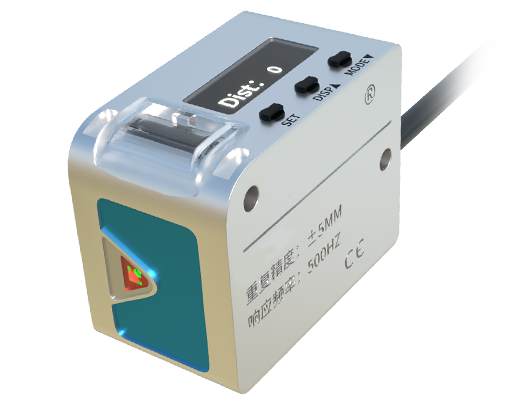
Typical industrial applications are diverse. In automated assembly lines, they are used for precise part positioning and verification before a robotic weld or pick-and-place operation. On machine tools, they serve as homing and limit switches for axes movement, ensuring the tool head or bed does not exceed its mechanical boundaries. In material handling, such as on stacker cranes or automated guided vehicles (AGVs), they provide accurate pallet positioning and height detection. The inductive fail-safe feature is particularly valuable in heavy machinery and press brakes, where reliably detecting the metallic frame or slide in its end position is critical for safety, regardless of ambient light or dirt conditions.
Selecting the right laser inductive sensor limit switch requires careful consideration of several parameters. The sensing range of the laser must be appropriate for the application, with sufficient margin. The type of output required is crucial—common options include digital (PNP/NPN) switches, analog (4-20mA, 0-10V) signals for proportional control, or IO-Link for smart, digital communication. Environmental ratings, such as IP67 or IP69K for water and dust resistance, are essential for harsh industrial settings. The mounting style, housing material (often stainless steel or ruggedized plastic), and connection type (cable or connector) must also suit the mechanical installation. Finally, the response time should be fast enough to keep up with the machine's cycle speed.
In conclusion, laser inductive sensor limit switches represent a powerful fusion of technologies, offering a blend of high precision and rugged reliability that is ideal for modern automated systems. By providing accurate position feedback and reliable limit detection without physical contact, they enhance machine performance, safety, and operational efficiency. As industries continue to push for greater precision and smarter manufacturing, understanding and effectively deploying these advanced sensors will remain a key competency for engineers and system integrators aiming to optimize their automation solutions.