In the intricate world of industrial automation, where precision and reliability are non-negotiable, the M8 proximity sensor stands as a testament to engineering excellence in a remarkably compact form factor. These cylindrical sensors, defined by their 8mm threaded barrel, are ubiquitous components in machinery, robotics, and assembly lines worldwide. Their primary function is to detect the presence or absence of a metallic or non-metallic target without physical contact, thereby enabling critical control, counting, positioning, and safety functions. The non-contact nature of their operation eliminates mechanical wear, ensuring a long operational life and consistent performance in demanding environments.
M8 proximity sensors are broadly categorized into two main types based on their detection principle: inductive and capacitive. Inductive M8 sensors are the most common variant. They generate an electromagnetic field and react exclusively to metallic objects, typically ferrous metals like steel and iron. When a metal target enters this oscillating field, it induces eddy currents that dampen the oscillation, triggering the sensor's switching circuit. This makes them ideal for applications like detecting piston position in cylinders, monitoring gear teeth rotation, or confirming the presence of a metal part on a conveyor. Their inherent immunity to non-metallic substances like dust, oil, or water splashes (given appropriate IP ratings) makes them exceptionally robust.
Conversely, capacitive M8 proximity sensors can detect both metallic and non-metallic materials, including liquids, plastics, glass, and wood. They function by measuring changes in capacitance. The sensor face and the target act as two plates of a capacitor. As a target approaches, it alters the dielectric constant and thus the capacitance of the system, prompting the sensor to switch. This capability is invaluable in industries like packaging, food and beverage, or chemical processing, where detecting levels of liquids in non-metallic tanks, presence of plastic bottles, or paper stacks is routine.
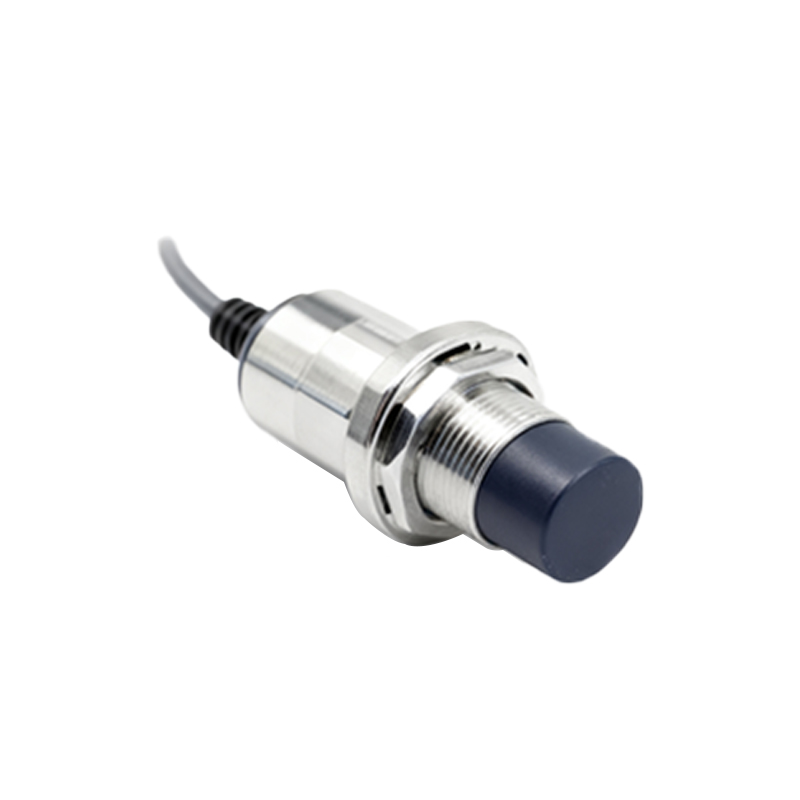
The selection of an M8 sensor goes beyond just the sensing principle. Key technical specifications demand careful consideration. Sensing distance, or 'Sn', is paramount. For a standard inductive M8 sensor, this typically ranges from 1mm to 2mm, though shielded (flush-mountable) and unshielded (non-flush) versions offer different mounting and sensing characteristics. The output configuration is another critical choice, with NPN (sinking) and PNP (sourcing) transistor outputs being the standard, alongside Normally Open (NO) or Normally Closed (NC) switching logic to interface seamlessly with Programmable Logic Controllers (PLCs) and other control systems. Connection is facilitated via a pre-wired cable or a quick-disconnect connector system, with 2-meter or 5-meter cables being common.
Environmental robustness is a hallmark of industrial-grade M8 sensors. They are commonly housed in nickel-plated brass or stainless steel barrels with ingress protection ratings of IP67 or IP69K, allowing them to withstand high-pressure washdowns, temporary immersion, and exposure to coolants and cutting oils. Operating temperature ranges typically span from -25°C to +70°C, ensuring functionality in both freezer warehouses and near hot machinery.
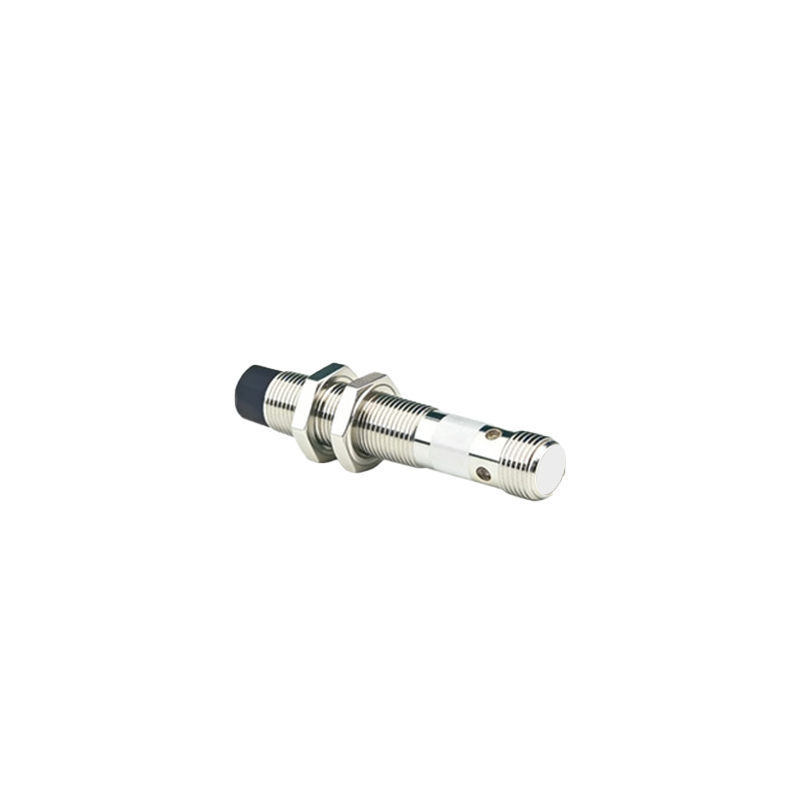
The application spectrum for M8 proximity sensors is vast. In automotive manufacturing, they verify the placement of tiny components. In packaging machinery, they count products at high speed. On robotic arms, they provide end-of-travel feedback. Their small size allows for installation in extremely tight spaces where larger sensors cannot fit, solving complex detection challenges without compromising the machine's design. When integrating these sensors, best practices include ensuring a stable power supply, maintaining the recommended mounting distances to avoid mutual interference between multiple sensors, and selecting the correct sensing face material (e.g., PTFE) for aggressive chemical environments.
Looking ahead, the evolution of M8 sensors continues. Modern iterations incorporate advanced features like IO-Link communication, which transforms the simple sensor into a smart device capable of transmitting detailed diagnostic data (e.g., operating hours, temperature warnings, signal strength) to higher-level control systems, enabling predictive maintenance and Industry 4.0 connectivity. This digital layer adds immense value, moving beyond mere detection to providing actionable intelligence.
In conclusion, the M8 proximity sensor, though small in stature, is a giant in industrial functionality. Its blend of compact design, versatile sensing technologies, and rugged construction makes it an indispensable component for engineers designing efficient, reliable, and intelligent automated systems. Understanding its principles, specifications, and applications is fundamental to optimizing modern manufacturing and process control.