In the landscape of industrial automation and consumer electronics, two critical technologies have fundamentally reshaped human-machine interaction (HMI): proximity sensors and touchscreens. While often perceived as distinct components, their integration represents a sophisticated synergy, driving efficiency, safety, and intuitive user experiences. This article delves into their operational principles, applications, and the technical interplay that defines modern control systems.
Proximity sensors are non-contact devices designed to detect the presence or absence of an object within a defined sensing range without physical contact. They operate on various principles, primarily inductive, capacitive, and photoelectric. Inductive sensors detect metallic objects by generating an electromagnetic field. When a metal target enters this field, it induces eddy currents, causing a change in the sensor's oscillation amplitude, which triggers a switching signal. These are workhorses in manufacturing for position detection, counting, and speed monitoring of metallic components.
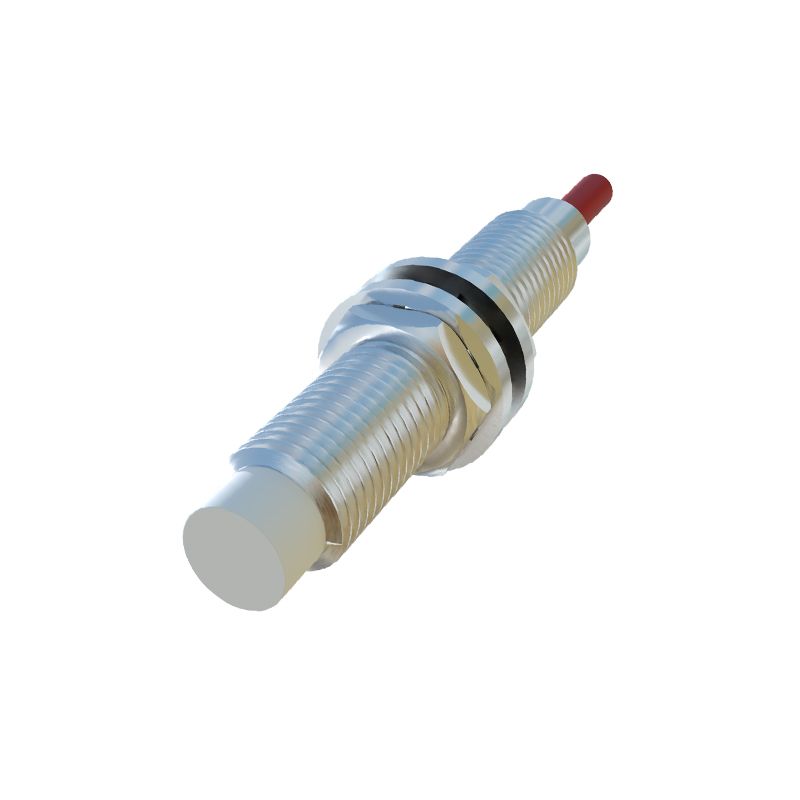
Capacitive proximity sensors, on the other hand, can detect both metallic and non-metallic materials (liquids, plastics, wood) by sensing changes in capacitance. They generate an electrostatic field. The introduction of any object with a dielectric constant different from air alters this field, leading to detection. This makes them ideal for level detection in tanks or presence sensing of packaged goods. Photoelectric sensors use a light beam (visible, infrared, or laser) and detect interruptions or reflections, offering long-range detection capabilities.
Touchscreens, as the primary interface, have evolved from resistive to the now-dominant capacitive technology. Capacitive touchscreens consist of a glass panel coated with a transparent conductive material like Indium Tin Oxide (ITO). The human body is an electrical conductor. When a finger touches the screen, it distorts the screen's electrostatic field, precisely measured as a change in capacitance at that point. This data is processed by a controller to determine the touch coordinates. Advanced variants support multi-touch gestures, providing a rich, intuitive user interface.
The true engineering elegance emerges when these technologies converge. Proximity sensors often serve as an enabling precursor or complementary system to touchscreen operation. A common application is display wake-up and power management in devices like industrial HMIs, kiosks, and automotive infotainment systems. A capacitive proximity sensor positioned around the bezel can detect a hand approaching from several centimeters away. This signal can trigger the touchscreen controller to power from a low-power sleep state to full operational readiness, conserving energy and presenting an instantly responsive interface to the operator. This eliminates the need for physical buttons and reduces wear on the touch panel.
In safety-critical industrial environments, this integration is paramount. A large machine controlled via a touchscreen HMI can be equipped with a ring of proximity sensors around the display. If an operator leans too close to the screen inadvertently, perhaps while wearing gloves that impede touch detection, the proximity sensor can detect this intrusion and initiate a safety protocol—such as dimming the screen, locking controls, or sending an alert—without registering a false touch. This layered interaction enhances operational safety.
Furthermore, in public or harsh environments, touchscreens can be prone to false triggers from water, dust, or accidental contact. Proximity sensing can act as a filter. The system can be programmed to require a deliberate hand presence detected by the proximity sensor before enabling touch input, thereby preventing unintended commands. This is particularly useful in medical devices, food processing, or outdoor installations.
From a design perspective, engineers must consider several factors for seamless integration. Sensor selection is crucial: the sensing range, response time, and environmental immunity (to factors like EMI, temperature, and contaminants) must match the application. The output signal from the proximity sensor (typically PNP/NPN digital or analog) must be correctly interfaced with the touchscreen controller or the overarching PLC (Programmable Logic Controller). Firmware and software development is key to defining the interaction logic—the timing, priorities, and actions resulting from combined sensor and touch inputs.
Looking forward, the fusion continues to advance with technologies like hover touch, where high-sensitivity capacitive sensors can detect finger position millimeters above the screen, enabling preview functions. The integration of time-of-flight (ToF) proximity sensors offers precise 3D gesture recognition, opening new avenues for contactless control in sterile or hazardous areas.
In conclusion, proximity sensors and touchscreens are not merely adjacent technologies but are increasingly interdependent. The proximity sensor provides context—the intent of interaction—while the touchscreen executes the precise command. This collaborative dynamic is essential for creating intelligent, efficient, and robust human-machine interfaces that meet the demanding needs of both industrial automation and sophisticated consumer devices. Their continued co-evolution will undoubtedly unlock new levels of interactive sophistication.