Line laser sensors represent a critical advancement in non-contact measurement and inspection technologies, widely adopted across manufacturing, automotive, electronics, and logistics sectors. These sensors project a precise laser line onto a target surface, and a high-resolution camera or receiver captures the deformation or displacement of this line. By analyzing the line's profile through triangulation principles, the sensor calculates exact dimensional data such as height, width, depth, and surface contours with micron-level accuracy. Unlike single-point laser sensors, line lasers scan entire cross-sections in a single pass, enabling rapid 2D and 3D profiling for real-time quality control.
The core working principle involves optical triangulation. A laser diode emits a focused fan-shaped beam, creating a bright line on the object. The reflected light is detected by a CMOS or CCD sensor at a known angle. Any variation in the object's surface geometry alters the line's position on the detector. Sophisticated algorithms process these deviations to generate precise topographic data. This method ensures high-speed operation, often achieving thousands of scans per second, making it ideal for dynamic production lines.
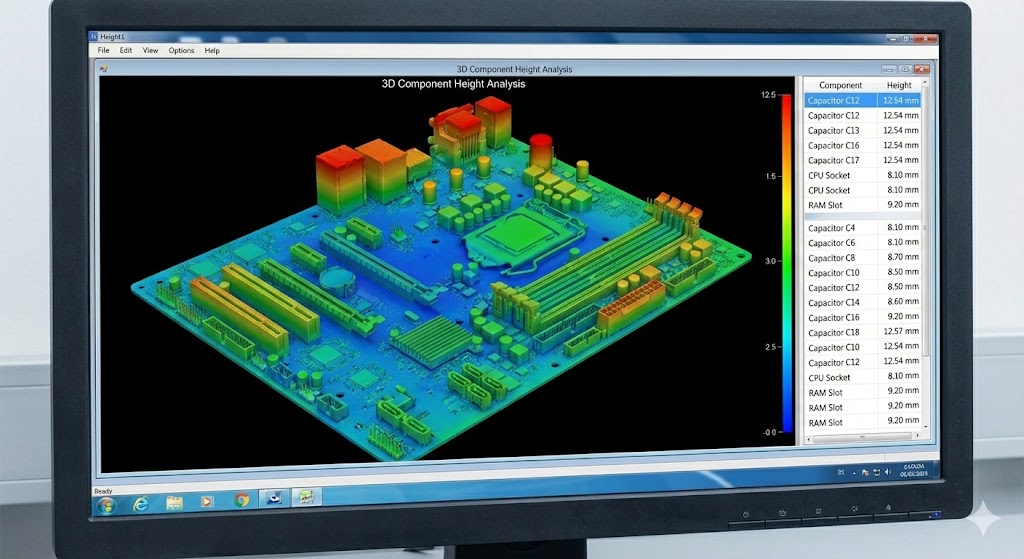
Key applications include weld seam inspection, where sensors verify bead geometry and detect defects like undercut or porosity. In automotive assembly, they measure panel gaps, flushness, and component alignment to maintain stringent tolerances. Electronics manufacturers employ line lasers for solder paste inspection, component coplanarity checks, and PCB warpage analysis. Additionally, they facilitate robotic guidance by providing real-time 3D coordinates for bin picking, palletizing, and assembly tasks. Logistics and warehousing utilize these sensors for parcel dimensioning, volume calculation, and automated sorting systems.
Advantages over traditional contact probes or vision systems are substantial. Line laser sensors eliminate mechanical wear, reduce measurement time, and operate reliably in harsh environments with dust, vibration, or temperature fluctuations. They offer sub-micron resolution and high repeatability, ensuring consistent product quality. Integration with industrial networks like Ethernet/IP, PROFINET, or EtherCAT allows seamless data exchange with PLCs and SCADA systems for automated decision-making.
Selecting an appropriate line laser sensor requires evaluating parameters such as measurement range, resolution, scanning frequency, and environmental resistance. For instance, blue laser models excel on shiny or metallic surfaces by minimizing speckle noise, while red lasers suit general-purpose applications. Embedded software features, including edge detection, pattern matching, and data filtering, further enhance performance. Regular calibration and maintenance, using certified reference standards, preserve long-term accuracy.
Future trends focus on miniaturization, enhanced AI-driven analytics, and multi-sensor fusion. Smart sensors with onboard processing can classify defects autonomously, reducing reliance on external computers. As Industry 4.0 evolves, line laser sensors will increasingly integrate with digital twins and IoT platforms, enabling predictive maintenance and adaptive manufacturing. Their role in enabling precision, efficiency, and automation underscores their indispensability in modern industrial ecosystems.
In conclusion, line laser sensors are transformative tools that bridge the gap between physical objects and digital control systems. By delivering fast, accurate, and reliable dimensional data, they empower industries to achieve higher productivity, reduce waste, and ensure superior product quality. Continuous innovation in optics, sensing, and data processing will further expand their capabilities, solidifying their position as a cornerstone of advanced manufacturing and automation.