In the realm of industrial automation and precision measurement, laser sensors are indispensable tools. A critical, yet often debated, parameter in their application is the laser spot size. The question "How large should the laser spot be?" does not have a universal answer. Optimal spot size is a function of the specific application, balancing requirements for resolution, working distance, surface characteristics, and environmental factors. Understanding these trade-offs is essential for engineers and system integrators to maximize sensor performance.
Fundamentally, the spot size of a laser sensor refers to the diameter of the projected laser beam at the point of measurement on the target surface. It is determined by the laser's wavelength, the optics of the transmitter (particularly the lens), and the distance to the target. As a rule, spot size increases with distance. Manufacturers typically specify a beam divergence angle (e.g., 0.1° to 2°), from which the spot diameter at a given distance can be calculated.
The primary advantage of a small laser spot is high spatial resolution. It allows the sensor to detect minute features, edges, or steps on an object. For example, in applications like precision displacement measurement of tiny components, inspection of semiconductor wafers, or profiling of fine wires, a spot size in the range of 10 to 50 micrometers is often necessary. A small spot minimizes the averaging effect over a surface area, providing a more precise reading of a specific point. This is crucial for ensuring tight tolerances in manufacturing.
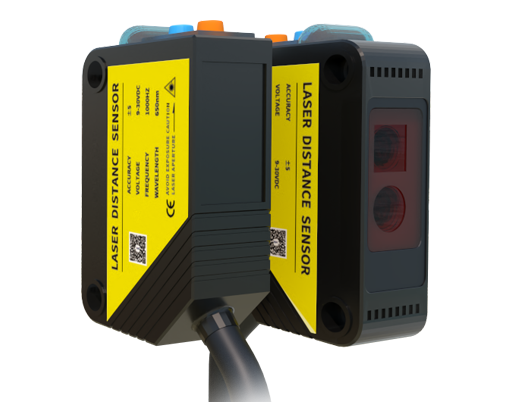
Conversely, a larger laser spot offers distinct benefits. It averages the measurement over a broader area, which is highly advantageous when dealing with rough, textured, or porous surfaces like cast metal, fabric, or paper. A small spot might reflect off a single grain or pore, giving a noisy and unreliable signal. A larger spot integrates these microscopic variations, resulting in a stable and representative measurement. Furthermore, a larger spot is more forgiving to minor surface tilts and is less susceptible to signal dropout due to dust or small contaminants, enhancing operational robustness in harsh environments.
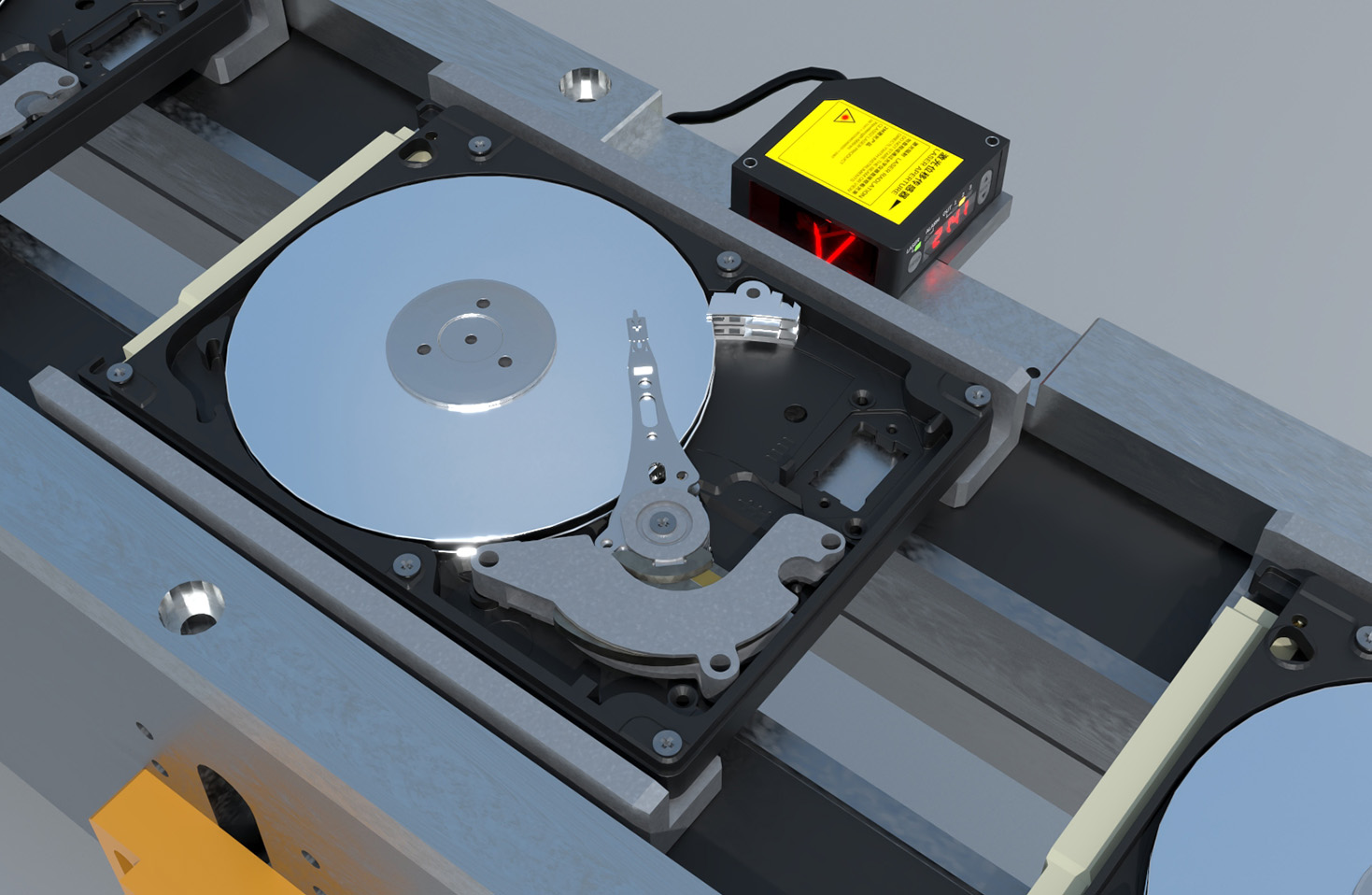
Working distance plays a pivotal role. For long-range applications, such as measuring the fill level in a large silo or monitoring vehicle position, a larger initial spot or a design with controlled divergence is necessary to maintain a usable spot size at the target. A spot that is too small at the transmitter may diverge insignificantly or, conversely, a poorly designed system might see the spot become impractically large and diffuse over distance, losing intensity and measurement accuracy.
The choice of spot size is also intimately linked to the sensing principle. For triangulation-based laser sensors, a smaller spot generally leads to better lateral resolution for profile scanning. For time-of-flight (ToF) or phase-shift sensors, spot size is less critical for distance accuracy but affects target discrimination. In contrast, for laser confocal displacement sensors, achieving an extremely small, focused spot is the core principle enabling nanometer-level resolution.
Environmental factors cannot be ignored. In the presence of airborne particles, steam, or vibration, a slightly larger spot with higher laser power (within safety limits, Class 1 or Class 2 typically) can penetrate interference more effectively and provide a stronger return signal. However, laser power and spot size must always be considered in the context of eye safety regulations (IEC 60825-1).
Therefore, the selection process is a systematic trade-off analysis. Start by defining the primary objective: Is it to measure a specific tiny feature, or to get an average level of a bulk material? Evaluate the target surface: Is it smooth, polished, rough, or translucent? Consider the required stand-off distance and the available sensor mounting space. Review environmental challenges like dust, moisture, or ambient light. Finally, consult sensor datasheets meticulously, paying attention to graphs showing spot size versus distance and minimum object size specifications.
In conclusion, there is no "ideal" laser spot size. A small spot (e.g.,<50µm) is the champion of high-resolution, precision measurement on well-defined surfaces. A large spot (e.g., >1mm) is the workhorse for stable, averaged measurements on difficult surfaces and in challenging conditions. The engineer's task is to match the spot size characteristic to the application's demands. By carefully analyzing the target, environment, and performance requirements, one can specify a laser sensor whose light spot is not just a parameter, but a optimized tool for reliable and accurate measurement.