In the realm of industrial automation and precision measurement, differential inductive sensors and proximity switches stand as critical components for non-contact detection and position sensing. These devices leverage electromagnetic principles to deliver reliable performance in harsh environments where mechanical switches or optical sensors might fail. This article delves into their operational principles, key differences, and typical applications, providing a comprehensive overview for engineers and technicians.
Differential inductive sensors, often referred to as linear variable differential transformers (LVDTs) in their most common form, are transducers that convert linear displacement into an electrical signal. Their core design consists of a primary coil and two secondary coils symmetrically wound on a cylindrical former. A movable ferromagnetic core, attached to the object being measured, moves within the coil assembly. When an alternating current excites the primary coil, it induces voltages in the two secondary coils. The position of the core determines the mutual inductance between the primary and each secondary coil. When the core is centrally positioned, the induced voltages in the secondary coils are equal in magnitude but opposite in phase, resulting in a differential output of zero. Any displacement of the core from the null position creates an imbalance, producing a differential output voltage whose magnitude is proportional to the displacement and whose phase indicates the direction of movement. This differential principle offers high accuracy, excellent resolution, and outstanding rejection of common-mode interference such as temperature fluctuations or supply voltage variations. They are predominantly used in applications requiring precise measurement of linear position, thickness, or runout in machine tools, avionics, and hydraulic systems.
Proximity switches, specifically inductive proximity sensors, are a broader category of non-contact devices designed to detect the presence or absence of a metallic target without physical contact. Their operation is based on the principle of electromagnetic induction and eddy current generation. A typical inductive proximity switch contains an oscillator circuit that generates a high-frequency electromagnetic field at its active face. When a metallic object (ferrous or non-ferrous) enters this field, eddy currents are induced in the target, which loads the oscillator and causes a reduction in its amplitude. This change is detected by a threshold circuit, which subsequently switches the output state of the sensor (e.g., from OFF to ON). Unlike differential sensors, standard inductive proximity switches provide a simple binary output—object detected or not detected—and are not inherently designed for precise distance measurement, though analog versions exist. They are characterized by their robust, often cylindrical or rectangular housings, making them ideal for harsh industrial environments with dust, oil, or coolant. Common types include shielded (flush-mountable) and unshielded versions, with sensing ranges typically from a few millimeters to several tens of millimeters. They are ubiquitous in factory automation for tasks like part detection on conveyors, limit switching, and counting metallic objects.
The fundamental distinction lies in their output and application. Differential inductive sensors are analog devices providing a continuous, precise voltage or current signal proportional to displacement, making them measurement instruments. Proximity switches are primarily digital switching devices used for detection and control logic. While some analog proximity sensors can provide distance-proportional signals, their linearity and accuracy are generally inferior to dedicated differential sensors like LVDTs.
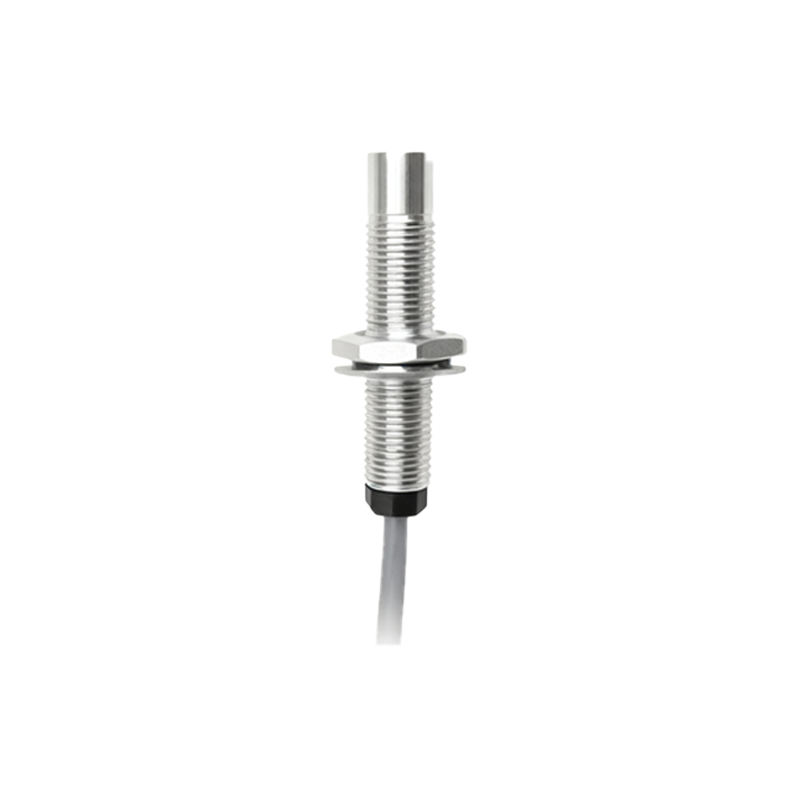
Selection between these technologies depends on the application's requirements. For high-precision, sub-micron level measurement of linear motion over a range, a differential inductive sensor is the superior choice. Its null position stability and robustness against environmental factors are unparalleled. For simple presence detection of metal objects, especially in high-speed counting or position verification on a production line, an inductive proximity switch offers a cost-effective, rugged, and easily integrated solution. It is worth noting that both sensor types are immune to ambient light, dirt (unless conductive), and can operate effectively in oily or wet conditions, a significant advantage over optical alternatives.
In modern systems, both devices often interface with programmable logic controllers (PLCs) or data acquisition systems. Differential sensors require signal conditioners or dedicated amplifier modules to process the millivolt-level AC output into a standard industrial signal like 4-20 mA or 0-10 V DC. Proximity switches typically have built-in electronics providing directly usable switching signals (PNP/NPN, NO/NC) compatible with PLC digital input modules.
Maintenance and installation also differ. Proximity switches are generally simpler to install and set up, often requiring only correct mounting and power connection. Differential sensors demand more careful mechanical alignment to ensure the core moves freely and axially within the coil, and their cabling may require shielding to prevent electrical noise interference.
In conclusion, differential inductive sensors and inductive proximity switches, while sharing an electromagnetic foundation, serve distinct purposes in industrial automation. The former excels in precise, analog displacement measurement, while the latter dominates in robust, binary object detection. Understanding their operational principles, strengths, and limitations is crucial for selecting the right sensor to enhance system reliability, accuracy, and efficiency