In the rapidly evolving landscape of industrial automation and quality control, the demand for high-precision, non-contact measurement solutions has never been greater. Multi-point laser distance sensors have emerged as a cornerstone technology, offering unparalleled accuracy, speed, and flexibility for a wide array of applications. Unlike traditional single-point sensors, these advanced devices utilize multiple laser beams to simultaneously measure distances at several discrete points, creating a detailed profile of a target object's surface, dimensions, or position.
The core operating principle is based on laser triangulation or time-of-flight (ToF) measurement. In a triangulation-based multi-point sensor, a laser diode projects a structured pattern of multiple points onto the target surface. The reflected light from each point is captured by a high-resolution CMOS or CCD array at a known angle. By calculating the displacement of each point's image on the sensor array, the device's onboard processor can determine the precise distance for each individual beam with micron-level resolution. Time-of-flight variants, often used for longer ranges, measure the phase shift or the direct flight time of laser pulses to calculate distance for each emitted point.
The advantages of deploying multi-point laser sensors are transformative. Firstly, they dramatically increase inspection throughput by capturing multiple data points in a single measurement cycle, eliminating the need for mechanical scanning or multiple sensor setups. This is critical in high-speed production lines for automotive, electronics, and consumer goods manufacturing. Secondly, they enable complex profile and contour measurements. Applications include verifying the flatness of semiconductor wafers, measuring the gap and flushness of car body panels, inspecting the thickness of rolled metal or glass, and monitoring the wear of railway wheels or turbine blades. The multi-point data can be used to calculate parameters like parallelism, warpage, and step height with exceptional reliability.
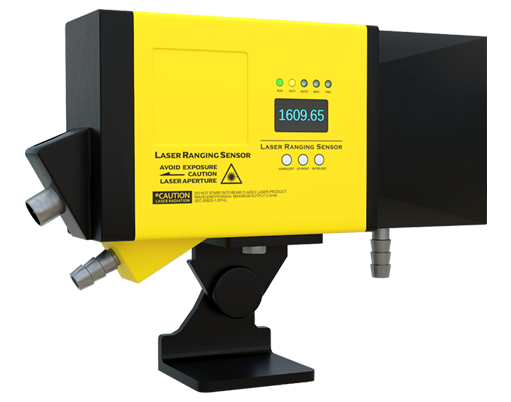
Furthermore, these sensors excel in challenging environments. They are largely immune to variations in ambient light and can measure on a diverse range of surface materials, colors, and textures, though specific calibration may be required for highly reflective or absorptive surfaces. Modern multi-point sensors are equipped with robust industrial housings (IP67/IP69K ratings), making them resistant to dust, water, oil, and mechanical vibration. Integration is streamlined through standard industrial communication protocols such as Ethernet/IP, PROFINET, EtherCAT, and analog/digital I/O, allowing seamless data transfer to PLCs, PCs, or robotic controllers.
A key consideration in system design is the configuration of the measurement points. The number of points can range from 2 to over 100, and their spacing can be fixed or programmable. This allows engineers to tailor the sensor to the exact geometry of the feature being measured. For instance, a sensor with five precisely spaced points is ideal for measuring the tread depth across a tire, while a sensor with a linear array of 32 points is perfect for profiling the edge of a continuous strip material.
Looking ahead, the integration of multi-point laser distance sensors with smart factory frameworks and AI-driven analysis is the next frontier. The rich datasets they provide are fueling predictive maintenance algorithms and real-time adaptive process control, moving beyond simple pass/fail inspection to continuous quality optimization. In conclusion, multi-point laser distance sensors represent a critical enabler of Industry 4.0, providing the precise, multi-dimensional spatial data necessary to build smarter, more efficient, and more reliable manufacturing and inspection systems. Their ability to deliver robust, high-speed, and detailed measurement solutions ensures they will remain indispensable tools for engineers pushing the boundaries of precision and automation.