In the realm of industrial metrology and precision sensing, the evolution from standard line lasers to polarization sensor line lasers represents a significant leap forward. These advanced optical tools are engineered to project a highly visible, straight laser line while simultaneously encoding that line with specific polarization states. This dual functionality unlocks a new dimension of data for machine vision systems, enabling solutions for challenges where conventional diffuse reflection or intensity-based methods fall short.
At its core, a polarization sensor line laser integrates a laser diode, precision optics for line generation, and a polarization-modifying element. The laser source emits coherent light, which is then shaped into a uniform line profile through cylindrical lenses or diffractive optical elements (DOEs). The critical differentiator is the subsequent stage: a polarizing filter or a waveplate (such as a quarter-wave or half-wave plate) imparts a defined polarization state—linear, circular, or elliptical—onto the entire line. This structured light is no longer just about intensity and position; every point along the line carries information about the orientation and phase of its electromagnetic waves.
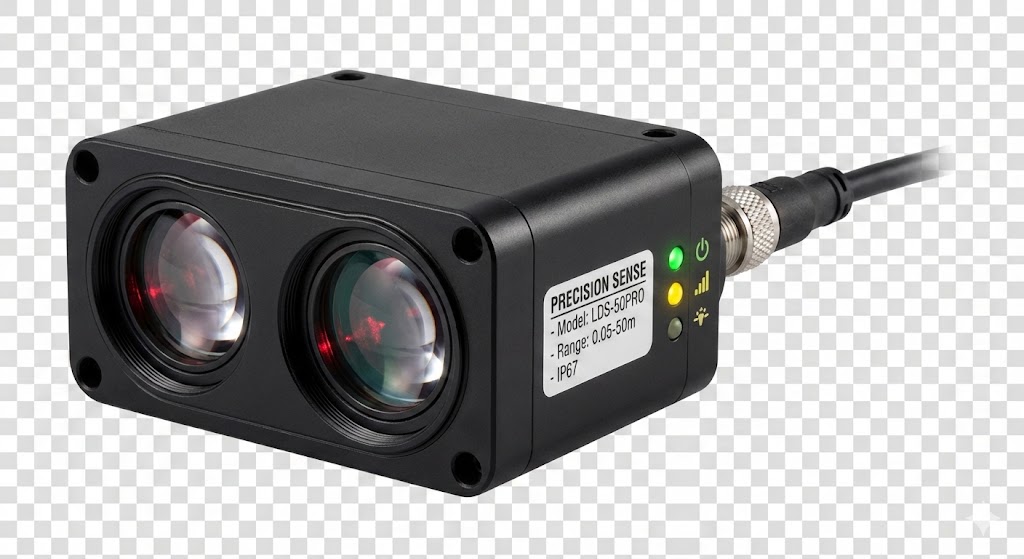
The true power is realized when this polarized line interacts with a target surface and is captured by a polarization-sensitive camera or sensor. The camera, equipped with a polarizing filter array (similar to those in some CMOS sensors) or external analyzers, measures how the surface has altered the incident polarization. Different materials and surface conditions—glossy vs. matte, metallic vs. dielectric, smooth vs. rough—modify polarization in characteristic ways. For instance, specular reflections from a smooth metal part tend to preserve linear polarization to a degree, while diffuse scattering from a painted surface depolarizes the light. By analyzing these changes, the system can extract information far beyond a simple 2D profile.
Key industrial applications are diverse and impactful. In automotive manufacturing, these sensors excel at inspecting glossy painted surfaces for defects like orange peel, scratches, or dirt inclusions that are invisible to standard vision systems under typical lighting. The polarization contrast highlights surface texture variations with exceptional clarity. In electronics assembly, they are indispensable for inspecting solder joints, transparent components like glass or plastic covers, and detecting residual fluxes. The ability to see through surface glare to inspect underlying structures is a paramount advantage. Furthermore, in advanced robotics for bin picking or handling of reflective parts, polarization data helps disambiguate shape from highlight artifacts, drastically improving 3D reconstruction accuracy and grasp planning. They also find use in stress analysis of transparent materials, where birefringence induced by mechanical strain alters polarization, allowing for non-contact quality control of molded plastic parts or glass.
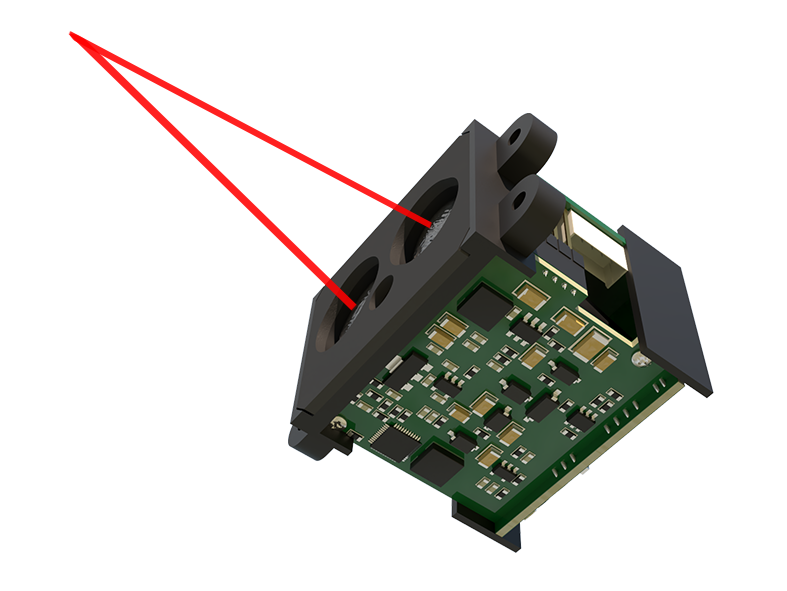
Selecting the right polarization sensor line laser requires careful consideration of several technical parameters. First is the laser wavelength, typically in the visible red (e.g., 650nm) or blue-violet (e.g., 405nm) range. Shorter wavelengths can offer better resolution and different interaction with materials. Output power and line uniformity are critical for achieving consistent signal-to-noise ratio across the entire field of view. The polarization purity (extinction ratio) and the specific polarization state (linear at a defined angle, circular) must match the application's needs. Line length and thickness at a given working distance determine the inspection area and resolution. Finally, mechanical robustness, thermal stability, and compatibility with industrial communication protocols (Ethernet/IP, PROFINET) are non-negotiable for integration into harsh factory environments.
Integration into a vision system involves synchronizing the laser with the capture sequence of the polarization camera. Sophisticated software algorithms then process the raw polarization images, often calculating parameters like Stokes vectors or degree of polarization to create enhanced feature maps. This processing separates the geometric information (the line's deformation for 3D height mapping) from the material information (the polarization signature), providing a rich, multi-layered dataset for decision-making.
While offering remarkable capabilities, practitioners must be aware of limitations. Extremely rough surfaces that completely depolarize light may offer little advantage over conventional methods. The cost is higher due to the specialized optics and required camera technology. Setup and calibration demand a deeper understanding of polarization optics. However, for challenging inspection tasks involving mixed, wet, or highly reflective surfaces, the investment is justified by unparalleled reliability and defect detection rates.
In conclusion, polarization sensor line lasers are not merely an incremental improvement but a transformative technology for industrial automation. By harnessing the properties of polarized light, they reveal hidden details of object surfaces, driving forward quality control, robotic guidance, and precise measurement in sectors demanding the highest levels of precision and reliability. As machine vision continues to evolve towards multi-modal perception, the integration of polarization data stands as a cornerstone for the next generation of intelligent manufacturing systems.