In today's rapidly evolving industrial automation and precision measurement landscape, laser sensors have become indispensable tools. Among the various brands, New Technology (often stylized as New Technology or NT) laser sensors have garnered significant attention for their performance and reliability. A primary consideration for engineers, procurement specialists, and system integrators is the price point of these devices. Understanding the factors that influence the cost of a New Technology laser sensor is crucial for making informed purchasing decisions.
The price of a New Technology laser sensor is not a single fixed figure but a spectrum determined by a confluence of technical specifications and application requirements. At the core, the measurement principle plays a fundamental role. Sensors based on time-of-flight (ToF) for long-range distance measurement, for instance, typically command a higher price than compact triangulation sensors used for precise displacement or thickness gauging at shorter ranges. The required measurement range and resolution are direct cost drivers. A sensor capable of accurately measuring up to 10 meters with sub-millimeter resolution will be priced significantly higher than one designed for 100mm range with micron-level accuracy.
Furthermore, additional features and robustness ratings substantially impact the final price. Sensors equipped with advanced functionalities like background suppression, programmable logic outputs, analog interfaces (4-20mA, 0-10V), or digital communication protocols (IO-Link, Ethernet/IP, PROFINET) add layers of complexity and cost. The housing material and Ingress Protection (IP) rating are also critical. A standard IP67-rated aluminum housing is common, but applications in harsh environments—requiring stainless steel housings, higher IP69K ratings for washdown, or specialized certifications for explosive atmospheres (ATEX)—will inevitably increase the price.
The laser class is another important, though often overlooked, factor. Class 1 lasers, which are inherently safe under all conditions of normal use, involve more engineering to ensure safety and may be priced differently than Class 2 devices. The type of output—simple switching (PNP/NPN), analog, or serial data—also correlates with cost. Integrated display units or configuration software can add convenience but also add to the unit cost.

Market dynamics and supply chain factors influence the broader pricing landscape. Fluctuations in the cost of raw materials, such as specialized optical components and semiconductors, can cause price adjustments. Regional distribution models also play a part; purchasing directly from a manufacturer's representative may differ in cost compared to buying through a large-scale industrial distributor, which might offer volume discounts but have different markup structures.
For a practical estimate, as of the current market analysis, entry-level New Technology laser sensors for basic object detection or simple distance measurement can start in the range of $150 to $300. Mid-range models, offering better accuracy, longer ranges, and standard industrial interfaces, typically fall between $400 and $800. High-end, feature-rich sensors with extended ranges, exceptional accuracy, multiple outputs, and ruggedized designs can range from $900 to well over $2,000. It is imperative to note that these are approximate figures, and exact quotations should be obtained from authorized distributors based on specific part numbers and project volumes.
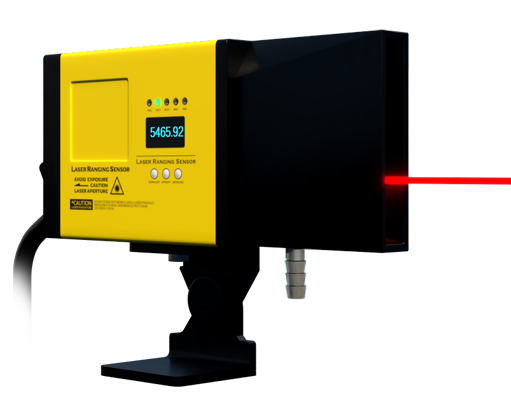
Ultimately, evaluating the price of a New Technology laser sensor should be framed within the context of total cost of ownership and value delivered. A slightly higher initial investment in a more capable or durable sensor can prevent costly downtime, rework, or system failures later. When selecting a sensor, balance the technical requirements of your application—range, accuracy, speed, environmental conditions—against the budget. Engaging with a technical sales engineer can provide clarity, ensuring the chosen sensor meets performance needs without unnecessary over-specification, which inflates cost, or under-specification, which risks project failure. The market for laser sensors is competitive, and while New Technology holds a strong position, comparing specifications and total cost against other reputable brands is always a recommended step in the procurement process.