Laser sensors are a cornerstone of modern automation, measurement, and safety systems. Their precision, speed, and reliability make them indispensable in industries ranging from manufacturing and robotics to automotive and consumer electronics. To effectively understand, select, and apply these sophisticated devices, a clear grasp of their fundamental terminology is essential. This guide provides a detailed explanation of the key terms associated with laser sensor technology.
Laser (Light Amplification by Stimulated Emission of Radiation): This is the core technology. A laser generates a highly focused, coherent, and monochromatic beam of light. Coherence means the light waves are in phase, and monochromatic means they are of a single, specific wavelength. This unique quality allows the beam to travel long distances with minimal divergence, enabling precise targeting and measurement.
Emitter (or Transmitter): This is the component within the sensor that generates and projects the laser beam. It typically contains a laser diode. The quality and characteristics of the emitter directly influence the sensor's range, spot size, and stability.

Receiver (or Detector): This component captures the light that returns from the target. It converts the optical signal (photons) into an electrical signal (voltage or current). Common types include photodiodes, phototransistors, and Position Sensitive Detectors (PSDs). The receiver's sensitivity determines the sensor's ability to detect weak or diffuse reflections.
Time-of-Flight (ToF): A fundamental measurement principle. The sensor calculates the distance to a target by precisely measuring the time it takes for a laser pulse to travel to the object and back. Since the speed of light is constant, the elapsed time is directly proportional to the distance. ToF sensors are excellent for long-range measurements and 3D imaging.
Triangulation: Another core measurement method. In a triangulation sensor, the emitter projects a laser spot onto the target. The reflected light is focused onto a PSD or a CMOS/CCD array at a known angle relative to the emitter. By analyzing the position of the reflected spot on the detector, the sensor's internal processor calculates the target's distance or profile with very high accuracy, especially at short to medium ranges.
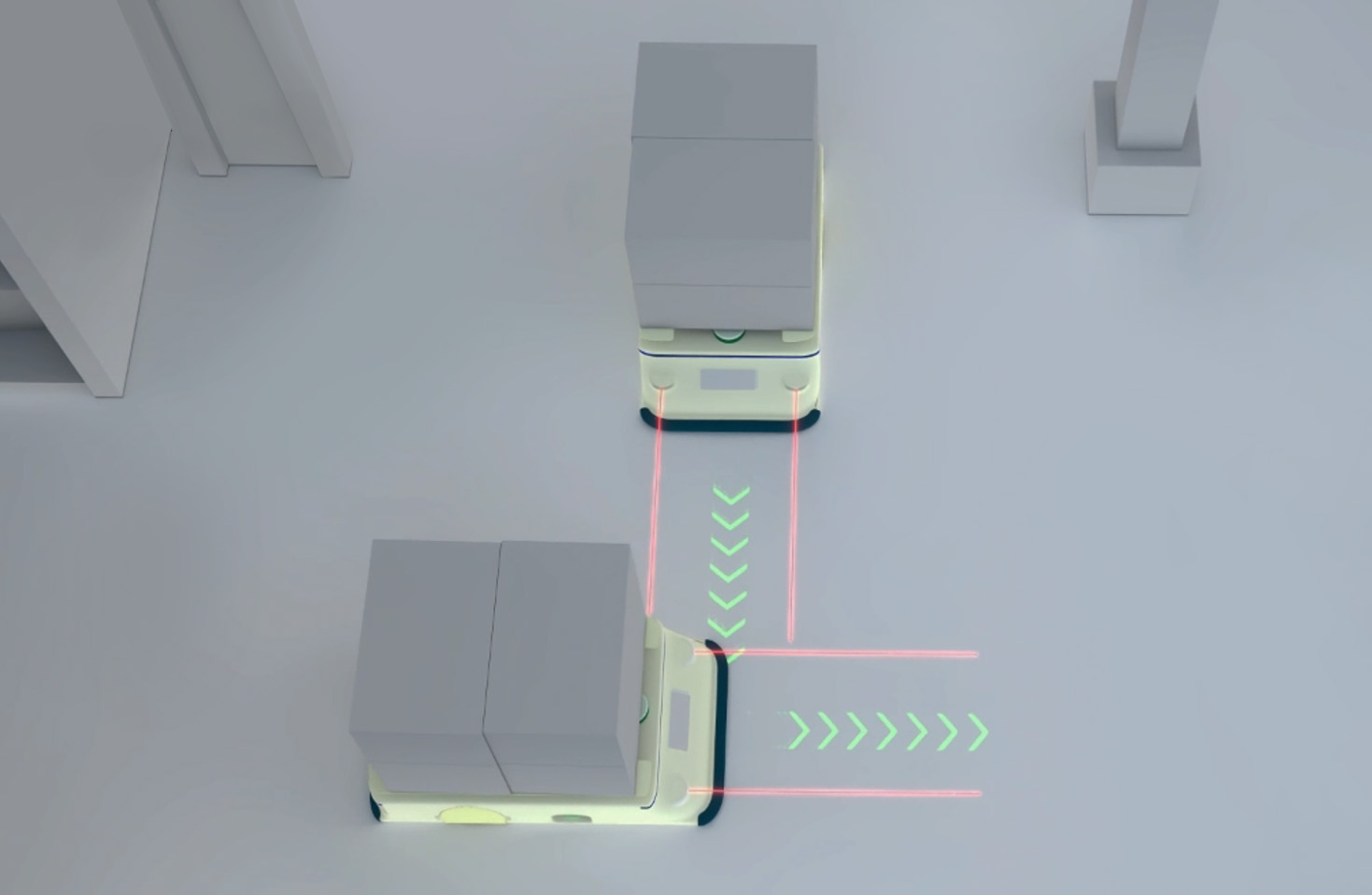
Spot Size: The diameter of the laser beam at the point where it hits the target. A smaller spot size allows for higher resolution and the ability to measure small features or edges. Spot size typically increases with distance due to beam divergence.
Resolution: The smallest change in the measured parameter (e.g., distance, displacement) that the sensor can reliably detect and report. It is a critical indicator of the sensor's precision. For example, a displacement sensor with a resolution of 0.1 µm can detect movements as small as one ten-thousandth of a millimeter.
Repeatability: Often confused with accuracy, repeatability refers to the sensor's ability to consistently return the same measurement value for the same target under identical conditions. High repeatability is crucial for quality control and process stability, even if the absolute value has a slight offset (accuracy error).
Accuracy: The degree of closeness between the sensor's measured value and the true or actual value of the target. It represents the total error of the measurement system, influenced by factors like linearity, temperature drift, and electronic noise.
Sampling Rate (or Response Time): The frequency at which the sensor takes measurements, usually expressed in Hertz (Hz) or milliseconds (ms). A high sampling rate (e.g., 10 kHz) allows the sensor to track fast-moving objects or rapid changes in position, which is vital for dynamic control systems.
Background Suppression (BGS): A feature commonly found in photoelectric sensors, including some laser types. BGS technology allows the sensor to ignore objects beyond a preset sensing distance. It electronically evaluates the angle of the reflected light, effectively creating a sharp, invisible cutoff plane. This makes it ideal for detecting objects on a conveyor belt while ignoring the belt itself or objects behind it.
Diffuse Reflection Mode: The most common operating mode. The sensor's emitter and receiver are housed in the same unit. The sensor detects light that is diffusely reflected off the target's surface. Performance depends heavily on the target's color, material, and surface texture.
Retro-reflective Mode: The sensor requires a separate reflector (like a prismatic reflector). The emitter projects a beam to the reflector, which sends it directly back to the receiver. The sensor detects an object when it interrupts this beam. This mode allows for longer sensing ranges than diffuse mode.
Through-beam Mode (or Opposed Mode): This system uses two separate units: an emitter and a receiver placed opposite each other. An object is detected when it breaks the laser beam traveling between them. This is the most reliable mode for long ranges and for detecting transparent or difficult-to-sense objects.
Analog Output: A continuous voltage or current signal (e.g., 0-10V, 4-20mA) that varies proportionally with the measured value (like distance). This output is used for continuous monitoring or control, such as guiding a robot arm or measuring thickness.
Digital Output (Switch Output): A discrete ON/OFF signal (like an NPN or PNP transistor) that activates when the target is within the sensing range or meets a specific condition. It is used for simple presence detection, counting, or triggering an action.
Understanding these terms empowers engineers and technicians to make informed decisions. Selecting the right laser sensor involves matching these specifications—measurement principle (ToF vs. Triangulation), required resolution, repeatability, sampling rate, and operating mode—to the specific demands of the application, ensuring optimal performance and reliability.