In the world of automation and smart technology, proximity sensors are the silent, unseen workhorses. These devices detect the presence or absence of an object within a specific range without any physical contact. Their ability to provide reliable, non-contact detection makes them indispensable in countless industrial, commercial, and consumer applications. From ensuring safety on factory floors to enabling features on your smartphone, proximity sensors are fundamental components of modern engineering.
At its core, a proximity sensor emits an electromagnetic field or a beam of radiation, such as infrared light. It then looks for changes in the field or return signal. The sensor's target, the object being detected, modifies the field or reflects the signal back. The sensor's circuitry processes this change to generate an output signal, typically a simple on/off switch. This non-contact operation offers significant advantages, including no mechanical wear, high reliability, long operational life, and fast response times, even in harsh environments where dirt, oil, or moisture might interfere with mechanical switches.
There are several primary types of proximity sensors, each based on different physical principles and suited for specific materials and conditions. Inductive proximity sensors are one of the most common types. They generate an oscillating electromagnetic field and detect the eddy current losses caused when a metallic object enters this field. Consequently, they are used exclusively for detecting metals, particularly ferrous metals like steel and iron. You will find them in machine automation for tasks like counting metal parts, determining position limits, or confirming the presence of a component.
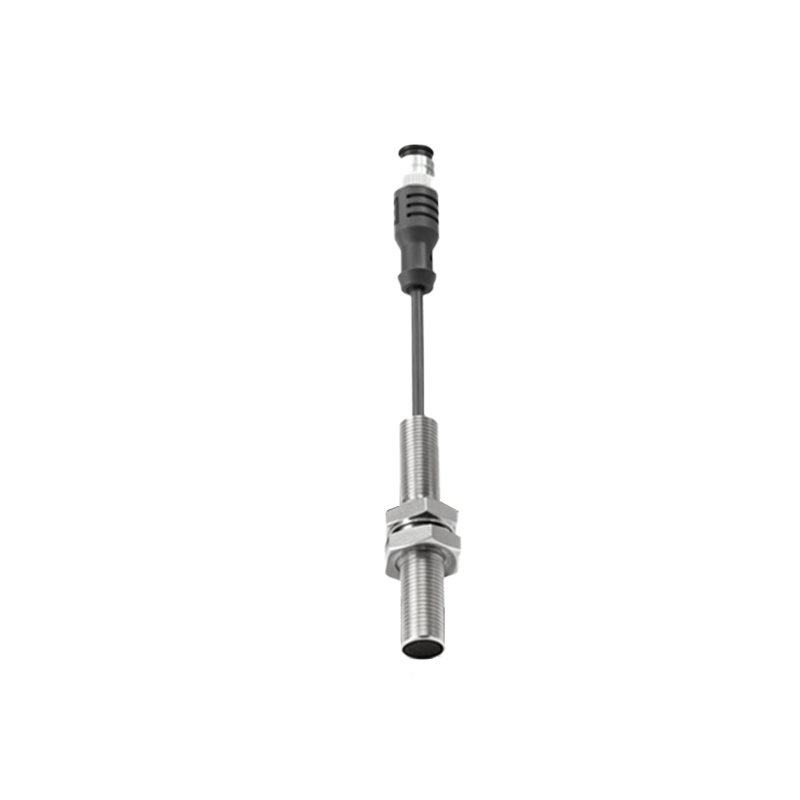
Capacitive proximity sensors, on the other hand, can detect both metallic and non-metallic materials, including liquids, powders, plastics, and wood. They function by generating an electrostatic field and sensing the change in capacitance that occurs when any object with a dielectric constant different from air enters the field. This makes them versatile for applications like liquid level detection in tanks, material handling, or detecting filled packages on a conveyor belt.
Ultrasonic proximity sensors operate by emitting high-frequency sound waves and evaluating the echo received back. They measure the time interval between sending the signal and receiving the echo to calculate the distance to an object. These sensors are excellent for detecting objects of virtually any material, shape, or color, and they perform well in environments with dust, smoke, or fog. Common uses include distance measurement, pallet detection in warehouses, and vehicle detection in automated car washes.
Photoelectric sensors, or photo-eyes, use light to detect objects. They consist of a light emitter (usually LED) and a receiver. When the emitted light beam is interrupted or reflected by an object, the receiver detects the change. They come in through-beam, retro-reflective, and diffuse reflective variants, offering long detection ranges and the ability to sense small objects. Applications are vast, ranging from packaging lines and bottling plants to automatic doors and security systems.
Finally, magnetic proximity sensors, often called reed switches or Hall-effect sensors, detect the presence of a permanent magnet. They are simple, cost-effective, and used in applications like detecting the open/closed status of doors or windows, or in rotational speed sensing.
The applications of proximity sensors are nearly limitless. In industrial automation, they are crucial for position sensing, end-of-travel control, counting, and jam detection. In the automotive industry, they are used for parking assistance systems, collision avoidance, and detecting seat occupancy. In consumer electronics, a small proximity sensor in your smartphone turns off the screen during a call to save power and prevent accidental touches. They also enable touchless faucets, automatic hand dryers, and robotics.
When selecting a proximity sensor, engineers must consider several factors: the material of the target object, the required sensing distance, the operating environment (temperature, presence of contaminants), the output type needed (digital or analog), and the required speed of response. Proper installation is also critical, as surrounding metal or other sensors can sometimes cause interference.
In conclusion, proximity sensors are a foundational technology that enables automation, enhances safety, and creates convenience. Their development continues to advance, with trends focusing on miniaturization, increased intelligence with IO-Link communication, and greater robustness. As machines and devices become smarter and more interactive, the role of the humble proximity sensor will only grow in importance, continuing to sense our world without ever making contact.