In the rapidly evolving landscape of industrial automation and precision engineering, the advent of ultra-compact laser sensors marks a significant technological leap. These miniature yet powerful devices are redefining the boundaries of non-contact measurement, offering unparalleled accuracy in applications where space constraints and environmental challenges were once insurmountable obstacles. Unlike traditional photoelectric or ultrasonic sensors, ultra-compact laser sensors utilize a highly focused, coherent light beam to detect minute changes in position, distance, or profile with micron-level precision. Their compact form factor, often no larger than a fingertip, allows for seamless integration into dense machinery, robotic arms, and portable inspection tools without compromising performance.
The core operational principle hinges on laser triangulation or time-of-flight measurement. In triangulation-based models, a laser diode projects a precise spot onto the target surface. The reflected light is captured by a high-resolution CMOS or CCD array at a known angle. By calculating the displacement of the light spot on the receiver, the sensor determines the exact distance to the target with exceptional speed and repeatability. This method is ideal for high-precision tasks such as wafer alignment in semiconductor fabrication, thickness monitoring of thin films, and real-time inspection of micro-component assemblies. Time-of-flight variants, which measure the phase shift or direct flight time of laser pulses, excel in longer-range applications, including AGV navigation and bulk material level sensing, while maintaining a remarkably small footprint.
One of the most compelling advantages of these sensors is their robustness in harsh industrial environments. Engineered with IP67 or higher ingress protection ratings, they withstand exposure to dust, oil, coolant mist, and mechanical vibrations that would incapacitate conventional sensors. Advanced models incorporate temperature compensation algorithms and hardened optical windows, ensuring stable readings across a wide operational range from -10°C to 60°C. Furthermore, the coherent nature of laser light minimizes interference from ambient light, enabling reliable operation under bright factory lighting or in fluctuating outdoor conditions.
The integration of smart features has propelled ultra-compact laser sensors into the era of Industry 4.0. Many units now come equipped with integrated processors and digital interfaces such as IO-Link, EtherCAT, or PROFINET. This allows for real-time data transmission to PLCs or cloud-based analytics platforms, facilitating predictive maintenance, statistical process control, and adaptive system calibration. For instance, in automated assembly lines, these sensors can instantly detect part misalignment or dimensional deviations, triggering corrective actions without halting production. Their low power consumption and modular design also support the growing trend towards decentralized, edge-computing architectures.
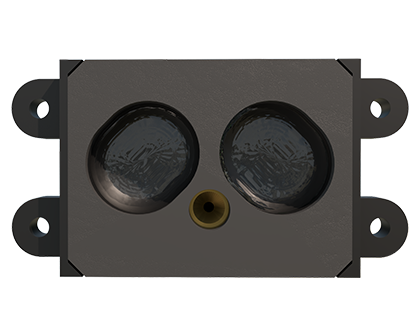
Application diversity is a hallmark of this technology. In electronics manufacturing, they verify solder paste deposition and component placement on PCBs. In automotive production, they ensure precise gap and flush measurements between body panels. Medical device manufacturers rely on them for sterilizable, high-accuracy inspection of catheters and implants. Even in consumer goods, they monitor fill levels in miniature cosmetic containers or check the integrity of micro-engraved security features. The ability to measure on reflective, transparent, or dark surfaces—thanks to adjustable laser power and sophisticated receiver algorithms—further expands their utility.
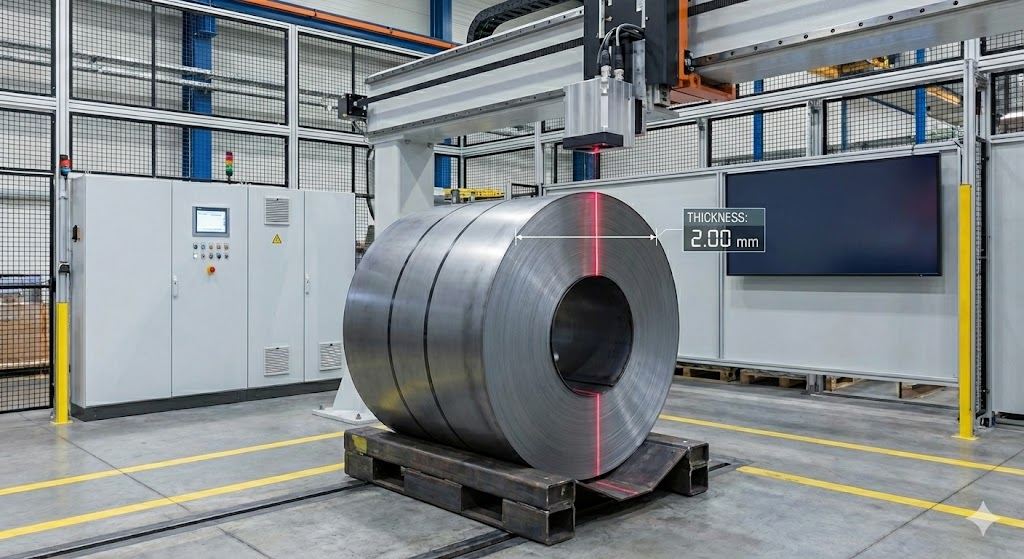
Looking ahead, ongoing advancements in laser diode efficiency, ASIC miniaturization, and AI-enhanced signal processing promise to make these sensors even smaller, smarter, and more cost-effective. Emerging trends include the development of multi-spot laser sensors for simultaneous profile scanning and hyperspectral laser sensing for material identification. As industries continue to demand higher precision, greater flexibility, and more compact solutions, ultra-compact laser sensors are poised to become indispensable tools, driving innovation in micro-manufacturing, robotics, and beyond. Their impact underscores a fundamental shift towards intelligent, sensor-driven systems where size no longer dictates capability.
