In the realm of industrial automation and control, the ability to detect objects without physical contact is paramount. Among the various non-contact sensing technologies, capacitive proximity switches and capacitive sensors stand out for their unique capabilities and versatility. Unlike their inductive counterparts, which are limited to detecting metallic objects, capacitive sensors can detect a vast array of materials, including liquids, plastics, glass, wood, and granular substances. This fundamental characteristic opens up a wide spectrum of applications across diverse industries.
The operating principle of a capacitive sensor is elegantly rooted in the concept of capacitance. At its core, the sensor forms one plate of a capacitor, with the target object acting as the other plate. The air gap between them serves as the dielectric. The sensor's internal oscillator generates an electrostatic field. When a target enters this field, it alters the dielectric constant and thus the capacitance of the system. This change in capacitance is detected by the sensor's evaluation circuitry. Once the change exceeds a predefined threshold, the sensor's output state switches, signaling the presence of the object. A key feature is the sensitivity adjustment, often via a potentiometer, which allows the user to fine-tune the sensing distance for specific materials and environmental conditions, effectively ignoring background interference.
Capacitive proximity switches are typically self-contained devices with a built-in oscillator and switching output. They are commonly used for straightforward presence/absence detection. Capacitive sensors, in a broader sense, can refer to more sophisticated systems, including analog-output sensors that provide a continuous signal proportional to the distance or material property, which is crucial for level sensing or thickness measurement.
The applications for capacitive sensing are extensive. In packaging, they reliably detect plastic bottles, foil wrappers, or cardboard boxes on high-speed lines. In the food and beverage industry, they are indispensable for liquid level control in non-metallic tanks, whether detecting the creamy foam on beer or the precise fill level of juice in a PET bottle. Wood processing utilizes them to monitor lumber position, while the pharmaceutical sector employs them to count pills or verify the presence of plastic vial caps. A particularly critical application is in bulk material handling, where they prevent overfills in silos containing powders, grains, or pellets.
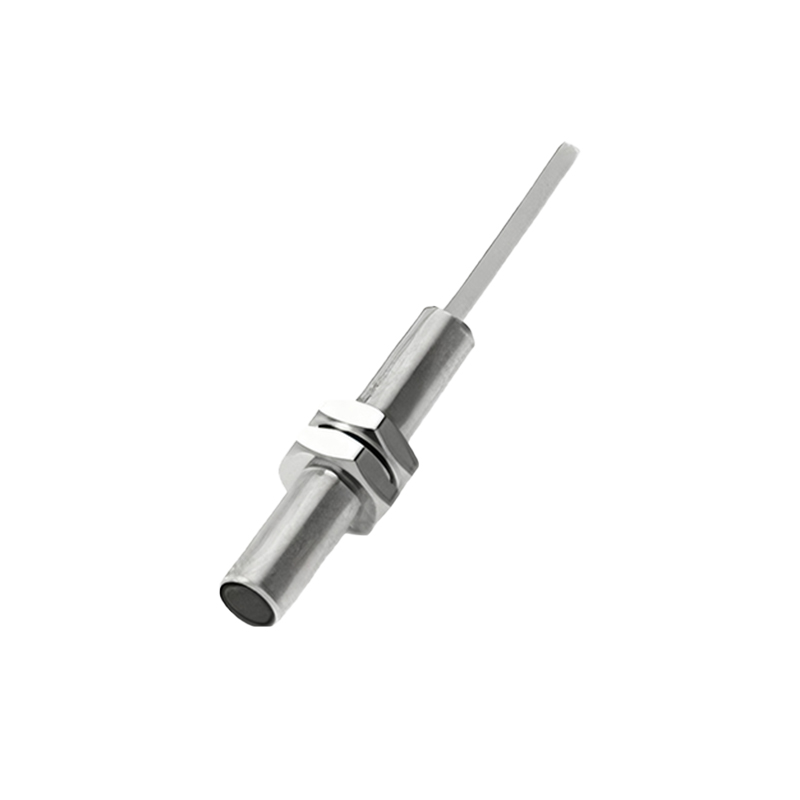
Selecting the right capacitive sensor requires careful consideration of several parameters. The nominal sensing distance (Sn) is specified for a standard target (usually grounded metal). For non-metallic materials, the effective sensing range is reduced and must be factored in. The housing material is vital; cylindrical brass or stainless-steel housings offer robustness for harsh environments, while plastic housings are used where sensing through a container wall is necessary. The output type must match the control system: PNP (sourcing) or NPN (sinking) transistor outputs for DC sensors, or relay contacts for AC/DC switching. Environmental factors like temperature extremes, humidity, dust, and the presence of conductive contaminants can significantly impact performance. For instance, accumulated dust or condensation on the sensor face can cause false triggering, making sensors with built-in environmental compensation a wise choice.
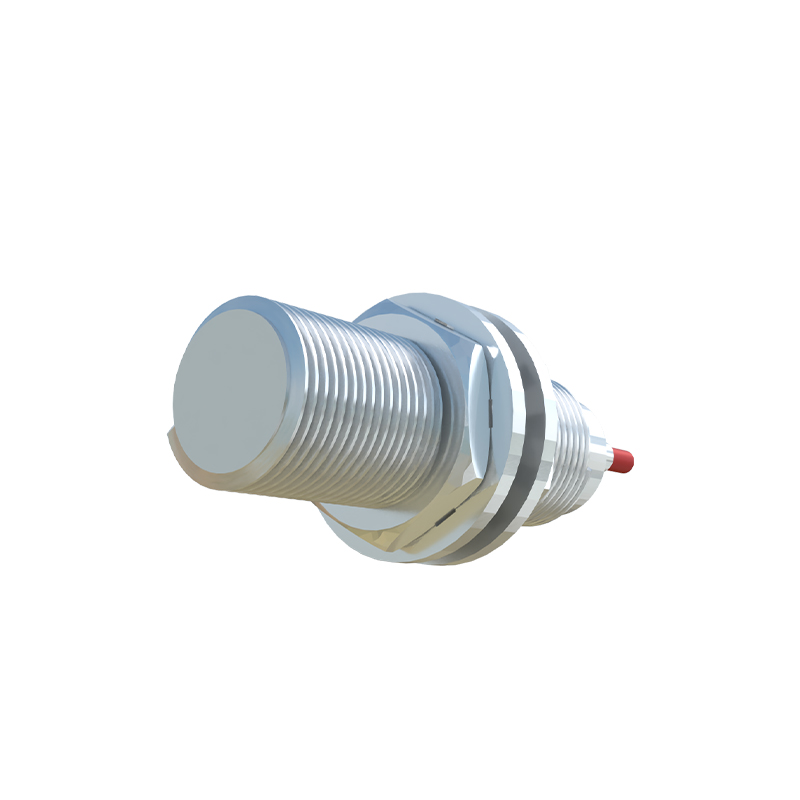
Installation and commissioning are straightforward but demand attention to detail. Maintaining the recommended clearance from surrounding metal (typically 2-3 times the sensor diameter) prevents side-effects from adjacent structures. When sensing through a non-metallic container wall, the effective sensing distance is reduced, and the wall thickness must be less than the sensor's reduced range. The sensitivity adjustment should be performed with the target in the desired detection position and under normal operating conditions to ensure reliable operation while ignoring the container wall itself.
In comparison to other technologies, capacitive sensors fill a specific niche. They are the go-to solution when the target is non-metallic, or when detection must occur through a barrier. While photoelectric sensors offer longer ranges, they can be fooled by color or transparency. Ultrasonic sensors are excellent for long-range and precise distance measurement but may be affected by temperature gradients or soft, sound-absorbing materials.
In conclusion, capacitive proximity switches and sensors are powerful and flexible tools in an engineer's arsenal. Their ability to interact with almost any material makes them indispensable for modern, automated processes. A deep understanding of their operating principle, coupled with a methodical approach to selection and installation based on the specific application requirements, ensures optimal performance, enhanced process reliability, and reduced downtime. As industries continue to innovate with new materials and complex processes, the role of capacitive sensing technology will only grow in importance.