Capacitive proximity sensors are versatile and essential components in modern industrial automation and control systems. Unlike their inductive counterparts which detect only metals, capacitive sensors can detect a wide range of materials, including liquids, plastics, glass, wood, and granular substances, by measuring changes in capacitance. This article delves into the operational principles, key features, diverse applications, and critical selection criteria for these powerful sensing devices.
Fundamental Operating Principle
The core operation of a capacitive proximity sensor is based on the principle of capacitance. A capacitive sensor essentially functions as an open capacitor. Its active face contains two conductive electrodes (often arranged as concentric metal rings) that form an electrostatic field. When no target is present, the oscillator circuit within the sensor maintains a stable state. As a target object enters the sensing field, it alters the dielectric properties of the space between the electrodes. Even non-conductive materials have a dielectric constant higher than air. This change increases the capacitance of the system. Once the capacitance reaches a preset threshold, it triggers the oscillator to start or stop oscillating. This change in the oscillator's state is subsequently processed by the evaluation circuitry, which switches the sensor's solid-state output (typically NPN or PNP).
Key Characteristics and Advantages
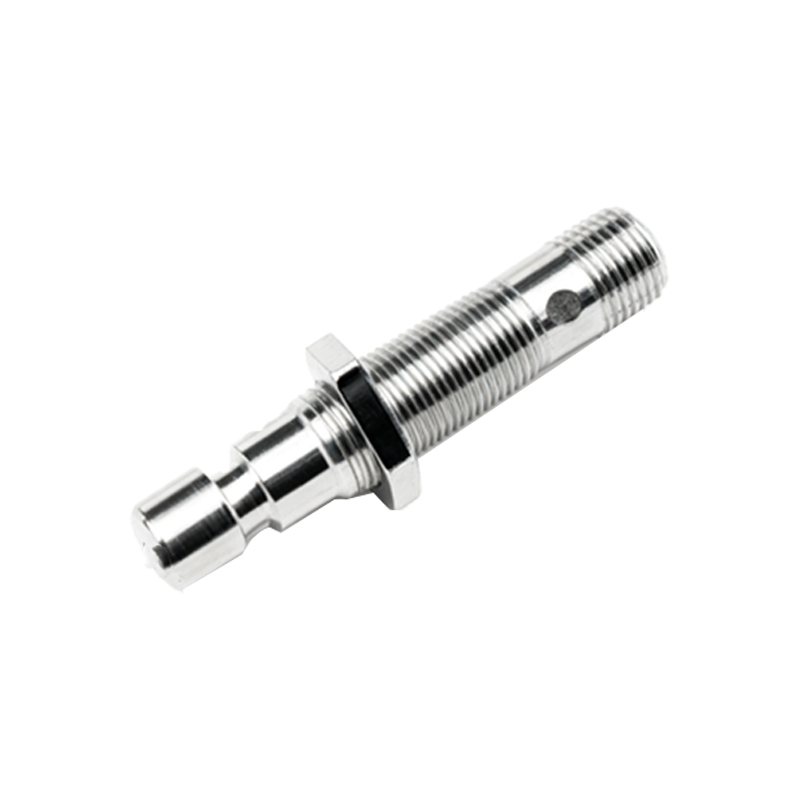
Capacitive sensors offer several distinct advantages. Their primary benefit is material versatility. They can detect virtually any solid or liquid, making them indispensable for applications involving non-metallic objects. Many models feature adjustable sensitivity, allowing engineers to fine-tune the sensing distance and ignore interfering background materials, such as a container wall. They are also effective for level detection of both conductive and non-conductive liquids, powders, and granules. Modern designs are robust, often featuring housings made of PTFE or PPS for harsh chemical environments, and are available in various form factors (cylindrical, rectangular, slot-type). However, they can be influenced by environmental factors like humidity, dust, and temperature extremes, which can affect the dielectric constant of air. Proper shielding and installation are crucial to mitigate false triggers from unwanted background.
Common Industrial Applications
The application scope for capacitive sensors is remarkably broad. In packaging and material handling, they detect the presence of cardboard boxes, plastic bottles, or film layers. In the food and beverage industry, they are used for level control in silos containing flour, sugar, or grains, and for detecting liquid levels in transparent bottles or containers. Woodworking and furniture manufacturing utilize them to sense wood panels or composite boards. In the automotive sector, they monitor fluid levels (e.g., coolant, brake fluid) and detect plastic components on assembly lines. Specialized versions are employed as touch-sensitive control interfaces, replacing mechanical buttons in appliances and industrial HMIs. Slot sensors are perfect for detecting missing labels or tabs on a continuous web.
Selection Guide and Installation Best Practices
Selecting the right capacitive sensor requires careful consideration of several parameters. First, define the target material and the required sensing distance (Sn). Note that the rated sensing distance is defined for a mild steel target; for other materials, a reduction factor based on the material's dielectric constant must be applied. The sensor housing material must be compatible with the industrial environment (e.g., resistant to oils, chemicals, or washdowns). Output type (NO/NC, NPN/PNP) must match the PLC or controller input card. For level detection, consider the dielectric constant of the medium; low-K materials like certain plastics may require a specialized high-sensitivity sensor. Installation is critical: ensure the sensor is not mounted too close to conductive grounding surfaces, as this can reduce the effective sensing range. Maintain a minimum clearance around the active sensing face as specified in the datasheet. For level control in agitated vessels, use a stilling pipe to prevent false signals from splashing. Always refer to the manufacturer's technical documentation for specific wiring, temperature, and voltage requirements.
In conclusion, capacitive proximity sensors are powerful tools that bridge the gap where other sensor types fall short. Their ability to interact with a diverse material set through non-contact means makes them a cornerstone of flexible and reliable automation solutions. A thorough understanding of their operating principles, coupled with diligent selection and installation practices, ensures optimal performance and longevity in demanding industrial environments.