In the world of industrial automation and electrical engineering, inductive proximity sensors are indispensable components. They provide non-contact detection of metallic objects, ensuring reliability, safety, and efficiency in countless applications, from assembly lines and packaging machinery to material handling and robotic systems. A common and critical question for procurement specialists, project managers, and engineers is: "How much does an inductive proximity sensor cost?" The answer is not a simple figure, as the price is influenced by a complex matrix of technical specifications, brand reputation, and market dynamics.
Firstly, the core technology and specifications are primary cost drivers. The sensing range is a fundamental factor. Standard barrel sensors with a range of 2mm to 15mm are typically the most economical, often found in the $20 to $80 USD range for basic models. Sensors with extended ranges (e.g., 20mm to 40mm) or those designed for specialized detection (like factor-1 sensors for all metals) command a higher price, potentially ranging from $80 to $200 or more. The housing material also significantly impacts cost. Brass or nickel-plated brass housings offer good durability at a moderate price point. Stainless steel housings, essential for washdown environments (IP67/IP69K ratings) or corrosive applications, can increase the cost by 30% to 50% compared to standard models.
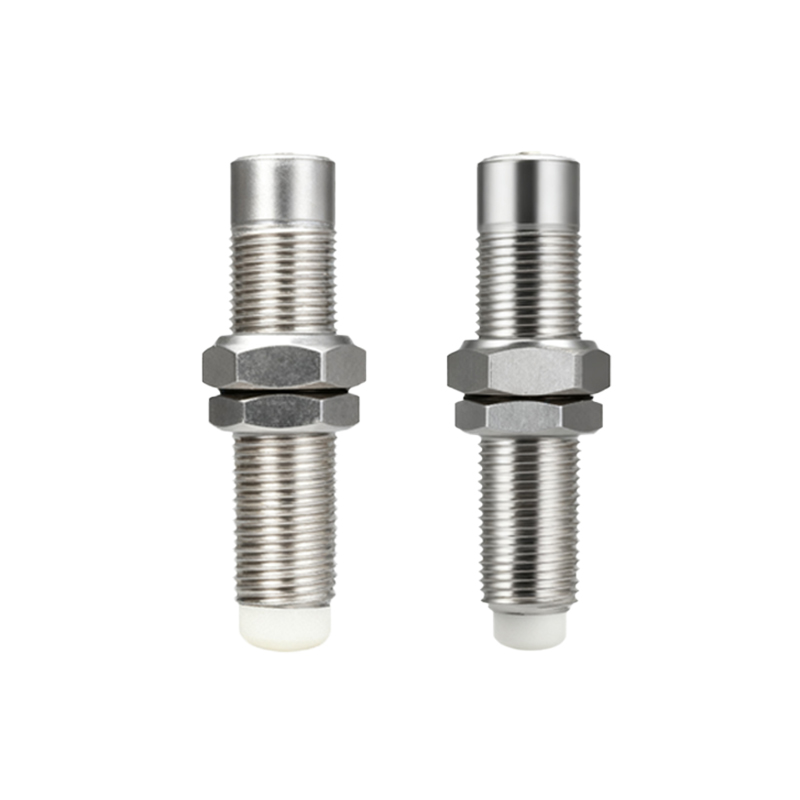
Output configuration is another key variable. Basic two-wire DC sensors are generally less expensive than their three-wire or four-wire counterparts. Three-wire sensors (PNP or NPN) offer more stable performance and are industry standards, with prices reflecting that. Analog output sensors (4-20mA, 0-10V) or IO-Link enabled smart sensors, which provide diagnostic data and parameterization capabilities, sit at the premium end of the spectrum, with prices easily exceeding $150 and reaching several hundred dollars. The connection type—integral cable, quick-disconnect (M8, M12), or terminal compartment—also adds variance to the final cost.
Brand positioning creates a substantial price stratification. Established global leaders like Siemens, Omron, Pepperl+Fuchs, and Balluff are synonymous with high reliability, extensive R&D, global support, and long-term availability. Their products often carry a premium, with standard sensors starting around $50 and going well above $300 for advanced models. This cost is frequently justified in mission-critical applications where sensor failure leads to costly downtime. Mid-tier and value brands, including numerous European, American, and Asian manufacturers, offer competitive alternatives. These sensors, often priced between $20 and $120, provide solid performance for many standard applications and have gained significant market share. Finally, the market is populated with economy-grade sensors, often sourced directly from manufacturers. While tempting at price points as low as $10 to $40, engineers must rigorously evaluate their long-term reliability, consistency, and certification (e.g., CE, UL) for the intended application.
Beyond the unit price, the Total Cost of Ownership (TCO) is a crucial concept. A cheaper sensor that fails prematurely can incur massive costs in production stoppages, emergency shipping, and labor for replacement. Conversely, a more expensive, robust sensor with features like diagnostic LEDs, short-circuit protection, and high noise immunity can prevent unplanned downtime, offering a far better return on investment. Purchasing volume is a universal lever; significant OEM or plant-wide orders almost always secure substantial discounts from distributors or directly from manufacturers.
In conclusion, pinpointing an exact price for an inductive proximity sensor is impractical without defining the application requirements. As a guideline, expect to budget anywhere from $25 for a basic, economy-range sensor to over $400 for a specialized, long-range, smart sensor from a top-tier brand. The most cost-effective strategy is to carefully analyze the operational environment, required sensing performance, and necessary certifications. Collaborating with a trusted technical distributor or supplier representative is invaluable. They can help navigate the specifications-to-price landscape, ensuring you select a sensor that delivers optimal performance and reliability for your specific electrical and automation needs, ultimately providing the best value over its entire service life.