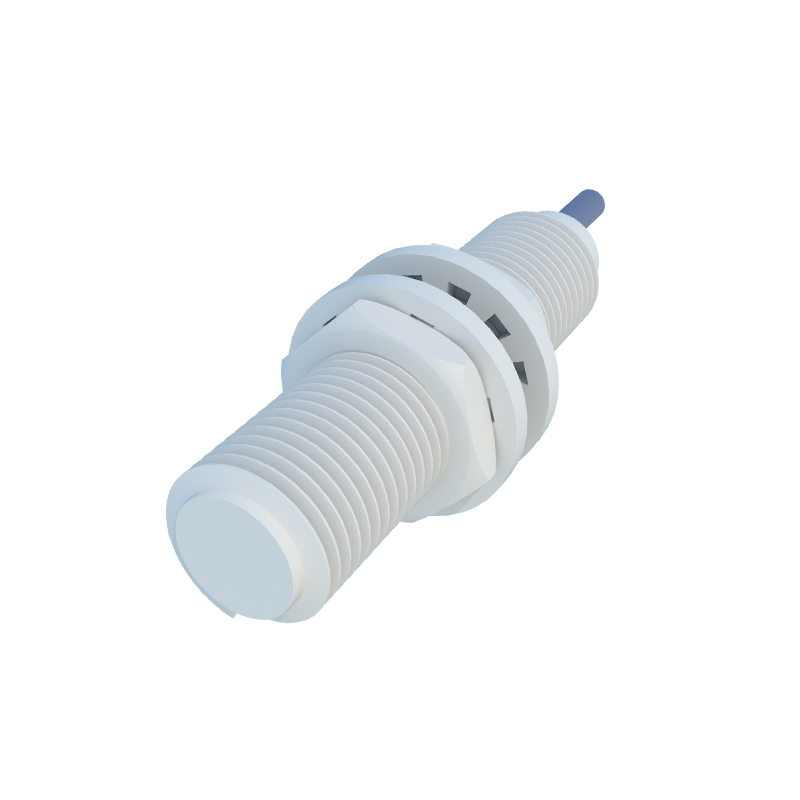
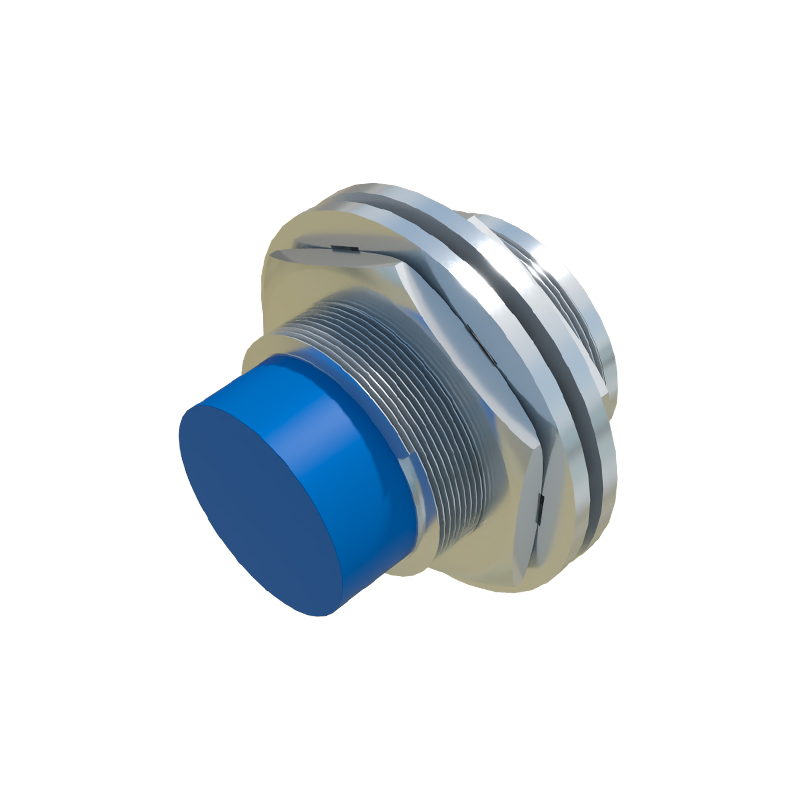
Capacitive proximity sensors are widely utilized in industrial settings for non-contact liquid level detection due to their reliability, versatility, and ability to function through non-metallic container walls. These sensors operate on the principle of capacitance change. Essentially, a capacitive sensor generates an electrostatic field. When a target material—in this case, a liquid—enters this field, it alters the sensor's capacitance. The sensor's internal circuitry detects this change and triggers an output signal, typically a switch signal, indicating the presence or absence of liquid at a predetermined level.
The core advantage of capacitive sensors for liquid level applications lies in their material-agnostic nature. Unlike inductive sensors, which only detect metals, capacitive sensors can detect virtually any material, including water, oils, chemicals, and granular substances, provided the dielectric constant differs from air. This makes them exceptionally suitable for monitoring liquids in plastic, glass, or composite tanks. The sensor can be mounted externally on the tank wall, enabling a completely sealed, non-invasive installation that eliminates risks of contamination or leakage—a critical factor in food & beverage, pharmaceutical, and chemical processing industries.
Key design considerations for effective implementation include the dielectric constant (εr) of the liquid, wall material and thickness, and the sensor's sensitivity adjustment. Liquids with higher dielectric constants (like water, εr ≈ 80) produce a stronger signal change compared to hydrocarbons (εr ≈ 2-4). Modern capacitive sensors feature adjustable sensitivity potentiometers or teach-in functions. This allows engineers to calibrate the sensor to ignore the constant capacitance of the container wall and respond precisely to the liquid level change, even in the presence of buildup or coating on the inner wall.
Installation and environmental factors are paramount. Sensors must be mounted securely against a clean, flat surface of the tank wall. Gaps or curved surfaces can destabilize the electrostatic field. Factors like temperature fluctuations, humidity, and airborne contaminants can influence performance. Selecting sensors with appropriate housing materials (e.g., PTFE for aggressive chemicals) and ingress protection ratings (IP67/IP69K for washdown areas) ensures long-term stability. For conductive fluids, a special grounding ring or ensuring proper tank grounding might be necessary to prevent false triggers from stray capacitance.
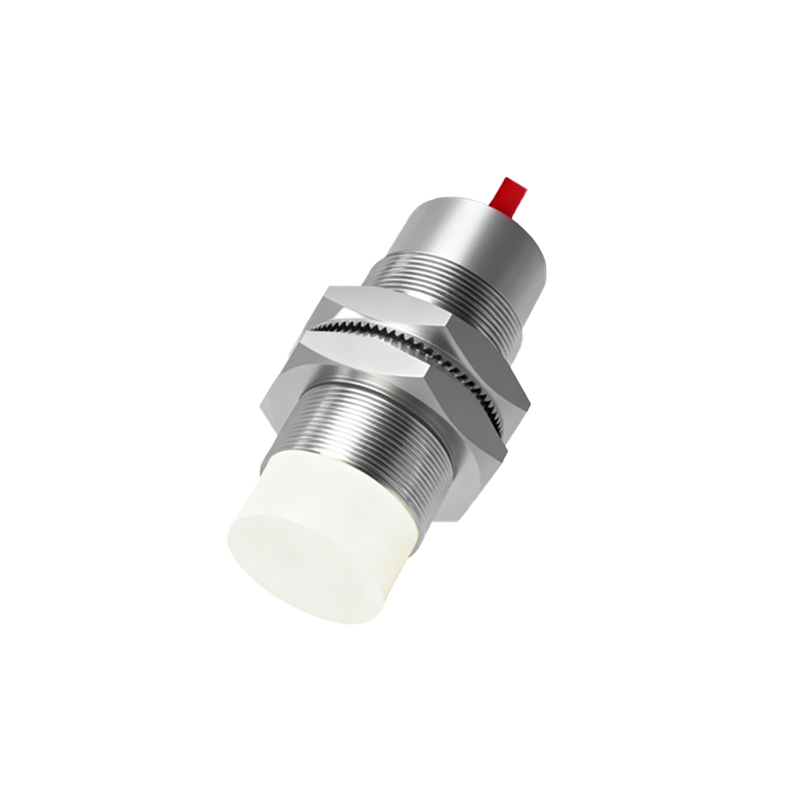
Applications are diverse. In water treatment plants, they control pump operations by detecting high/low levels in clarifiers or storage tanks. In food processing, they monitor milk, juice, or syrup levels in stainless steel or plastic vessels without contact. In the chemical industry, they provide safe level indication for corrosive or hazardous liquids. Furthermore, they are integral in leak detection systems by sensing unexpected liquid presence in containment sumps.
Compared to other technologies like ultrasonic, float switches, or conductive probes, capacitive sensors offer a compelling blend of simplicity, durability, and cost-effectiveness for point-level detection. They have no moving parts to wear out, require minimal maintenance, and are unaffected by factors like pressure, foam, or vapor that can plague other methods. However, for continuous level measurement, specialized capacitive probes (level transmitters) with analog outputs are employed instead of simple proximity switches.
In conclusion, capacitive proximity sensors provide a robust and flexible solution for industrial liquid level control. Their ability to sense through walls, compatibility with diverse liquids and containers, and solid-state reliability make them a cornerstone of modern process automation. Proper selection, calibration, and installation are key to leveraging their full potential for ensuring process efficiency, safety, and product quality across countless industries.