Proximity sensors are indispensable components in modern industrial automation, celebrated for their non-contact detection capabilities, durability, and high-speed operation. They play a critical role in object detection, position sensing, and counting across diverse sectors like manufacturing, automotive, and packaging. However, despite their widespread adoption and significant advantages, these sensors are not without inherent limitations. A thorough understanding of their key disadvantages is crucial for engineers and system designers to ensure optimal selection, integration, and reliability in complex control systems.
One of the most prominent drawbacks is their limited sensing range. Unlike other sensing technologies, such as ultrasonic or photoelectric sensors, most inductive and capacitive proximity sensors operate effectively only within a very short distance, typically from a few millimeters to several centimeters. This constraint imposes strict mounting and positioning requirements. The target object must pass within this narrow window for reliable detection, which can complicate mechanical design and limit application flexibility. For tasks requiring detection of objects at greater distances, alternative sensor types must be considered, potentially increasing system cost and complexity.
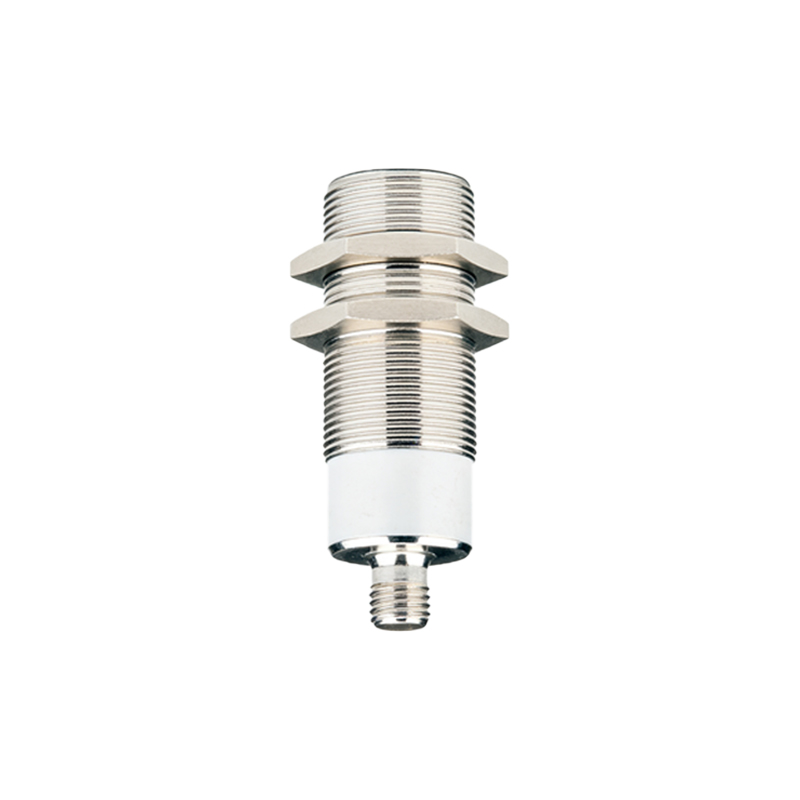
Environmental susceptibility poses another significant challenge. While proximity sensors are generally robust, their performance can be severely degraded by specific ambient conditions. Inductive sensors, designed to detect metallic objects, are notoriously susceptible to interference from external electromagnetic fields generated by nearby motors, transformers, or welding equipment. This can lead to false triggering or failure to detect. Capacitive sensors, which react to changes in capacitance, can be influenced by humidity, dust, or the presence of non-target materials, causing erratic behavior. Even the target object's properties—such as the type of metal, size, shape, and surface condition—can dramatically affect an inductive sensor's effective sensing distance, introducing variability and potential for error.
Furthermore, these sensors typically offer limited information output. A standard proximity sensor provides a simple binary signal: on or off. It confirms the presence or absence of an object within its range but conveys no additional data about the object's speed, exact distance (analog variants exist but are less common), color, temperature, or other characteristics. This "dumb" functionality means they cannot be used for more sophisticated tasks like quality inspection, precise measurement, or complex identification, which are increasingly demanded in smart factories and Industry 4.0 environments. For such applications, vision systems or more advanced sensors are necessary.
Physical and installation limitations are also noteworthy. The sensing face of the sensor must be kept clean and unobstructed. Accumulation of dirt, oil, metal shavings, or other contaminants on the active surface can insulate the sensing field, leading to reduced range or complete operational failure. This necessitates regular maintenance in harsh industrial settings. Additionally, most standard proximity sensors have a "blind zone" immediately in front of the sensing face where detection is not possible. This dead zone must be accounted for during mechanical design. The sensors themselves can also be physically bulky for some applications, and their fixed sensing direction limits mounting options.
Finally, cost considerations for specialized types can be a disadvantage. While basic inductive sensors are relatively inexpensive, sensors designed for extreme environments (high temperature, high pressure, corrosive atmospheres) or those with extended ranges, analog outputs, or special materials (like PTFE coating for chemical resistance) command a significantly higher price. This can impact the overall project budget, especially when large quantities are required. Selecting an over-specified sensor for a simple task wastes capital, while choosing an under-specified one risks premature failure and downtime.
In conclusion, while proximity sensors are powerful tools for basic presence detection, their limitations regarding range, environmental sensitivity, data poverty, physical constraints, and cost for specialized models must be carefully evaluated during the system design phase. Successful implementation hinges on a clear assessment of the application requirements, operating environment, and performance expectations. Often, the solution involves complementing proximity sensors with other sensing technologies to create a robust, reliable, and intelligent automation system that overcomes the shortcomings of any single device.