In the world of industrial automation and process control, accurate and reliable level measurement is paramount. Among the various technologies available, the laser level sensor stands out for its precision, versatility, and non-contact operation. This technology has become a cornerstone in industries where other methods fall short due to harsh conditions, complex material properties, or stringent accuracy requirements.
At its core, a laser level sensor operates on the time-of-flight (ToF) principle, specifically using the time-of-flight of light. The sensor emits a focused pulse of laser light towards the target material—be it a liquid, solid, or slurry. This light beam travels at the constant speed of light, reflects off the surface of the material, and returns to a detector within the sensor. An internal high-speed clock precisely measures the time elapsed between the emission and reception of the pulse. Since the speed of light is a known constant, the sensor's microprocessor can calculate the distance to the material with exceptional accuracy. This distance measurement is then converted into a level value, typically displayed as a percentage, volume, or specific unit of length.
The advantages of using laser technology for level measurement are significant. First and foremost is its high precision, with accuracies often reaching within a few millimeters. The laser beam is extremely focused, allowing for precise targeting even in vessels with internal obstructions like agitators, heating coils, or baffles. This focused beam also enables measurements through small openings or in very narrow spaces. As a non-contact method, the sensor does not touch the material, eliminating issues of wear, contamination, or material buildup that plague contact sensors like floats or probes. This makes laser sensors ideal for corrosive, abrasive, adhesive, or extremely hot/cold substances. Furthermore, they are largely unaffected by changes in process conditions such as pressure, vacuum, density, or dielectric constant, which can impact other technologies like radar or ultrasonic sensors.
However, laser sensors are not a universal solution. Their primary limitation is their performance in the presence of heavy dust, steam, or foam. These atmospheric conditions can scatter or absorb the laser beam, leading to a weak or lost signal. For such environments, radar sensors operating at lower frequencies are often more suitable. Additionally, the reflectivity of the target surface plays a crucial role. While most industrial materials provide sufficient reflection, extremely dark, absorbent, or transparent surfaces (like clear liquids or glass) may require special targeting aids or sensor settings to ensure a reliable return signal.
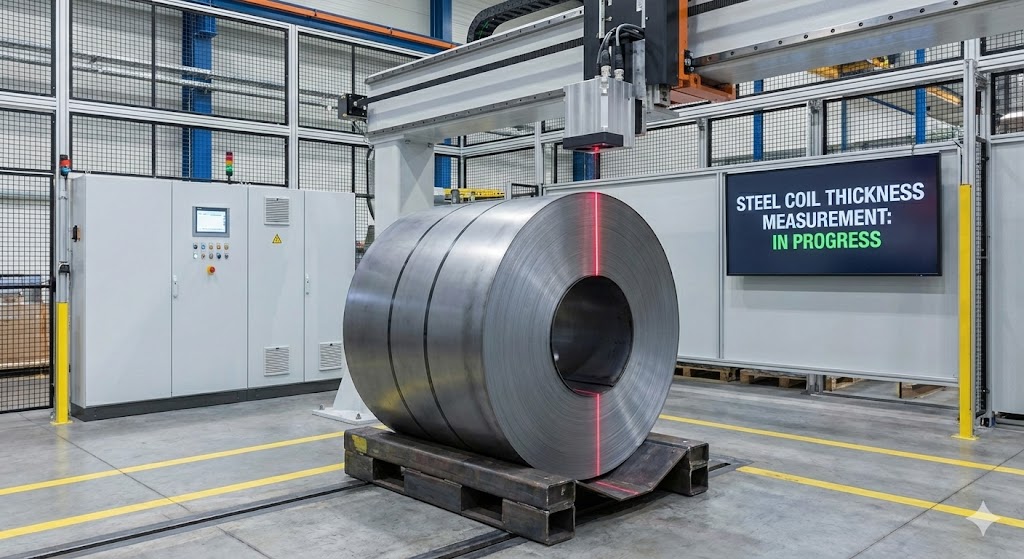
The applications of laser level sensors are diverse and span numerous sectors. In the bulk solids industry, they accurately measure levels of powders, granules, and pellets in silos, hoppers, and conveyor systems. In the chemical and pharmaceutical sectors, they monitor aggressive acids, solvents, and sensitive ingredients in reactors and storage tanks. The food and beverage industry utilizes them for hygienic level control of ingredients, even in challenging products like flour (dusty) or syrup (sticky). Water and wastewater treatment plants employ them for level measurement in clarifiers, filter beds, and sludge tanks. They are also indispensable in the mining, cement, and power generation industries for inventory management and process control.
Selecting the right laser level sensor requires careful consideration of several key parameters. The most critical is the measurement range, which must cover the minimum and maximum level distances in the application. The required accuracy and resolution will dictate the sensor's performance grade. The process connection (e.g., flange, thread) and housing material (often stainless steel) must be compatible with the vessel and the environment. The laser's wavelength and power class (typically Class 1 or Class 2, which are eye-safe) are important for safety and performance. Finally, the output signal (4-20 mA analog, digital protocols like Modbus, or relay switches) must integrate seamlessly with the existing control system.
In conclusion, laser level sensors offer a powerful solution for demanding level measurement tasks. Their combination of pinpoint accuracy, non-contact operation, and resilience to challenging process media makes them a preferred choice for engineers and plant operators. By understanding the underlying principle, acknowledging its limitations, and carefully matching the sensor's specifications to the application's requirements, one can leverage this advanced technology to achieve reliable, maintenance-free, and highly accurate level control, thereby enhancing process efficiency, safety, and inventory management.