In the high-stakes world of modern manufacturing, precision is not just a goal; it is an absolute requirement. At the heart of this relentless pursuit of accuracy lies a critical, yet often underappreciated, component: the laser machine sensor. Far more than simple accessories, these sophisticated devices act as the indispensable eyes and ears of laser cutting, welding, engraving, and marking systems. They provide the real-time feedback and control necessary to transform powerful, raw laser beams into tools of remarkable finesse and reliability.
The core function of a laser machine sensor is to monitor and measure. Different sensor types are deployed to tackle specific challenges in the laser processing workflow. One of the most common applications is distance measurement and focus control. Here, capacitive or optical sensors continuously measure the gap between the laser cutting head and the workpiece. This is crucial because the focal point of the laser—where its energy is most concentrated—must be maintained at a precise position relative to the material's surface for optimal cut quality and speed. Any deviation, caused by warped metal sheets or uneven surfaces, can lead to poor cuts, excessive dross, or even damage to the optics. A height-following sensor detects these variations in real-time and automatically adjusts the cutting head's Z-axis position, ensuring the focal point remains perfectly positioned throughout the entire job.
Another vital category is beam diagnostic sensors. These are the quality control inspectors of the laser system itself. They can monitor the laser beam's power, profile, and position. A drop in laser power, which might be invisible to the operator, would immediately be detected, preventing the production of out-of-spec parts. Similarly, sensors that analyze the beam's mode profile ensure the energy distribution is ideal for the task at hand, whether it's fine engraving or deep-penetration welding. This proactive monitoring allows for predictive maintenance, scheduling lens cleaning or laser source service before a minor issue escalates into costly downtime or scrap.
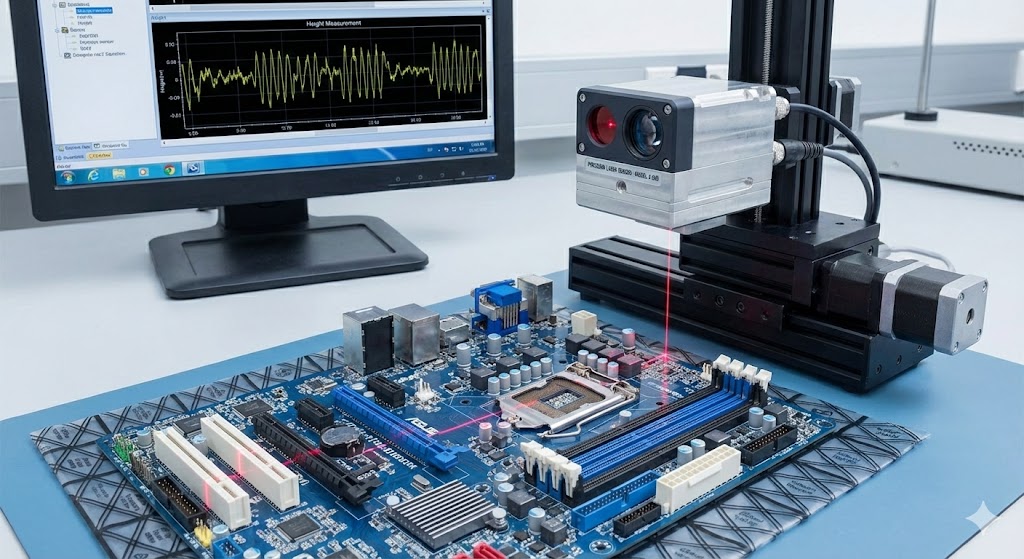
For processes like welding and heat-treating, temperature monitoring sensors are paramount. Pyrometers or thermal cameras measure the heat-affected zone around the laser spot. This data is fed back to the machine controller, which can dynamically adjust laser power or travel speed to maintain a consistent weld pool size or hardening depth. This closed-loop control is essential for achieving repeatable, high-strength welds, especially on complex or variable-geometry parts where manual parameter setting would be impractical.
Furthermore, vision-based sensors and seam trackers have revolutionized laser welding and cutting of three-dimensional components. These systems use cameras and laser line projectors to visually locate the joint or cutting path before and during the process. If a part is slightly misaligned on the fixture, the sensor detects the error and guides the laser head to follow the actual seam, not just the programmed path. This dramatically reduces fixturing costs and setup time while improving joint consistency and product quality.
The integration of these sensors creates a smart, adaptive manufacturing environment. Data from various sensors is aggregated and analyzed, often feeding into larger Industrial Internet of Things (IIoT) platforms. This enables not just machine-level optimization but also plant-wide insights into process efficiency, tool wear, and production trends. The result is a significant reduction in waste, lower energy consumption per part, and a drastic decrease in manual inspection and rework.
Choosing the right sensor depends heavily on the specific laser application, the material being processed, and the desired outcome. Factors such as measurement range, speed, accuracy, and environmental robustness (to factors like spatter, dust, or intense ambient light) must be carefully considered. Manufacturers of laser systems and independent sensor providers offer a wide array of solutions, from simple through-beam sensors for part presence detection to complex coaxial melt pool monitoring systems for aerospace-grade welding.
In conclusion, laser machine sensors are the enabling technology that elevates laser equipment from powerful tools to intelligent production systems. They bridge the gap between digital design intent and physical manufacturing reality. By providing continuous, precise feedback, they ensure consistency, enhance quality, unlock new process capabilities, and drive overall equipment effectiveness. As laser technology continues to advance towards higher powers and faster speeds, the role of sensors will only become more critical, solidifying their status as the fundamental sensory organs of the smart factory.