In the realm of industrial automation, environmental monitoring, and security systems, the ability to measure distance, detect presence, or profile objects from afar is paramount. Long range laser sensors have emerged as a critical technology enabling these capabilities with remarkable precision and reliability. Unlike their short-range counterparts, these sensors are engineered to perform over extended distances, often spanning tens to hundreds of meters, and in some specialized cases, even kilometers.
The fundamental principle behind most long range laser sensors is LiDAR (Light Detection and Ranging) or laser time-of-flight (ToF) technology. A laser diode emits a focused pulse of light towards a target. A high-sensitivity photodetector then captures the light reflected back. By precisely measuring the time delay between the emission and the reception of the pulse, the sensor's internal processor calculates the distance to the target using the known constant speed of light. This method allows for highly accurate measurements, largely independent of ambient light conditions. Advanced models incorporate phase-shift measurement techniques for even higher resolution at the cost of maximum range.
The performance of a long range laser sensor is defined by several key parameters. The maximum range is the most obvious, but it is intrinsically linked to the target's reflectivity. A sensor rated for 300 meters on a white, reflective surface may only achieve 100 meters on dark, absorbent materials. Accuracy and resolution indicate how close the measurement is to the true value and the smallest detectable change in distance, respectively. The laser's spot size is crucial for applications requiring measurement of small objects or precise edges at a distance. Furthermore, factors like measurement speed (update rate), environmental sealing (IP rating for dust and water resistance), and operating temperature range are critical for real-world deployment.
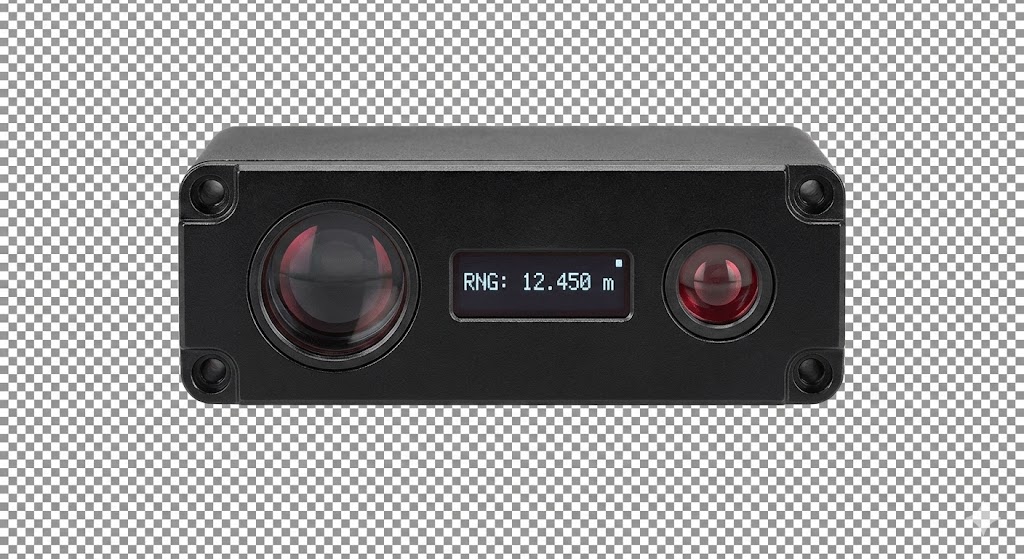
The applications for these sensors are vast and growing. In industrial settings, they are used for bulk level monitoring in silos and tanks, crane positioning and anti-collision systems, and large-scale dimensional gauging of products like steel beams or timber. In traffic management and toll systems, they accurately classify vehicles by profile and measure speed over long stretches of road. The security and perimeter protection sector relies on them to create invisible intrusion detection fences around critical infrastructure. Furthermore, they are the backbone of modern topographic surveying, forestry management, and are integral components in the navigation systems of autonomous vehicles and drones.
Selecting the right long range laser sensor requires a careful analysis of the application's needs. Beyond just the required distance, one must consider the target properties (size, color, material), the necessary accuracy, the environmental conditions (outdoor sunlight, rain, fog, or indoor dust), and any potential eye safety concerns, which are governed by laser class regulations (typically Class 1 or Class 2 for safe operation). Interface requirements (analog output, digital protocols like IO-Link, Ethernet/IP) and mounting constraints also play a significant role in the selection process.
A notable challenge for long range operation is atmospheric interference. Fog, rain, and dust can scatter or absorb the laser beam, reducing effective range and signal strength. Modern sensors combat this with higher output power (within safety limits), sophisticated signal processing algorithms to filter noise, and sometimes the use of specific laser wavelengths that are less susceptible to atmospheric attenuation.
As technology advances, the trends point towards sensors that are smarter, more compact, and more integrated. The incorporation of Ethernet-AP connectivity for easy configuration and data logging, onboard data processing for edge computing applications, and multi-echo detection capabilities (which can distinguish between a primary target and background interference like a wire fence) are becoming standard. The fusion of laser measurement data with other sensor inputs, like inertial measurement units (IMUs) or cameras, is also opening new frontiers in machine perception and automation.
In conclusion, long range laser sensors are powerful tools that translate the physical property of distance into precise, actionable digital data. Their non-contact nature, high accuracy, and ability to function over considerable distances make them indispensable in a wide array of fields. By understanding their operating principles, key specifications, and application requirements, engineers and system integrators can effectively harness this technology to solve complex measurement and detection challenges, driving efficiency and innovation across industries.