In the realm of precision measurement and automation, laser rangefinder sensors have become indispensable tools. These devices provide accurate, non-contact distance measurements by utilizing the properties of light. Their operation is elegantly simple in principle yet sophisticated in execution, enabling applications across diverse industries from manufacturing and robotics to construction and consumer electronics.
The fundamental principle behind a laser rangefinder sensor is based on either time-of-flight (ToF) or phase-shift measurement. In the time-of-flight method, the sensor emits a short pulse of laser light towards a target. A high-speed receiver within the sensor then detects the reflection of that pulse. By precisely calculating the time difference between the emission and reception of the laser pulse, and knowing the constant speed of light, the sensor's onboard processor can determine the distance to the target with remarkable accuracy. This method is excellent for longer ranges. The phase-shift method, often used for shorter, high-precision measurements, involves emitting a continuous laser beam with modulated amplitude. The sensor measures the phase difference between the emitted and reflected modulated signal. This phase shift is directly proportional to the distance traveled, allowing for sub-millimeter resolution in many cases.
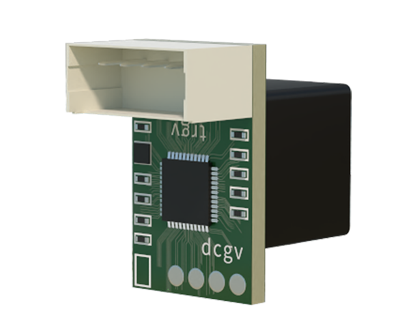
Modern laser sensors incorporate advanced components to ensure reliability and precision. A laser diode generates the coherent light beam, typically in the visible red or invisible infrared spectrum for safety and performance. Lenses focus the outgoing beam and collect the returning reflection. The heart of the system is the photodetector and the high-speed timing or phase-analysis circuitry. Environmental factors like target color, reflectivity, and ambient light are compensated for by intelligent algorithms and sometimes by using specialized filters or signal processing techniques.

The applications for laser rangefinder sensors are vast and growing. In industrial automation, they are crucial for positioning robotic arms, measuring object dimensions on conveyor belts, and controlling material levels in silos. The construction industry relies on them for surveying, monitoring structural deformations, and aligning machinery. Autonomous vehicles and mobile robots use arrays of these sensors, often LiDAR systems, to map their surroundings and navigate safely. Even everyday devices like smartphones now incorporate miniature laser sensors for camera autofocus and augmented reality features.
Selecting the right laser rangefinder sensor requires careful consideration of several key parameters. The measuring range is the first consideration, varying from a few centimeters to several hundred meters depending on the model. Measurement accuracy and repeatability are critical; high-end industrial sensors offer accuracies down to microns, while more economical models may be suitable for less demanding tasks. The response time, or how quickly the sensor can take and output a measurement, is vital for high-speed automation processes. Other factors include the laser's spot size (a smaller spot allows for measuring smaller objects), the type of output signal (analog voltage, current, or digital protocols like IO-Link or Ethernet), and the sensor's housing rating (IP67 for dust and water resistance is common for industrial use). Finally, the nature of the target surface—whether it's highly reflective, dark, transparent, or at an acute angle—can significantly impact performance and may require sensor models with specific capabilities.
Installation and operation also demand attention. Ensuring a stable mounting point, minimizing vibration, and avoiding optical interference from other strong light sources are essential for consistent results. Regular cleaning of the lens is a simple but important maintenance task. As technology progresses, trends point towards sensors that are smaller, more energy-efficient, and smarter. Integration with Industrial Internet of Things (IIoT) platforms allows for predictive maintenance and data analytics, while multi-function sensors that can measure distance, profile, and even speed are emerging.
In conclusion, laser rangefinder sensors are a cornerstone technology of modern measurement. By understanding their operating principles, recognizing their wide-ranging applications, and methodically evaluating specifications against specific needs, engineers and technicians can effectively harness their power to enhance accuracy, efficiency, and automation in countless scenarios.
