Capacitive proximity sensors are widely used in industrial automation, consumer electronics, and safety systems due to their non-contact detection capability. Unlike inductive sensors that only detect metals, capacitive sensors can detect a variety of materials, including liquids, plastics, glass, and organic substances. This versatility makes them essential in applications ranging from level sensing to touch interfaces.
The fundamental principle behind capacitive proximity sensing is based on changes in capacitance. Capacitance is the ability of a system to store an electrical charge, and it depends on three primary factors: the surface area of the electrodes, the distance between them, and the dielectric constant of the material between the electrodes. In a typical capacitive sensor, one electrode acts as the sensor face, while the target object or environment serves as the other electrode. When an object approaches the sensor, it alters the dielectric properties of the space between the electrodes, leading to a measurable change in capacitance.
A standard capacitive proximity sensor consists of an oscillator circuit, a signal converter, and an output stage. The oscillator generates a high-frequency electric field that emanates from the active surface of the sensor. In the absence of a target, the oscillator operates at a baseline frequency determined by the inherent capacitance of the system. As an object enters the sensing range, it interacts with the electric field, effectively increasing the system's capacitance. This change causes the oscillator's frequency to shift. The signal converter monitors this frequency variation and translates it into a corresponding voltage or current change. Finally, the output stage triggers a switch—such as a relay or solid-state output—when the signal exceeds a predefined threshold, indicating the presence of the object.
Several factors influence the performance and sensitivity of capacitive sensors. The dielectric constant of the target material plays a critical role; materials with higher dielectric constants, like water or metals, cause more significant capacitance changes and are easier to detect. Conversely, materials with low dielectric constants, such as dry wood or certain plastics, may require closer proximity or sensor calibration. Environmental conditions like humidity, temperature, and the presence of contaminants can also affect readings, necessitating proper shielding and housing designs to minimize false triggers.
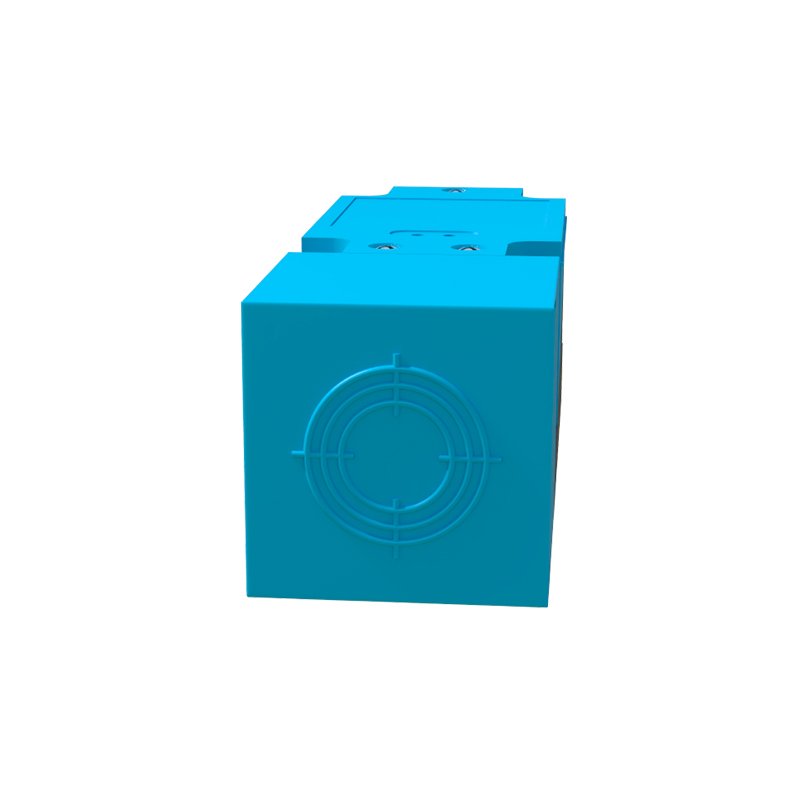
Applications of capacitive proximity sensors are diverse. In industrial settings, they monitor fill levels in tanks by detecting liquids or granular materials through container walls, eliminating the need for direct contact. In consumer devices, they enable touch-sensitive buttons on appliances or screens, replacing mechanical switches for enhanced durability. Additionally, they are employed in safety systems to detect human presence, such as in elevator doors or automated machinery guards.
When selecting a capacitive sensor, key parameters include sensing range, response time, and environmental ratings. Typical sensing distances range from a few millimeters to several centimeters, with adjustable sensitivity to accommodate different materials. Modern sensors often feature embedded microprocessors for self-compensation against temperature drift and electromagnetic interference, ensuring reliable operation in harsh conditions.
In summary, capacitive proximity sensors operate by detecting changes in capacitance caused by the intrusion of an object into an electric field. Their ability to sense non-metallic materials and operate through non-conductive barriers makes them a flexible solution for numerous automation and control tasks. With ongoing advancements in miniaturization and signal processing, these sensors continue to evolve, offering higher precision and integration for smart systems.