In the world of industrial automation, process control, and smart devices, sensors are the fundamental components that bridge the physical and digital worlds. Two of the most prevalent and sometimes confused types are pressure sensors and proximity sensors. While both are transducers that convert a physical phenomenon into an electrical signal, their operating principles, applications, and functionalities are distinctly different. Understanding these differences is crucial for engineers, technicians, and procurement specialists to select the right component for their specific needs.
A pressure sensor is a device designed to measure the force exerted by a fluid or gas per unit area. Its core function is to quantify pressure, which can be absolute, gauge, or differential. The working principle typically involves a sensing element—such as a diaphragm, piezoelectric crystal, or strain gauge—that deforms under applied pressure. This deformation causes a change in an electrical property, like resistance, capacitance, or voltage, which is then converted into a standardized output signal (e.g., 4-20 mA, 0-10V, or a digital protocol). Pressure sensors are integral to systems where monitoring or controlling force, flow, level, or altitude is essential. Common applications include hydraulic and pneumatic systems, automotive tire pressure monitoring systems (TPMS), medical equipment like ventilators and blood pressure monitors, HVAC systems, and industrial process control for tanks and pipelines. They provide a continuous, analog measurement, delivering a value that corresponds directly to the pressure magnitude.
In stark contrast, a proximity sensor is a non-contact device designed to detect the presence or absence of an object within a specific range without any physical contact. It does not measure a continuous variable like force; instead, it provides a discrete, binary output—typically "on" or "off." The primary function is presence detection, object counting, or position verification. Proximity sensors operate on various principles depending on the type. Inductive proximity sensors detect metallic objects by generating an electromagnetic field. Capacitive sensors can detect both metallic and non-metallic materials (like plastic, wood, or liquids) by sensing changes in capacitance. Ultrasonic sensors use sound waves to measure distance to an object, while photoelectric sensors employ a light beam. Their output is usually a simple switch signal (PNP/NPN). Applications are vast in automation: detecting a part on a conveyor belt, counting products, limiting the travel of a machine tool, verifying a door is closed in an elevator, or enabling touchless faucets. They are the workhorses of assembly lines, packaging machinery, and safety systems.
The divergence in their core purpose leads to several key distinctions. The first is the nature of the measured quantity. Pressure sensors measure an intensive physical property (pressure), yielding a variable analog or digital value. Proximity sensors detect the existence of an object, yielding a simple yes/no signal. Secondly, the interaction differs significantly. Pressure sensors often require direct contact or a port to interface with the medium being measured (like a gas or liquid). Proximity sensors, by definition, operate without contact, which prevents wear and tear and allows for detection of fragile or fast-moving objects.
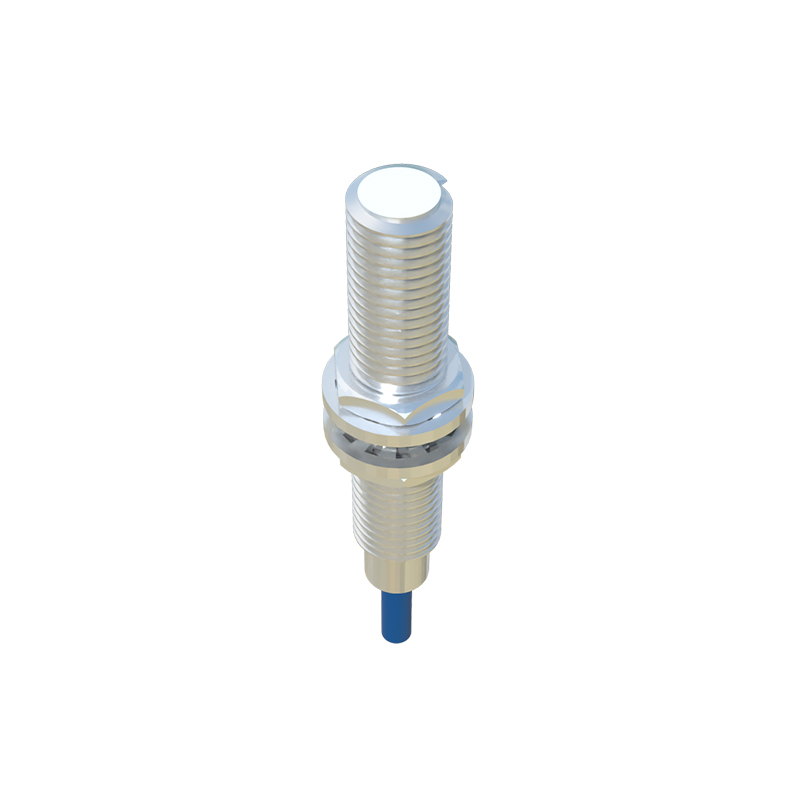
The output signals further highlight the difference. A pressure transmitter provides a proportional output representing a pressure range (e.g., 0-100 psi). A proximity sensor provides a discrete switching signal, often compatible with programmable logic controller (PLC) inputs. This makes their roles in a control loop fundamentally different: pressure sensors are typically used for monitoring and closed-loop control (like maintaining a specific tank pressure), whereas proximity sensors are used for sequencing, safety interlocks, and event triggering.
Selection criteria for these sensors are therefore based on entirely different questions. For a pressure sensor, key questions include: What is the pressure range and media type? What accuracy and long-term stability are required? What is the required output signal and electrical connection? For a proximity sensor, the questions are: What material is the target object? What is the required sensing distance (the rated operating distance)? What is the object size and required switching frequency? What is the environmental condition (presence of dust, water, or electrical noise)?
In summary, while both sensors are vital to modern technology, a pressure sensor is an analog measuring device for quantifying force per unit area, essential for process variables. A proximity sensor is a digital switching device for non-contact object detection, essential for automation logic and safety. Confusing them can lead to system failure, as installing a proximity sensor where pressure measurement is needed would provide no quantitative data, and using a pressure sensor for object detection would be impractical and inefficient. By clearly understanding their distinct roles—measurement versus detection—professionals can ensure optimal sensor selection, leading to more reliable, efficient, and intelligent system designs.