The laser sensor industry stands as a cornerstone of modern automation and measurement technology. These devices, which utilize laser light to detect, measure, or profile objects with exceptional precision, have evolved from niche laboratory instruments into ubiquitous components across countless sectors. Their core principle involves emitting a laser beam and analyzing the reflected light to determine distance, presence, dimensions, or surface characteristics. This fundamental capability, when engineered into robust, compact, and increasingly intelligent systems, unlocks a world of possibilities for efficiency, safety, and quality control.
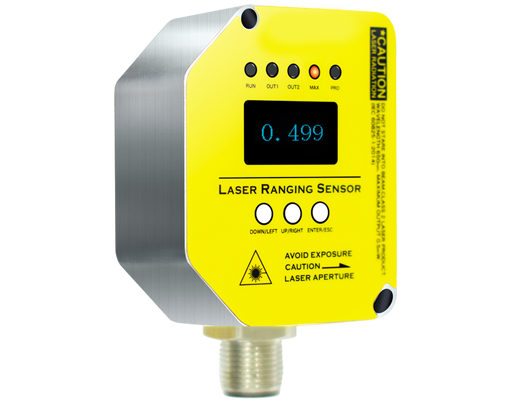
The technological evolution within this field has been rapid. Early laser sensors were large, expensive, and required meticulous calibration. Today, advancements in semiconductor lasers, photodetectors, and embedded processing have led to miniaturization, significant cost reduction, and enhanced reliability. Key types dominate the market. Laser distance sensors, using time-of-flight or triangulation methods, provide non-contact measurements critical in logistics, construction, and robotics. Laser profile sensors, or line scanners, capture detailed 2D or 3D cross-sections of objects for inspection and reverse engineering. Furthermore, the integration of artificial intelligence and machine learning is a transformative trend, enabling sensors not just to collect data but to interpret it—identifying defects, classifying objects, and making real-time decisions without central computer intervention.
The applications of laser sensors are vast and deeply integrated into the global industrial fabric. In manufacturing, they are indispensable for robotic guidance, ensuring arms precisely weld, assemble, or handle components. They perform high-speed quality inspection on production lines, detecting microscopic flaws in electronics, verifying fill levels in packaging, and measuring tolerances in automotive parts with micron-level accuracy. The automotive sector itself relies on them for advanced driver-assistance systems (ADAS) and autonomous vehicle development, where LiDAR (Light Detection and Ranging) sensors map the environment in 3D. Beyond the factory floor, laser sensors secure perimeters, monitor structural deformations in bridges, optimize agricultural harvesting, and even guide surgical instruments in medical settings.
Market dynamics are fueled by the relentless push towards Industry 4.0 and smart automation. The demand for higher productivity, reduced waste, and flawless quality control drives continuous investment. Regions with strong manufacturing bases, such as Asia-Pacific, North America, and Europe, represent the largest markets. The competitive landscape features a mix of established multinational electronics giants and specialized technology firms, all competing on parameters like accuracy, speed, environmental robustness (resistance to dust, light, vibration), and ease of integration into digital ecosystems.
However, the industry does not operate without challenges. Technical hurdles include ensuring consistent performance in harsh, unpredictable environments—such as extreme temperatures or highly reflective surfaces. Cost pressure remains intense, especially for high-volume applications like consumer electronics. Furthermore, the development of safety standards, particularly for higher-power lasers, and navigating varying international regulations add layers of complexity for manufacturers.
Looking ahead, the future of the laser sensor industry appears exceptionally bright, intertwined with broader technological megatrends. Miniaturization will continue, enabling integration into smaller devices and wearables. The push for higher data resolution and faster sampling rates will persist. A significant frontier is the fusion of sensor data from multiple types—laser, vision, inertial—to create richer, more contextual environmental models for complex robotics and autonomous systems. Sustainability efforts will also influence design, focusing on energy efficiency and longer lifecycle management. As the Internet of Things expands, laser sensors will act as critical physical-world data points, feeding information into vast digital networks that optimize everything from supply chains to urban infrastructure.

In conclusion, the laser sensor industry is far more than a supplier of components; it is a critical enabler of technological progress. By providing the "eyes" for machines with unmatched precision and versatility, these sensors are foundational to building smarter, safer, and more efficient systems across the entire spectrum of human enterprise. Its ongoing innovation cycle promises to unlock new capabilities and applications that are difficult to fully envision today, solidifying its role as a key driver of the next industrial revolution.