In the realm of industrial automation and quality control, the detection of surface irregularities such as concavities and convexities is paramount. Laser sensors have emerged as a pivotal technology for achieving high-precision, non-contact measurement, offering unparalleled accuracy and reliability in diverse manufacturing environments. This article delves into the operational principles, key advantages, and practical applications of laser sensors in detecting surface topography deviations.
Laser sensors operate on the principle of triangulation or time-of-flight measurement. In triangulation-based systems, a laser diode projects a focused beam onto the target surface. The reflected light is captured by a position-sensitive detector (PSD) or a CMOS/CCD array. Any surface irregularity—be it a depression (concavity) or a protrusion (convexity)—alters the angle of reflection, causing a shift in the position of the laser spot on the detector. This displacement is precisely calculated to determine the height or depth variation with micron-level resolution. Time-of-flight sensors measure the phase shift or the round-trip time of the laser pulse, suitable for larger measurement ranges but with generally lower resolution compared to triangulation methods for fine surface detail.
The advantages of laser sensors in detecting concavities and convexities are multifaceted. Firstly, they provide non-contact measurement, eliminating the risk of surface damage or wear associated with tactile probes. This is crucial for inspecting delicate materials like polished metals, ceramics, or coated surfaces. Secondly, laser sensors offer high-speed data acquisition, enabling real-time inspection on fast-moving production lines, such as in automotive body panel manufacturing or continuous web processes. Thirdly, their high resolution allows for the detection of minute defects—micro-dents, scratches, weld seams, or coating inconsistencies—that might be invisible to the human eye or conventional vision systems. Environmental robustness is another key benefit; many industrial-grade laser sensors are designed with IP67 ratings, resistant to dust, moisture, and vibrations common in factory settings.
In practical applications, laser sensors are deployed across various stages of production. In metal fabrication, they scan rolled sheets to detect dents, bulges, or thickness variations before stamping. In electronics assembly, they verify the coplanarity of component leads or detect warpage on printed circuit boards (PCBs). The automotive industry relies on them for inspecting body panel flatness, gap measurements, and paint quality assessment. Furthermore, in packaging, laser sensors ensure the integrity of embossed logos or detect deformities on containers. Advanced systems often integrate multiple laser sensors into profilometers or 3D scanning systems, creating detailed topographic maps of complex surfaces.
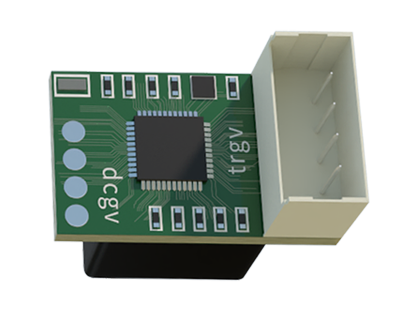
Despite their robustness, optimal performance requires careful consideration of factors like surface reflectivity, color, and ambient light. Highly reflective or transparent surfaces may require sensor calibration or the use of specialized models with adjustable laser power and filtering options. Integration with programmable logic controllers (PLCs) and industrial PCs allows for seamless data processing, trend analysis, and immediate feedback for process adjustment.
In conclusion, laser sensors represent a cornerstone technology for precision detection of surface concavities and convexities. Their ability to deliver fast, accurate, and non-contact measurements underpins modern quality assurance protocols, driving efficiency and reducing waste in manufacturing. As sensor technology continues to evolve with enhancements in speed, resolution, and AI-driven data analysis, their role in ensuring product excellence and operational integrity will only expand further.