In the demanding environments of modern manufacturing, metalworking, and material processing, equipment durability and operational reliability are non-negotiable. One critical component that often determines the longevity and uptime of machinery is the proximity sensor. Specifically, the anti-chip proximity sensor has emerged as a vital solution to a pervasive industrial challenge: contamination by metallic chips, swarf, and fine particulate debris. This article delves into the fundamental reasons why these specialized sensors are indispensable, exploring their design principles, operational benefits, and the consequences of their absence.
Traditional inductive proximity sensors are excellent at detecting metallic objects without physical contact. However, their Achilles' heel in machining applications like milling, turning, or drilling is their sensitivity to the very byproducts of these processes—metal chips and conductive dust. These fragments can accumulate on the sensor's active face, leading to false triggering, signal damping, or complete failure. A sensor might interpret a pile of chips as a solid metal target, causing a machine to stop prematurely or, worse, fail to detect an actual part, leading to collisions or production defects. This unreliable behavior results in costly unplanned downtime, reduced product quality, and increased maintenance burdens.
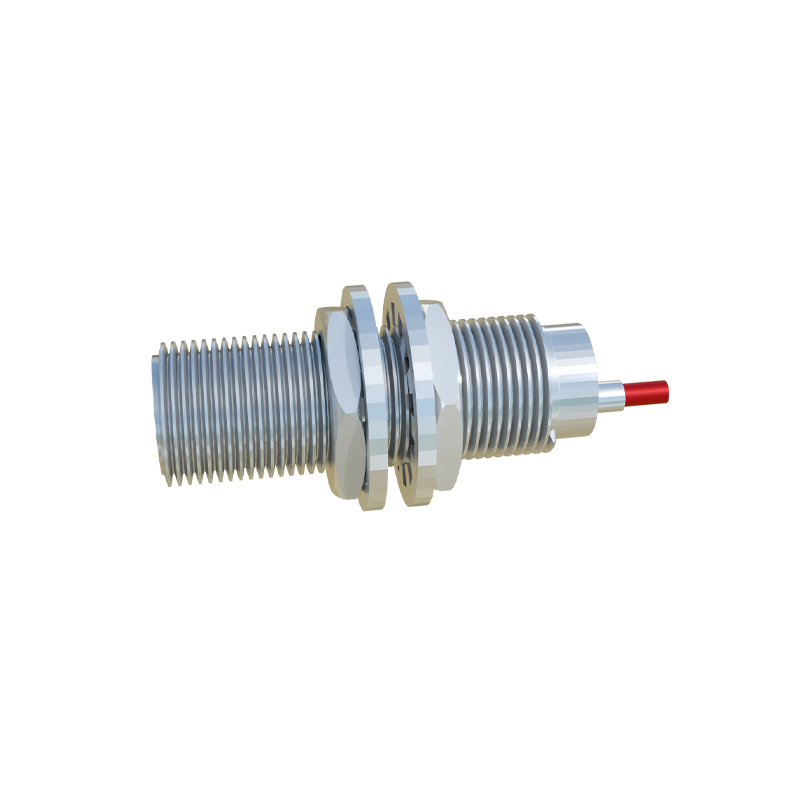
The anti-chip proximity sensor is engineered to solve this exact problem. Its core innovation lies in its unique electromagnetic field design. Standard sensors generate a wide, diffuse electromagnetic field that extends laterally from the sensing face. This broad field easily captures stray chips around the detection area. In contrast, anti-chip models utilize a focused, concentrated field geometry. This field is shaped to project forward in a narrow, cylindrical pattern, much like a flashlight beam. This design minimizes the sensor's sensitivity to small metallic particles adhering to or lying near the sides of the sensing face. Only a substantial metallic object entering the direct, forward path of this focused field will trigger a reliable detection signal.
The construction materials further enhance this immunity. Many anti-chip sensors feature a sensing face made of a specialized, wear-resistant plastic or a coated stainless steel that discourages the adhesion of magnetic chips. Some advanced designs incorporate a flush-mounted form factor, allowing them to be installed seamlessly into a metal bracket, leaving no protruding edges or recesses where chips could gather. This physical design works in tandem with the electronic circuitry, which is often tuned with higher switching hysteresis. This means the difference between the "on" and "off" signal thresholds is greater, preventing the sensor from oscillating due to minor interference from particulate matter.
The operational and financial benefits are substantial. First and foremost is enhanced reliability. Machines equipped with anti-chip sensors experience far fewer false stops and erroneous readings, leading to smoother production flow and higher Overall Equipment Effectiveness (OEE). Maintenance intervals are extended, as technicians spend less time cleaning standard sensors or troubleshooting chip-related faults. This directly translates to lower total cost of ownership. Furthermore, in automated systems where precision is paramount—such as in robotic pick-and-place operations within a stamping plant or on a CNC lathe's tool changer—the consistent accuracy of anti-chip sensors ensures repeatable positioning and prevents expensive errors.
Ignoring the need for chip immunity can have severe repercussions. Beyond frequent downtime, accumulated conductive debris can physically damage a standard sensor's face through abrasion or cause internal short circuits. In safety-critical applications, such as part presence verification in a press brake or automated guided vehicle (AGV) docking, a sensor failure due to contamination could lead to equipment damage or even personnel hazard. As industries push toward lights-out manufacturing and higher degrees of automation, the robustness of every component, including sensors, becomes a cornerstone of operational strategy.
In conclusion, the adoption of anti-chip proximity sensors is not merely a technical preference but a strategic imperative for industries plagued by metallic debris. Their focused field technology, robust construction, and intelligent electronics provide a defensive barrier against one of the most common causes of sensor failure. By ensuring reliable object detection in contaminated environments, they protect capital investment, optimize production efficiency, and provide the operational certainty required in today's competitive and automated industrial landscape. Specifying the right sensor for the environment is a fundamental engineering decision, and for applications involving chips and swarf, the anti-chip variant is the unequivocally correct choice.