In the rapidly evolving landscape of industrial automation and precision measurement, Yushan laser distance sensors have emerged as a cornerstone technology, offering unparalleled accuracy, reliability, and versatility. These sensors utilize the principle of time-of-flight or phase-shift measurement, where a laser diode emits a focused beam of light towards a target. The sensor then precisely calculates the distance by measuring the time it takes for the reflected light to return or by analyzing the phase shift of the modulated signal. This non-contact measurement method is critical in applications where physical contact could damage the target or the sensor itself, or where high-speed, repetitive measurements are required.
The core advantages of Yushan laser sensors lie in their robust engineering. Designed to withstand harsh industrial environments, they often feature high ingress protection (IP) ratings, ensuring resistance to dust, moisture, and vibrations. Their measurement range can vary significantly, from sub-millimeter precision over short distances to reliable detection over several hundred meters, catering to diverse sector needs. Key performance parameters include measurement resolution, often in the micrometer range for high-end models, repeatability, linearity error, and response time. A fast response time, sometimes in the microsecond range, enables real-time process control in dynamic manufacturing lines, such as robotic guidance, conveyor belt monitoring, and assembly verification.
In practical applications, Yushan laser distance sensors are indispensable across multiple industries. In the automotive sector, they are deployed for precise gap and flush measurement during vehicle assembly, ensuring quality and aesthetic standards. In logistics and warehousing, they facilitate automated dimensioning of packages, palletizing, and inventory management through level detection in silos. The construction industry leverages them for alignment, deformation monitoring, and crane positioning. Furthermore, in electronics manufacturing, these sensors enable the precise placement of miniature components on printed circuit boards (PCBs).
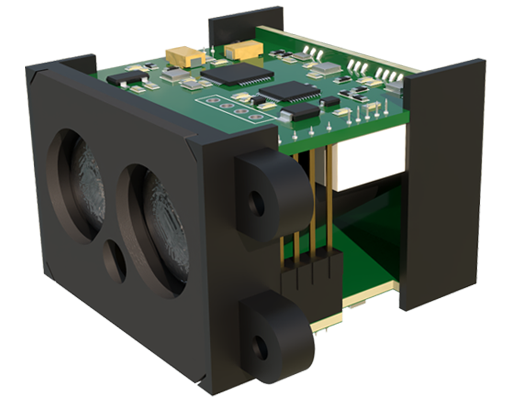
Integration into larger systems is streamlined through various analog and digital output options, such as 4-20 mA, 0-10 V, RS-232, RS-485, and Ethernet-based industrial protocols like PROFINET or EtherNet/IP. This connectivity allows seamless communication with Programmable Logic Controllers (PLCs), Human-Machine Interfaces (HMIs), and supervisory control systems. When selecting a Yushan sensor for a specific task, engineers must consider factors like target properties (color, reflectivity, surface texture), environmental conditions (ambient light, temperature fluctuations), required accuracy, and mounting constraints. For instance, a dark, matte surface may require a sensor with a higher laser power or a specialized receiver to overcome low signal return.

Maintenance of these devices is typically minimal due to their solid-state design with no moving parts. However, ensuring a clean lens is vital for optimal performance, as contamination can scatter the laser beam and introduce measurement errors. Regular calibration checks against a known reference are also recommended to maintain long-term accuracy. The future trajectory for Yushan and similar laser distance sensors points toward even greater miniaturization, enhanced intelligence with onboard data processing, and improved performance in challenging conditions, such as measuring transparent objects or in the presence of heavy airborne particulates.
Ultimately, the adoption of Yushan laser distance sensors represents a strategic investment in operational efficiency, quality assurance, and safety. By providing exact, non-contact distance data, they empower automated systems to perform with a level of consistency and precision unattainable by manual methods or older technologies. As Industry 4.0 and smart factory concepts continue to mature, the role of precise, reliable, and connected measurement devices like these will only become more central to industrial innovation and productivity gains worldwide.