In the realm of industrial automation and smart systems, proximity sensing technology has evolved significantly, with sunlight infrared (IR) proximity sensors emerging as a critical component for reliable non-contact detection. These sensors operate by emitting infrared light, typically in the near-infrared spectrum, and measuring the reflection from objects within their detection range. What sets sunlight IR proximity sensors apart is their advanced design to mitigate interference from ambient infrared radiation, such as sunlight or artificial lighting, ensuring stable performance even in challenging environmental conditions.
The core engineering principle hinges on modulated IR signals. Unlike basic IR sensors that may be susceptible to ambient light noise, sunlight IR proximity sensors utilize a specific frequency modulation for the emitted IR beam. A dedicated receiver circuit is tuned to detect only this modulated signal, effectively filtering out constant or irregular infrared interference from natural or artificial sources. This modulation-demodulation technique, often implemented with precision oscillators and synchronous detection circuits, allows for accurate distance measurement or presence detection, typically ranging from a few centimeters to several meters, depending on the sensor's power and lens configuration.
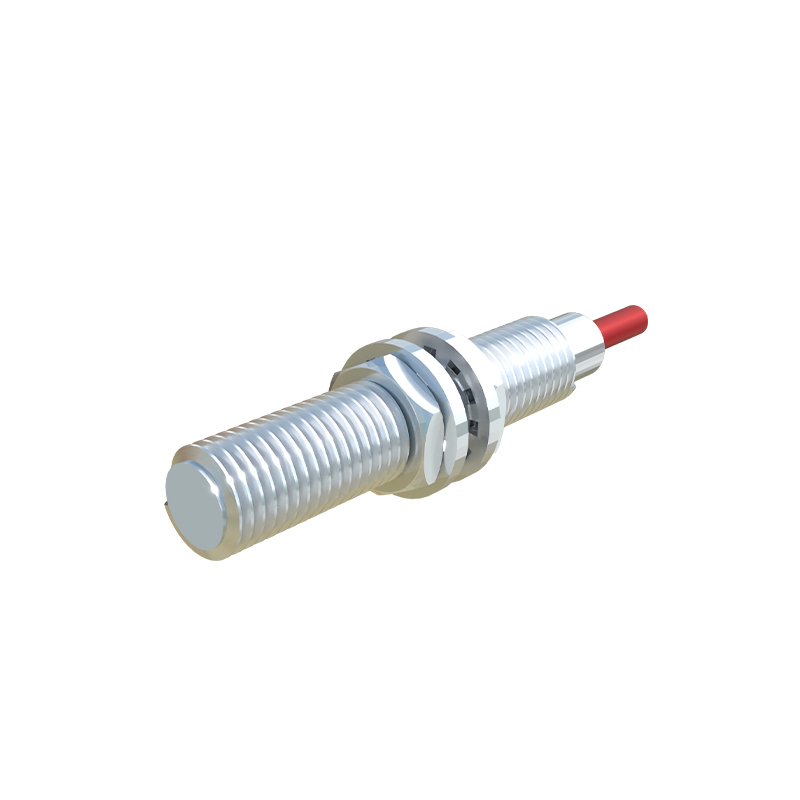
Key components include an IR LED (often with a narrow emission angle for directed beams), a photodiode or phototransistor as the receiver, and a signal processing IC. The housing and lens materials are also crucial; they are designed to offer optimal transmission for the chosen IR wavelength while providing mechanical robustness and, in some models, resistance to dust, moisture, or chemicals per IP ratings. Calibration is a vital step in manufacturing, where sensors are adjusted to account for component tolerances and to define a clear threshold for object detection against the background "noise floor."
From an application standpoint, these sensors are indispensable across various sectors. In automotive engineering, they are deployed in automatic door systems, obstacle detection for parking aids, and driver monitoring systems. In consumer electronics, they enable features like automatic screen dimming in smartphones and tablets when held close to the user's face. Industrial automation leverages them for object counting on conveyor belts, precise positioning in robotic assembly lines, and safety curtains for machinery. Furthermore, in the burgeoning field of the Internet of Things (IoT), sunlight IR proximity sensors contribute to smart building management, controlling lighting or HVAC systems based on occupancy, even in sunlit atriums or warehouses.
The selection criteria for engineers involve several parameters: sensing distance, response time, output type (digital or analog), supply voltage, and environmental operating temperature. A critical specification is the sensor's immunity to ambient light, often quantified in datasheets as the maximum tolerable irradiance from sunlight or lamps. Modern advancements integrate these sensors with microcontrollers and digital interfaces (like I2C or SPI), providing not just a proximity signal but also calibrated distance data, facilitating easier integration into digital control systems.
Despite their robustness, design challenges persist. Extreme angles of direct sunlight, highly reflective or absorbent target surfaces, and rapid environmental transitions can still pose issues. Therefore, system design often incorporates redundancy, sensor fusion (combining IR data with ultrasonic or capacitive sensing), and intelligent software algorithms for error correction. Maintenance considerations are generally minimal, but periodic cleaning of the optical surface is recommended to prevent false triggers due to dirt accumulation.
In conclusion, sunlight infrared proximity sensors represent a mature yet continuously improving technology. Their ability to provide dependable, non-contact sensing in variable lighting conditions makes them a cornerstone of modern electromechanical design. As industries move towards greater autonomy and intelligence, the role of these precise and resilient sensors is set to expand, driving innovations in safety, efficiency, and user interaction across countless applications.