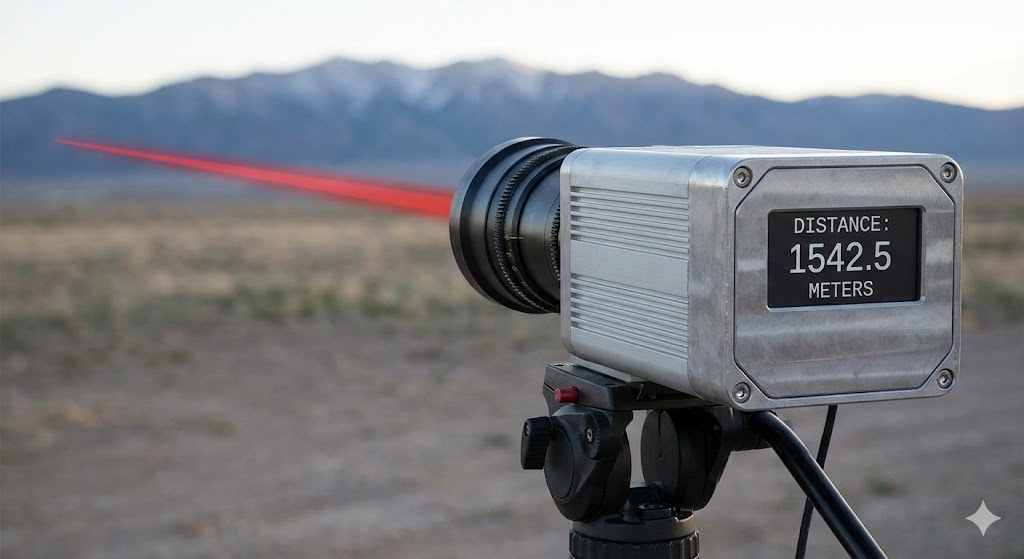
In the world of industrial automation, motion control, and traffic management, accurately measuring the speed of an object is a fundamental requirement. Among the various technologies available, the laser speed sensor stands out for its precision, non-contact operation, and versatility. This article delves into the working principles of these devices, explores their diverse applications, and provides a practical guide for selecting the right sensor for specific needs.
At its core, a laser speed sensor operates on the principle of the Doppler Effect, the same phenomenon that causes the change in pitch of a passing ambulance siren. The sensor emits a coherent beam of laser light towards a moving surface. When this light hits the surface, it is scattered back with a slight shift in its frequency. This shift, known as the Doppler frequency shift, is directly proportional to the velocity of the target object. The sensor's internal photodetector and sophisticated signal processing electronics analyze this returning light, precisely calculating the frequency shift and, consequently, the speed and length of the moving object. This method allows for measurements without any physical contact, eliminating wear and tear and enabling use on hot, fragile, or otherwise inaccessible materials.
The applications for laser speed sensors are remarkably broad. In industrial manufacturing, they are indispensable for monitoring and controlling the speed of production lines, such as in paper mills, steel rolling facilities, and textile manufacturing. They ensure consistent product quality by providing real-time feedback for process control systems. In the printing industry, they synchronize the speed of different rollers to prevent smudging or misalignment. Furthermore, they are crucial in scientific research for measuring fluid flow velocities or the dynamics of mechanical components. A common, though often misunderstood, application is in law enforcement for vehicle speed detection, where specific LIDAR (Light Detection and Ranging) guns are used. Industrial laser sensors differ significantly from their traffic enforcement counterparts in their design and data output, focusing on continuous measurement rather than instant snapshot speeds.
When selecting a laser speed sensor, several key parameters must be considered to ensure optimal performance. The first is measurement range, which includes both the minimum and maximum speeds the device can accurately detect. The stand-off distance, or the optimal working distance between the sensor and the target, is another critical factor. The material and surface properties of the target significantly impact performance; rough surfaces like paper scatter light well, while shiny or transparent materials like glass or polished metal can pose challenges, though modern sensors often have settings to compensate for this. Output signals are also important; common interfaces include analog (4-20 mA, 0-10 V), digital (RS232, RS485), and pulse outputs, which must be compatible with the user's data acquisition or control system. Finally, environmental factors like ambient light, temperature, and vibration resistance should be evaluated based on the installation site.

Compared to other speed measurement technologies like encoder wheels or contact tachometers, laser sensors offer distinct advantages. Their non-contact nature means no slippage or mechanical wear, leading to higher long-term accuracy and lower maintenance. They can measure speed on a wide variety of materials without modification. However, they may have limitations with certain difficult surfaces and typically come at a higher initial cost than simple contact methods. Understanding these trade-offs is essential for making an informed decision.
In conclusion, laser speed sensors are powerful, precise tools that have become integral to modern automation and measurement systems. By harnessing the physics of light, they provide reliable, non-contact velocity data that drives efficiency, ensures quality, and enables advanced control across countless industries. A careful evaluation of the measurement requirements, target properties, and operational environment will guide users to the most suitable laser sensor, unlocking its full potential for enhancing process reliability and productivity.