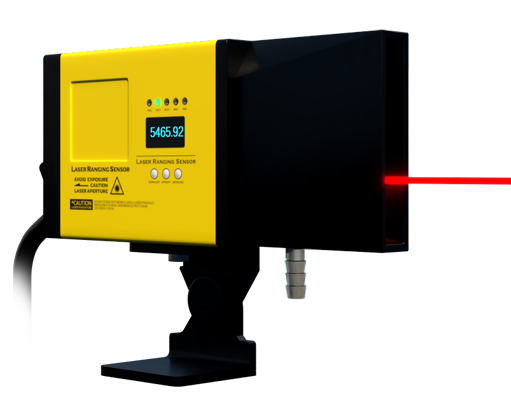
Laser photoelectric sensors, often referred to as laser beam sensors or laser through-beam sensors, have become a cornerstone technology in modern industrial automation, safety systems, and precision measurement. The core question "Are laser photoelectric sensors good?" can be answered with a resounding yes, but with important nuances that depend entirely on the specific application requirements. Their fundamental principle involves a separate transmitter and receiver; the transmitter emits a focused laser beam, and the receiver detects it. Any object interrupting this beam triggers an output signal.
The primary advantage that makes laser sensors exceptionally "good" is their unparalleled precision and sensing stability over long distances. Unlike standard infrared or LED-based photoelectric sensors, laser diodes produce an extremely narrow, coherent, and intense beam of light. This results in several critical benefits. First, the high directivity allows for precise detection of very small objects or precise positioning, as the beam spot remains small even over distances of tens or hundreds of meters. This is invaluable in applications like wafer handling in semiconductor manufacturing or detecting fine wires. Second, the intense, focused light provides superior resistance to ambient light interference, including sunlight, making them reliable in outdoor or brightly lit environments. Third, their long sensing range, far exceeding that of diffuse-reflective sensors, enables solutions for large-scale applications like vehicle detection at gate entrances or perimeter security.
Furthermore, laser through-beam sensors offer exceptional reliability and stability. Because they rely on the presence or absence of a beam, they are largely unaffected by the object's color, reflectivity, or surface finish—a significant challenge for diffuse-reflective sensors. A black, non-reflective object is detected as reliably as a shiny white one, as long as it is opaque enough to block the beam. This leads to fewer false triggers and higher operational consistency in demanding industrial settings.
However, to provide a balanced analysis, it is crucial to consider potential limitations where a laser sensor might not be the optimal choice. The key drawback is the requirement for two separate units: a transmitter and a receiver, which must be precisely aligned during installation and maintain that alignment despite vibration or thermal drift. This makes installation slightly more complex than with a single-unit sensor. The cost is also typically higher than for standard photoelectric sensors. For applications requiring detection of transparent objects, such as glass or clear films, specific laser sensors with polarized filters are needed, adding to complexity. In environments with excessive dust, fog, or steam, the laser beam can be scattered or attenuated, potentially causing unreliable operation unless specially designed models are used.
When evaluating if a laser photoelectric sensor is good for your project, consider these application-based questions. Is precise detection of small objects required over a medium to long distance? Is the sensing environment subject to strong ambient light? Are the target objects varied in color and reflectivity? If the answer is yes, a laser through-beam sensor is likely an excellent, high-performance choice. For simpler tasks over short ranges with consistent object surfaces, a more economical standard photoelectric sensor might suffice.
In conclusion, laser photoelectric sensors are an outstanding and highly effective technology for applications demanding precision, long range, and environmental robustness. Their "goodness" is proven in countless critical roles across manufacturing, packaging, logistics, and security. The decision to use one should be based on a clear understanding of its strengths—superior beam focus, long-range capability, and insensitivity to target surface properties—against its considerations of installation alignment and cost. For the right application, they deliver unparalleled reliability and performance that justifies their position as a premium sensing solution.